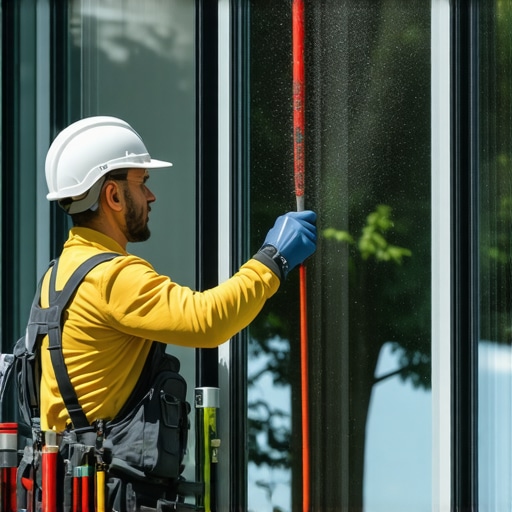
The Invisible Enemy on Your Glass
As a master glazier with a quarter-century in the field, I have seen every imaginable failure of a window system. From catastrophic structural collapses in high-rise curtain walls to the slow, agonizing rot of a poorly flashed Rough Opening in a residential bungalow, the issues usually start small. In 2026, we are seeing a resurgence of a very specific problem: organic resin bonding, or what the layman calls tree sap, which is wreaking havoc on modern high-performance coatings. Most homeowners assume they need a full window repair or to replace windows when they see permanent-looking spotting. But the pros have moved away from harsh solvents and razor blades, opting instead for a $4 automotive clay bar. This is not just a cleaning trick; it is a mechanical decontamination process that preserves the integrity of the Glazing Bead and the glass surface itself.
The Condensation Crisis and the Sap Connection
A homeowner recently called me in a total panic because their brand-new, high-efficiency windows were ‘sweating’ and looked permanently scarred. I walked in with my hygrometer and showed them the interior humidity was spiking at 65 percent. It was not a window failure; it was their lifestyle choices combined with a massive oak tree overhanging the south elevation. The high humidity was creating a sticky film on the glass, which then acted as a magnet for airborne sap particles. Once the sun hit those south-facing units, the Solar Heat Gain effectively baked that resin into the glass.
“Installation and subsequent maintenance are just as critical as the window performance itself. A high-performance window that is neglected or cleaned with abrasive materials will fail to meet its life-cycle expectations.” – AAMA Installation Masters Guide
This scenario highlights why understanding the physics of your windows is vital. When we talk about window cleaner techniques in 2026, we are talking about protecting a complex thermal envelope.
The Physics of the $4 Clay Bar Hack
Why a clay bar? To understand this, we must look at the glass at a microscopic level. Even float glass, which looks perfectly smooth, has a surface topography. When tree sap—a complex mixture of terpenes, resin acids, and esters—lands on the glass, it doesn’t just sit there. It fills the microscopic valleys of the glass surface. Standard window cleaner solutions, usually ammonia-based or simple surfactants, lack the mechanical ‘bite’ to pull these resins out of the valleys. Using a razor blade, a traditional tool for many, risks damaging the Sash or, worse, scratching the tempered surface or catching a Muntin edge. The clay bar works through a process of shear and encapsulation. As you glide the lubricated clay across the pane, it shears off the protruding sap and traps it within the clay’s plastic matrix. It is a non-abrasive way to restore the ‘slickness’ of the glass, which is essential for the performance of modern hydrophobic coatings.
Thermal Logic: Why Sap is More Dangerous in the South
If you are in a hot climate like Texas or Florida, your windows are likely optimized for a low Solar Heat Gain Coefficient (SHGC). This usually means your Low-E coating is on Surface #2 (the inner face of the outer pane). When sap sits on the exterior (Surface #1) in these climates, the glass surface temperature can reach 140 degrees Fahrenheit. This heat acts as a catalyst, accelerating the chemical bonding of the sap to the glass. In these regions, a window repair specialist isn’t just looking for cracks; they are looking for surface etching. If the sap is not removed via the clay bar method regularly, the acids in the resin can permanently pit the glass, requiring you to replace windows far earlier than the 20-year NFRC expectation.
“The durability of fenestration products is heavily dependent on the environmental conditions and the removal of corrosive contaminants from the exterior glazing surface.” – NFRC Performance Standards
For my colleagues in the north, the focus is on the U-Factor and heat retention, but the sap problem remains relevant as it interferes with the Visible Transmittance (VT), making your high-dollar windows look like cheap plexiglass.
The Step-by-Step Restoration Protocol
To execute this hack like a professional, you first need to ensure the Sill Pan and Weep Hole are clear of debris. Start by washing the window with a standard pH-neutral surfactant to remove loose dust. Next, use a dedicated clay lubricant or a highly diluted soap mixture. Glide the clay bar in a cross-hatch pattern. You will actually hear the ‘grab’ of the sap and feel the resistance through your fingertips. As the clay pulls the contaminants, the sound will change from a gritty rasp to a silent glide. This is the sound of a preserved investment. If you find that the glass remains hazy after this, you might be looking at seal failure rather than surface contamination, which is a different window repair conversation involving the desiccant in the spacer bar. Always check the Shim placement if you notice the Operable sash is sticking, as sap can also gum up the weatherstripping, leading to air infiltration that mimics a drafty window.