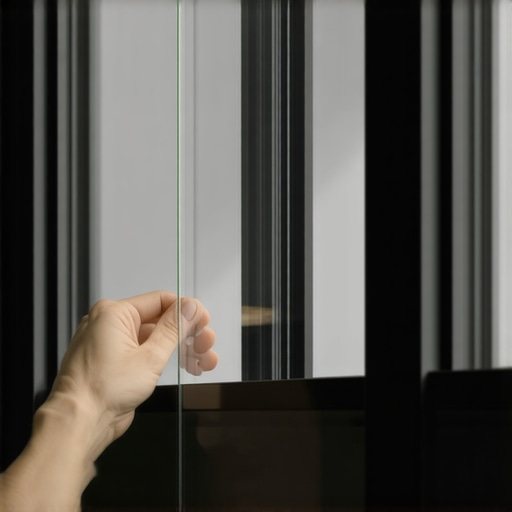
The Science of Seal Integrity: Beyond the Visual Inspection
In my twenty-five years of handling glass, from towering curtain walls to the delicate restoration of century-old wood casements, I have seen every possible failure of the building envelope. Most homeowners look at a window and see a piece of glass. I see a dynamic thermal barrier that is constantly fighting atmospheric pressure, ultraviolet radiation, and the laws of thermodynamics. When people ask about window repair versus a total replace windows project, they often overlook the most critical component: the elastomeric seal. By 2026, we are moving toward a more rigorous diagnostic standard I call the Squish Test. This is not about looking for fog; it is about measuring the compression set of the bulb seals and the pliability of the glazing bead. If your seals have lost their memory, your high-dollar window is nothing more than a glass-lined wind tunnel.
The Condensation Crisis: A Master Glazier’s Narrative
A homeowner called me in a panic because their new windows were ‘sweating.’ I walked in with my hygrometer and showed them the humidity was 60 percent. It was not the windows; it was their lifestyle choices combined with a fundamental misunderstanding of the dew point. I recall a specific case in a bitter Chicago winter where the homeowner blamed the manufacturer for ice buildup on the interior sash. Upon closer inspection using the Squish Test, I found that the operable units had been installed without proper shim support, causing the frame to bow slightly. This bow prevented the weatherstripping from compressing. The ‘spongy’ feel they reported was actually the seal failing to meet the frame, allowing moist interior air to hit the cold glazing bead. This was not a manufacturing defect; it was an installation failure that led to a localized dew point crisis. As the AAMA standards remind us:
“Installation is just as critical as the window performance itself. A high-performance window installed poorly will fail.” AAMA Installation Masters Guide
The Mechanics of the 2026 Squish Test
The Squish Test is a technical evaluation of the window’s weather-stripping and its ability to maintain a seal under pressure. Take your thumb and press against the EPDM or silicone bulb seal located on the perimeter of the sash. In a healthy window, the material should provide firm resistance and immediately return to its original shape. If it feels brittle, or conversely, if it feels ‘mushy’ and slow to recover, the polymer has degraded. This degradation is often caused by long-term exposure to VOCs from window cleaner chemicals or simple UV-driven off-gassing. When the seal becomes spongy, it no longer creates the airtight environment required for your Argon or Krypton gas fill to do its job. In the northern climates where heat loss is the primary enemy, a failed seal means your U-Factor just doubled, regardless of what the NFRC label says.
The Northern Climate Logic: Fighting Heat Loss
In regions like Minneapolis or Chicago, the U-Factor is the metric that determines your comfort. A lower U-Factor indicates better insulation. We focus heavily on the warm-edge spacer, which is the piece that separates the panes of glass in an Integrated Glass Unit (IGU). If this spacer is made of aluminum, it acts as a thermal bridge, conducting cold directly to the interior edge of the glass. In 2026, we prioritize structural foam or composite spacers. For these cold environments, we place the Low-E coating on Surface #3. This specific placement allows the coating to reflect long-wave infrared radiation (heat) back into the room. If your seals are spongy, this sophisticated thermal management is bypassed entirely by air infiltration. This is why ASTM E2112 is so vital for installers to follow:
“The primary goal of a window installation is to maintain the continuity of the water-resistive barrier and the air barrier across the rough opening.” ASTM E2112 Standard Practice
The Installation Autopsy: Why Most Replacements Fail
When I perform an installation autopsy on a leaking window, the culprit is almost always the Rough Opening preparation. Many ‘caulk-and-walk’ installers simply slide a new window into the old hole and blast it with expanding foam. A master glazier knows better. We follow the Shingle Principle, where every layer of flashing tape and building wrap overlaps the layer below it to ensure water is shed to the exterior. A critical component is the sill pan. This is a sloped flashing at the bottom of the rough opening that directs any water that might bypass the primary seals out through the weep holes. If your installer skips the sill pan, you are betting the structural integrity of your home on a bead of caulk that will eventually shrink and crack.
The Math of Replacement: ROI vs. Comfort
The marketing for new windows often focuses on energy savings, but the reality is more nuanced. While you will see a reduction in your utility bills, the real Return on Investment (ROI) is often measured in comfort and the prevention of rot. A spongy seal is a precursor to moisture infiltration. Once water enters the rough opening, it reaches the wood framing. If the flashing tape was not applied with a J-roller to ensure a permanent bond, the water will find the gaps. By the time you see mold on your drywall, the muntins and headers might already be compromised. Replace windows decisions should be made based on the physical state of the frame and the integrity of the seals, not just a desire for a lower heating bill. If your windows are twenty years old and the seals fail the Squish Test, the mechanical systems of the window are likely at the end of their lifecycle.
Glass Tech: Gas Fills and Desiccants
Within the IGU, there is more than just air. We use Argon because it is denser than air and slows the convection currents between the panes. However, the integrity of this gas fill depends entirely on the primary and secondary seals. When these seals fail, the gas escapes and is replaced by moisture-laden air. This is where the desiccant inside the spacer bar comes into play. It is designed to absorb small amounts of moisture, but it has a saturation point. Once that point is reached, you get the dreaded ‘fogged window.’ At this stage, window repair is often a temporary fix. Replacing the IGU is possible, but if the sash itself is warped or the glazing bead is brittle, a full replacement is the only logical path forward. We look for high Visible Transmittance (VT) to ensure that while we are blocking heat, we are not living in a cave. Balancing the Solar Heat Gain Coefficient (SHGC) with the U-Factor requires a deep understanding of your home’s orientation to the sun.
Final Professional Advice
Do not let a high-pressure salesman talk you into features you do not need for your climate. If you live in the North, focus on the U-Factor and triple-pane options with warm-edge spacers. Test your current windows using the Squish Test. If the seals are rigid or failing to compress, you are losing money every hour. When you do choose to replace, vet your installer more than the brand of window. Ask about their sill pan strategy and their method for sealing the flashing tape to the rough opening. Precision in the hole is what protects your investment for the next thirty years.