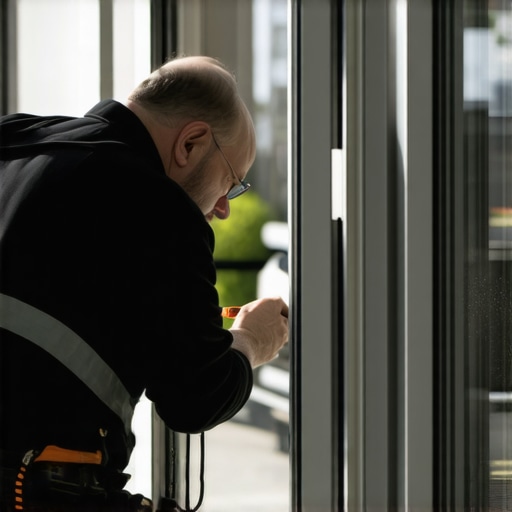
The Invisible Shield: Why Your Argon Gas Fill Matters
As a veteran glazier who has spent nearly three decades in the trenches of residential and commercial fenestration, I have seen every shortcut in the book. Most homeowners look at a window and see a piece of glass in a frame, but I see a complex thermal barrier that is constantly under assault from pressure changes, UV radiation, and temperature swings. The most misunderstood component of this barrier is the inert gas fill, specifically Argon. In 2026, as energy codes tighten and the cost of heating and cooling continues to climb, knowing whether your windows actually contain the gas you paid for is the difference between a comfortable home and a drafty money pit. You do not need a degree in thermal dynamics to verify your window performance; you just need to understand the physics of the Insulated Glass Unit (IGU).
The Condensation Crisis: A Case Study in Seal Failure
A homeowner called me in a panic last winter because their expensive, five-year-old windows were ‘sweating’ on the inside. They were convinced the manufacturer had sold them duds. I walked in with my handheld infrared thermometer and a hygrometer. I showed them that the interior humidity was sitting at a staggering 62 percent while the outside temperature was a biting 10 degrees. However, when I scanned the center of the glass, the temperature was significantly lower than the manufacturer specifications. It was not just a lifestyle issue; it was a total loss of Argon. I noticed a slight ‘cupping’ of the glass where the panes were bowing inward. This told me the seal had failed, the Argon had escaped, and the negative pressure was pulling the glass together. They did not need a window repair professional to patch a leak; they needed a full glass replacement because the thermal performance had collapsed. This is why understanding the Dew Point and the role of inert gas is vital for any property owner.
“The presence of inert gas such as argon or krypton significantly reduces the U-factor of a window, provided the seal integrity is maintained over the product’s lifespan.” – NFRC Technical Bulletin
The Glass Class: Decoding the NFRC Label
When you prepare to replace windows, you are bombarded with numbers. The U-Factor is the most critical for those of us in northern climates. It measures the rate of heat transfer. The lower the number, the better the window insulates. Argon gas is the secret weapon here. Argon is an inert, colorless gas that is much denser than the standard air we breathe. By filling the space between the panes with Argon, we slow down the convection currents. In a standard air-filled IGU, the air near the cold exterior pane cools down and sinks, while the air near the warm interior pane rises. This creates a circular ‘convection loop’ that carries heat right out of your house. Argon, being heavy and sluggish, inhibits this loop. For a window to reach peak efficiency in 2026, we typically look for a Low-E coating on Surface #3 for cold climates, which reflects the long-wave infrared heat back into the room.
The $5 Infrared Detection Test
You do not need an expensive laboratory test to check for gas leaks. In 2026, a basic handheld infrared (IR) thermometer, which you can pick up for about $5 to $10 at most hardware liquidators, is your best diagnostic tool. Here is the process. On a cold day, measure the temperature of the wall next to the window, then measure the temperature of the glass at the very center and the glass near the glazing bead at the edge. In a healthy Argon-filled window, the center-of-glass temperature should be remarkably close to the room temperature. If the center-of-glass temperature is more than 10 degrees colder than the interior air, your Argon has likely dissipated, replaced by atmospheric air and moisture. Another quick trick is the ‘reflection test’ using a simple penlight. Hold the light up to the glass at an angle. You will see four reflections (two for each pane). If the window has a Low-E coating and Argon fill, one of those reflections will have a distinctively different color, usually a pinkish or greenish hue, indicating the coating is present and the IGU is likely intact. If you see two identical pairs of reflections, you are looking at a clear-glass unit with zero thermal advantage.
“Installation is just as critical as the window performance itself. A high-performance window installed poorly will fail.” – AAMA Installation Masters Guide
Anatomy of a Failed Seal
Why does the gas leave in the first place? It comes down to the Sash construction and the spacer system. Many cheap windows use a single-seal system where a butyl rubber spacer is simply pressed against the glass. Over time, the constant expansion and contraction of the frame—especially in operable windows—stresses that bond. High-end windows use a dual-seal system: a primary seal of polyisobutylene (PIB) to keep the Argon in, and a secondary seal of silicone or structural foam to provide strength. If the installer didn’t check the Rough Opening for squareness and forced the window in with too much pressure, the frame can twist, putting torque on the IGU and breaking that seal. This is why a professional installation, using proper Shim techniques and Flashing Tape, is just as important as the glass itself. Even a window cleaner can tell you that if they see fogging between the panes that they cannot wipe away, the unit is biologically dead. The desiccant inside the spacer has reached its saturation point, and the window is now just a thermal hole in your wall.
Managing the Rough Opening and Water
When we perform a full-frame replacement, we aren’t just looking at the glass. We have to manage the Sill Pan and the Weep Hole system. A window is essentially a controlled leak in your building envelope. Every window will eventually have water hit its tracks. A properly installed window allows that water to exit through the weep holes without hitting the Rough Opening. If your installer ‘caulks and walks’ without ensuring the sill is sloped and the flashing is integrated with the house wrap, you will face structural rot that no amount of Argon gas can fix. Always ask your contractor about their water management strategy before they pull the first trim piece off your house.
Conclusion: Buy the Tech, Not the Hype
Before you commit to a window repair or a massive replacement project in 2026, do your homework. Use the IR thermometer test to audit your current units. If only one or two units have failed, you can often just replace the IGU (the glass ‘sandwich’) rather than the whole frame, saving thousands. Look for the NFRC label, ensure you have a warm-edge spacer, and verify that your installer uses a high-quality Flashing Tape. A window should last 25 years, not five. Don’t let a fast-talking salesman sell you on gimmicks; trust the physics of Argon and the precision of a master glazier. “