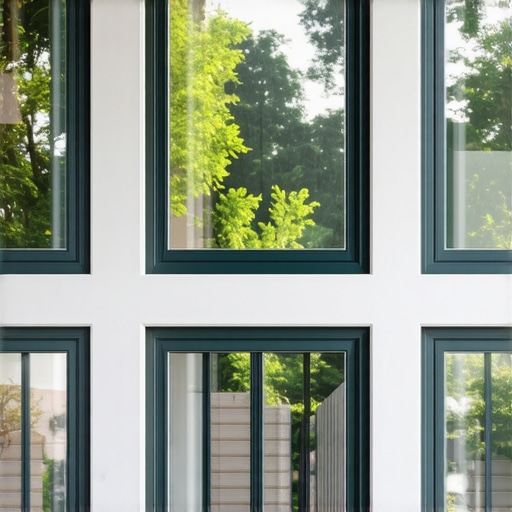
You feel it before you see it. It is that subtle movement of air across your ankles as you walk past the living room at night. It is the frost forming on the interior glazing bead when the mercury drops below zero. Most homeowners assume a draft is just a gap in the caulk, but as a master glazier, I can tell you that the draft is often a symptom of total thermal failure. When you decide to replace windows, you are not just buying glass; you are buying a managed thermal barrier. By 2026, the standards for what constitutes a high-performance window will have shifted drastically due to tighter energy codes and the evolution of thin-triple glazing technology. If you are still looking at standard double-pane units from the big-box stores, you are essentially buying a flip-phone in the age of the smartphone.
“U-factor is the rate of heat loss from a building or the rate at which heat flows through a specific material. Lower numbers indicate better insulation and higher energy efficiency.” – NFRC Energy Performance Labeling Guide
A few years ago, I was called to a residence where the owner was in a state of absolute panic because their brand-new windows were sweating profusely. This is a classic narrative in my trade. I walked into the home, and instead of looking at the glass, I pulled my hygrometer from my tool belt. I showed them that the interior humidity was a staggering 62 percent while it was 12 degrees Fahrenheit outside. It was not a product defect; it was a lifestyle and ventilation issue. The windows were actually performing so well that they were holding all that moisture inside the building envelope. This illustrates why understanding the physics of your windows is vital. You can hire the best window cleaner in the city, but if your glass specs do not match your climate, you will always be fighting a losing battle against physics.
1. The Precision of Surface #3 Low-E Positioning
In cold northern climates, the placement of the Low-E coating is the difference between comfort and constant shivering. Low-E, or low-emissivity, is a microscopic layer of silver or other metal oxides applied to the glass surface. For 2026, the gold standard for cold-weather performance is placing the coating on Surface #3. To understand this, you have to count the glass surfaces from the outside in: Surface #1 is the exterior face, Surface #2 is the inside of the outer pane, Surface #3 is the outside of the inner pane, and Surface #4 is the interior face you touch. When we place the coating on Surface #3, it allows solar heat to enter the home but reflects the long-wave infrared heat back into the room. This turns your windows into passive heaters. If you get this wrong and put a high-solar-gain coating in a southern climate, you will turn your home into an oven.
2. Beyond Argon: The Rise of Noble Gas Blends
The space between your panes, known as the Insulated Glass Unit or IGU, is not filled with regular air. Air contains moisture and moves in a convection loop that transfers heat. We use noble gases because they are denser and have lower thermal conductivity. While Argon has been the industry standard, the 2026 specs often move toward higher concentration levels, sometimes upwards of 95 percent, or even blends of Argon and Xenon. This density slows down the molecular vibration that transfers heat from the warm interior pane to the cold exterior pane. When you look for a window repair, often it is because this gas has leaked out through a failed seal, a condition known as a blown IGU. Replacing the entire unit is usually the only way to restore that original thermal resistance.
3. Thermal Breaks and Warm-Edge Spacers
The weakest part of any window is the edge of the glass. This is where the two panes are held apart by a spacer. In the old days, these spacers were made of aluminum, which is a fantastic conductor of cold. You would see condensation or even ice forming right at the glazing bead. Modern 2026 specs require warm-edge spacers made of stainless steel or structural foam. These materials act as a thermal break, preventing the cold from the exterior glass from jumping across to the interior pane. When we set the glass into the sash, the interaction between the spacer and the desiccant inside it determines how many years the window will remain clear before fogging occurs.
“Installation is just as critical as the window performance itself. A high-performance window installed poorly will fail to meet its energy rating and may lead to structural damage.” – ASTM E2112 Standard Practice for Installation of Exterior Windows
4. The Rough Opening and Sill Pan Integrity
Even the most advanced glass package is useless if the installation is a caulk-and-walk job. Every window must be integrated into the weather-resistive barrier of the home. This starts at the rough opening. I insist on using a pre-sloped sill pan. This is a flashing component that sits at the bottom of the opening. If water ever gets past the window frame, the sill pan directs it back out through weep holes in the frame or over the siding. We use high-grade flashing tape to seal the window flanges to the house wrap, ensuring that wind cannot force air around the frame. If your installer just shoves some fiberglass insulation in the gaps and covers it with a piece of trim, they have built you a draft machine, not a window.
5. Total Unit U-Factor vs. Center of Glass
Do not let a salesman trick you with Center of Glass (COG) ratings. COG ratings only measure the performance of the glass itself, which is always higher than the window as a whole. You need to look at the total unit U-factor, which includes the frame and the spacer. For 2026, look for a total unit U-factor of 0.22 or lower for northern climates. This requires a frame with high thermal stability, such as a pultruded fiberglass or a high-quality vinyl with foam-filled chambers. These materials expand and contract at a similar rate to the glass, which protects the seals and prevents the operable parts of the sash from sticking over time. When we shim a window into place, we are looking for tolerances within 1/16th of an inch to ensure the weatherstripping compresses perfectly against the frame.
Ultimately, when you choose to replace windows, you are making a thirty-year decision. You can opt for the cheap fix today and spend the next three decades paying for it in high utility bills and uncomfortable drafty nights, or you can spec the glass for the physics of your specific climate. Water management is a science, and thermal comfort is an engineering feat. Don’t settle for the minimum code; look for the 2026 specs that utilize the full power of Low-E technology and precision installation to protect your building envelope.