The White Ghost on Your Sills: Understanding Vinyl Chalking
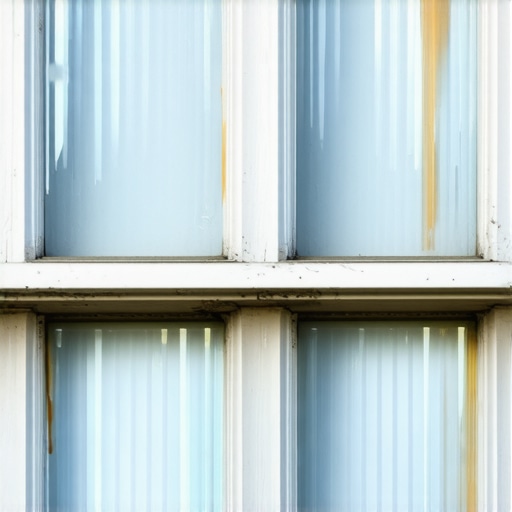
You walk out to your patio, run your hand along the window frame, and your palm comes away covered in a fine, white, powdery residue. In the trade, we call this ‘chalking,’ and it is the first sign that your vinyl fenestration is beginning its inevitable march toward structural failure. As a master glazier with a quarter-century in the field, I have seen homeowners mistake this for simple dust or a job for a window cleaner. It is not. It is the visible manifestation of photo-oxidation—the chemical breakdown of the polyvinyl chloride (PVC) matrix under the relentless bombardment of ultraviolet radiation. If you are planning to replace windows in 2026, understanding this process now is the difference between a calculated upgrade and an emergency window repair that bleeds your bank account dry.
“Installation is just as critical as the window performance itself. A high-performance window installed poorly will fail.” – AAMA Installation Masters Guide
I recall a specific job in the high-desert sun of the Southwest. I pulled a vinyl window out of a house where the homeowner complained the frames felt ‘brittle.’ As I pried at the nailing fin, the entire exterior flange snapped like a dry cracker. The previous installer had relied on the nailing fin instead of proper flashing tape and a dedicated sill pan, and the UV-degraded vinyl had lost all its impact resistance. The header was saturated because the brittle vinyl had cracked at the welded corners, allowing moisture to bypass the glazing bead and infiltrate the rough opening. This is why we don’t just ‘caulk and walk.’ We manage the interface between the wall and the glass.
The Science of the Chalk: Why Vinyl Fails
To understand chalking, we have to look at the extrusion process. High-quality vinyl windows use titanium dioxide (TiO2) as a stabilizer and a pigment. This chemical acts as a sunscreen for the PVC, absorbing UV rays and protecting the polymer chains from breaking. However, in regions with high solar intensity, the TiO2 eventually migrates to the surface as the top layer of plastic erodes. This is the ‘chalk’ you see. When the stabilizer is gone, the underlying PVC is vulnerable. It becomes hydrophobic, loses its flexibility, and begins to ‘yellow’ or ‘gray’ depending on the specific additives used in the factory. When you see this, you aren’t just looking at an aesthetic issue; you are looking at a frame that can no longer handle the thermal expansion and contraction cycles of the seasons.
Climate Logic: The Southern Strategy
In a southern or sun-drenched climate, the enemy is not the cold—it is the Solar Heat Gain Coefficient (SHGC). If your windows are chalking, they are likely also failing to protect your interior from radiant heat. When we replace windows in these zones, we focus on the glass Surface #2. In a standard double-pane insulated glass unit (IGU), the surfaces are numbered from the outside in. By placing a Low-E (low-emissivity) coating on Surface #2, we reflect the long-wave infrared radiation back toward the sun before it even crosses the thermal break. This reduces the load on your HVAC system and prevents the ‘greenhouse effect’ that makes south-facing rooms unbearable in July. We also look for thermally broken frames or fiberglass alternatives, which have a thermal expansion coefficient much closer to the glass itself, reducing the stress on the spacers and seals.
“A window’s SHGC rating is the most significant factor in cooling-dominant climates, determining how much solar radiation enters the living space.” – NFRC Performance Manual
Beyond the Glass: The Anatomy of a Proper Installation
If you determine that window repair is no longer an option and a full replacement is necessary for 2026, you must demand a ‘full-frame’ replacement rather than a ‘pocket’ or ‘insert’ installation. A pocket install leaves the old wooden or metal frame in the wall and slides a new, smaller window inside it. This is a recipe for disaster in a chalking scenario. You lose glass area, and you fail to address any underlying rot in the rough opening. A true master glazier will strip the opening down to the studs. We install a pre-sloped sill pan to ensure any water that bypasses the primary seals is directed back to the exterior via the weep hole system. We use high-grade flashing tape integrated with the weather-resistive barrier (WRB) in a shingle-lap fashion. Every shim must be composite—never wood, which can rot—placed precisely under the load-bearing points of the sash to ensure the frame remains square and the operable parts move with zero friction.
The Math of Replacement: ROI and Reality
The window industry is full of high-pressure sales tactics promising that new windows will pay for themselves in three years via energy savings. This is a fantasy. The real ROI of a high-quality window replacement is found in three areas: increased property value, acoustic dampening, and interior comfort. When you eliminate a drafty, chalking window, you eliminate the convective loops that make you feel cold even when the thermostat says 72 degrees. You stop the UV degradation of your carpets and furniture. You aren’t just buying glass; you are buying a managed environment. For the 2026 market, look for windows that meet the latest Energy Star Version 7.0 requirements, which demand even lower U-factors and tighter air infiltration ratings. Don’t be swayed by triple-pane glass if you live in a mild climate; the extra weight can actually cause premature hardware failure in vinyl frames that aren’t reinforced with steel or aluminum. Focus on the spacer tech—stainless steel or structural foam spacers are far superior to the old aluminum ‘box’ spacers that act as a thermal bridge, causing condensation at the edge of the glass.
How to Test Your Frames Today
If you aren’t sure if your windows are ready for the scrap heap, perform the ‘Pick Test.’ Take a small flat-head screwdriver and gently press it into the vinyl frame on the south side of your house. If the material feels ‘waxy’ and resists the point, the plasticizers are still active. If it ‘crunches’ or flakes off in shards, the PVC has become brittle. Check the muntins and the glazing bead—the strip that holds the glass in the frame. If these are loose or cracked, your seal integrity is gone. While a window cleaner can remove the surface chalking temporarily, they cannot restore the lost chemical stabilizers. At that point, you aren’t looking for a cleaner; you’re looking for an estimator. Planning now for 2026 allows you to choose the right materials and the right installer before the rush, ensuring that your next set of windows lasts for thirty years, not ten.