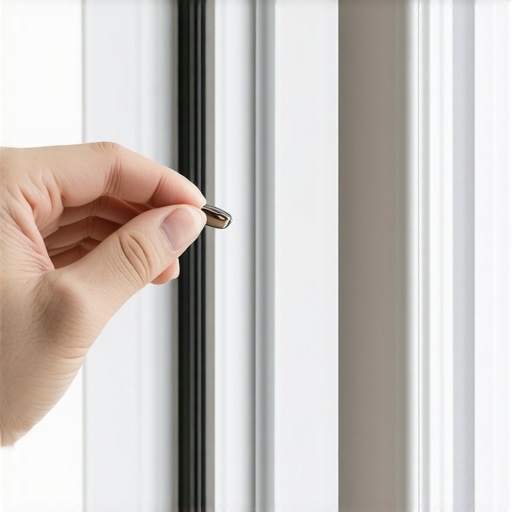
The window replacement industry is currently flooded with marketing jargon that promises the moon but often delivers little more than a lighter wallet. Before you commit to a twenty thousand dollar contract for your home, I want you to spend exactly four dollars on a high-strength neodymium magnet. This simple tool can reveal more about your existing fenestration performance than a slick brochure ever will. As someone who has spent over two decades navigating the physics of the building envelope, I have seen homeowners replace perfectly functional units simply because they did not understand what was happening inside their Insulating Glass Units or IGUs.
“Installation is just as critical as the window performance itself. A high-performance window installed poorly will fail.” AAMA Installation Masters Guide
A homeowner recently called me in a panic because their relatively new windows were sweating profusely every morning in late October. They were convinced the seals had failed and were looking for a window cleaner or a full replacement. I walked into the house with my hygrometer and a magnet. Within five minutes, I showed them that the interior humidity was hovering at sixty percent while the outside temperature had plummeted. The magnet stuck firmly to the spacer between the panes of glass. It was not a seal failure. It was an antiquated tin-plated steel Intercept spacer acting as a thermal bridge, pulling the cold from the exterior directly to the edge of the glass. The condensation was a lifestyle and ventilation issue, not a hardware failure. If they had replaced those windows without addressing the humidity, the new ones would have sweated just as much.
The Science of the Magnet Test
Why does a magnet matter for your 2026 home upgrade strategy? It helps you identify the thermal heart of your window: the spacer system. If a magnet sticks to the spacer between your glass panes, you have a cold-edge spacer, likely made of galvanized steel or tin-plated steel. In a cold climate like Chicago or Minneapolis, these spacers are the primary cause of perimeter condensation and localized drafts. In 2026, energy codes are tightening. If you are planning to replace windows, you must look for warm-edge spacers made of stainless steel or structural foam. These materials break the thermal bridge, keeping the glass edge temperature above the dew point. If your magnet does not stick, you might already have a high-performance spacer, and your issues might be solved with a simple window repair rather than a total tear-out.
The magnet can also help identify the frame material. Many homeowners are told they have premium fiberglass frames when they actually have vinyl-clad aluminum. A magnet will not stick to aluminum or vinyl, but it helps you investigate the structure. If you are looking for long-term stability, fiberglass is king because its expansion and contraction rate is almost identical to the glass it holds. This prevents the glazing bead from backing out and maintains the integrity of the seal over decades of seasonal cycles. Vinyl, while affordable, has a much higher coefficient of thermal expansion, which often leads to the sash warping in extreme heat or becoming brittle in the deep freeze.
Understanding the Glass Class: U-Factor and Low-E
When you look at a window, you are looking at a hole in your thermal barrier. To manage this, we use Low-Emissivity (Low-E) coatings. These are microscopically thin metallic layers deposited on the glass surface. In a northern climate, we typically want the Low-E coating on Surface Number Three. This is the interior-facing surface of the outboard lite. This placement allows the sun’s short-wave infrared radiation to enter the home and warm your objects, while the coating reflects the long-wave infrared radiation (your furnace heat) back into the room. This is the key to a low U-Factor. The U-Factor measures the rate of heat loss. The lower the number, the better the window is at keeping the heat in. If you are in a cold region, do not settle for anything higher than a 0.27 U-Factor.
“The NFRC rating is the only reliable way to compare the energy performance of different window products regardless of manufacturer claims.” NFRC Homeowner Guide
We also need to discuss the Solar Heat Gain Coefficient or SHGC. In the South, this is your most important metric. You want a low SHGC to block the sun’s radiant heat before it enters your living space. This is achieved by placing the Low-E coating on Surface Number Two. It reflects the solar energy back outside before it can pass through the Argon or Krypton gas fill. Many installers ignore this orientation, but as a master glazier, I can tell you that a window installed with the wrong coating orientation for its climate is a wasted investment.
The Installation Autopsy: Why Most Replacements Fail
I have performed hundreds of post-installation inspections where the homeowner complained of drafts. In nearly every case, the window itself was fine, but the installation was a disaster. Most “caulk-and-walk” crews rely on the nailing fin to keep water out. That is a recipe for rot. A proper installation requires a dedicated Sill Pan. This is a flashing element that sits at the bottom of the Rough Opening, sloped toward the exterior. If water ever gets past the primary seals, the sill pan catches it and directs it out through the weep hole system. Without this, water sits on your wooden framing, leading to the black rot that destroys headers and cripples the structural integrity of your wall.
Furthermore, the use of proper Shims and Flashing Tape is non-negotiable. I see installers jamming windows into a Rough Opening and using a single screw to hold it in place. You must shim the window at the anchor points to ensure the frame remains square and level. If the frame is twisted even an eighth of an inch, the weatherstripping will not compress properly, and you will have air infiltration. This is why a window cleaner might notice streaks of dust on the interior of your sash. That dust is being filtered through the air leaking around your seals. It is a sign of a poor fit, not a dirty window.
Making the Final Decision for 2026
Before you sign a contract for 2026, evaluate your current frames. If you have solid wood sashes with minimal rot, a window repair involving new weatherstripping and an IGU replacement might be more cost-effective than a full frame replacement. However, if your frames are drafty and your magnet test shows cold-edge spacers, it is time to upgrade. Focus on the numbers: U-Factor for the north, SHGC for the south. Demand to see the sill pans during the installation. Do not let them cover the rough opening with trim until you have verified the flashing tape is integrated with the house wrap in a shingle-fashion, ensuring water always flows down and out. A window is an investment in your home’s envelope. Treat it with the technical respect it deserves, and do not let a salesman talk you into features your climate doesn’t require.