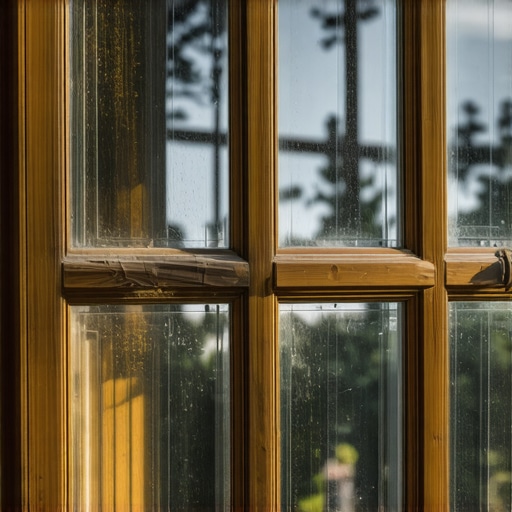
The Deceptive Nature of Window Decay
When you see a dark stain on your drywall or a soft spot on your wood trim, you are looking at the final stage of a long, silent process. I have spent over twenty-five years in the glazing industry, and I have seen the same story play out in thousands of homes. People often think a window repair is just a matter of scraping off some paint or calling a professional window cleaner to scrub away the mildew. In reality, what is happening inside your wall is a complex interaction of physics, thermodynamics, and failed moisture management. If your window frame is rotting from the inside out, it is rarely the fault of the glass. It is a failure of the system designed to keep the building envelope secure.
The Anatomy of a Failure: A Case Study in Neglect
I remember a job where I was called to a residence to assess what the owner thought was a minor leak. I pulled a casement window out of a house where the exterior looked pristine, but the header was completely black with rot once the casing was removed. Why? The previous installer had relied entirely on the nailing fin and a bead of cheap sealant instead of using proper flashing tape and a dedicated sill pan. This is what we call a ‘caulk-and-walk’ job, and it is the bane of my existence. The water had found its way behind the building wrap, sat on the wood for five years, and turned the structural framing into mush. By the time the homeowner noticed the smell of damp earth in their living room, the structural integrity of the rough opening had been compromised. This was no longer a simple fix; it was a full-scale forensic reconstruction of the wall.
“Installation is just as critical as the window performance itself. A high-performance window installed poorly will fail.” – AAMA Installation Masters Guide
The Shingle Principle and Water Management
To understand why windows rot, you must understand the Shingle Principle. In glazing and masonry, this means that every layer of the building must overlap the layer below it so that gravity naturally pulls water down and away from the interior. When an installer skips the drip cap or fails to integrate the window’s flashing with the house wrap, they are creating a shelf where water can sit. Capillary action then pulls that moisture into the end grain of your wood frames or the fiberglass substrate. Once water is trapped between the window frame and the rough opening, it has nowhere to go. There is no airflow to dry it out, and the heat of the summer turns that pocket of moisture into a literal incubator for fungal growth. This is why when you finally decide to replace windows, you often find the damage is much deeper than the sash itself.
The Role of Condensation and the Dew Point
In colder climates, the enemy isn’t just rain; it is the air inside your own home. If you are in a northern region, you are dealing with a massive temperature differential. Your interior air is warm and holds moisture, while the glass surface is cold. When that warm air hits the cold glass, it reaches its dew point, and water vapor turns into liquid. If your window has a poor U-Factor, meaning it allows too much heat to escape, that glass stays colder for longer. The resulting condensation doesn’t just sit on the glass; it runs down into the glazing bead and eventually seeps into the wood or the internal steel reinforcements of a vinyl frame. This internal moisture is what causes a window to rot from the inside out. A high-quality window will utilize warm-edge spacers, often made of structural foam or stainless steel, to keep the edges of the glass warm and prevent this condensation from ever forming.
“The purpose of a flashing system is to direct water that penetrates the exterior cladding back to the exterior.” – ASTM E2112 Standard Practice
Technical Specifications: U-Factor and SHGC
When you are looking to replace windows because of rot, you cannot just buy whatever is on the shelf at a big-box store. You have to look at the NFRC label. The U-Factor measures the rate of heat loss. In a cold climate, you want a U-Factor of 0.27 or lower. This is achieved through multi-pane units with Low-E coatings on surface number three to reflect heat back into the room. Conversely, if you are in a hot climate, your primary concern is the Solar Heat Gain Coefficient or SHGC. This measures how much solar radiation enters the home. A low SHGC means the window is blocking the sun’s radiant energy before it can heat up your interior surfaces. Using the wrong glass package for your climate is a recipe for thermal stress and eventual seal failure, which leads to the dreaded ‘foggy window’ syndrome.
The Critical Importance of the Sill Pan
One of the most overlooked components in a window installation is the sill pan. This is a three-sided, waterproof flashing component that sits at the bottom of the rough opening. Its job is to catch any water that might leak through the window unit itself and direct it back to the exterior through weep holes. Many installers skip this because it takes an extra ten minutes and costs a few extra dollars. However, without a sill pan, any water that gets past the sash or the glazing bead will dump directly onto your floor joists. When I perform an installation autopsy, the absence of a sill pan is almost always the smoking gun. Proper shimming is also vital; if the window is not perfectly level and plumb, the water will pool in the corners instead of draining out of the weep holes, leading to localized rot in the bottom corners of the sash.
Conclusion: Don’t Just Patch the Problem
If you find yourself constantly needing a window repair or if you notice that your frames are soft to the touch, do not assume a simple bead of caulk will fix it. Caulk is a secondary seal, not a primary waterproofing strategy. You need to address the physics of the installation. Ensure that your next set of windows is installed by someone who understands the importance of the rough opening tolerances, uses high-quality flashing tape, and respects the thermal dynamics of your specific climate. A window is a hole in your home’s thermal envelope; make sure it is managed with the precision it deserves.