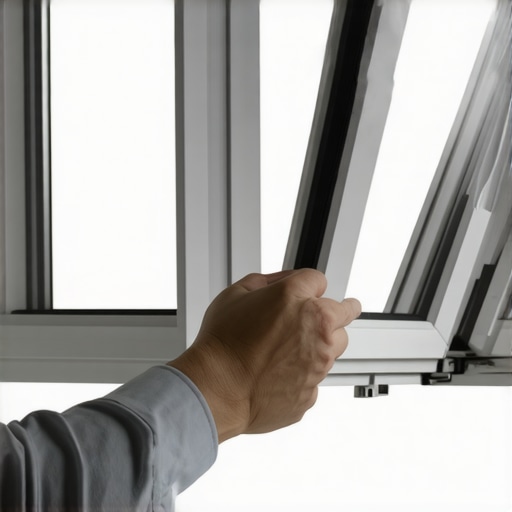
The Frustration of the Half-Mast Sash
There is a specific kind of mechanical irritation that occurs when you attempt to catch a cross-breeze on a brisk autumn evening only to have your window stop dead in its tracks exactly six inches up. As a glazier with twenty-five years in the field, I have seen homeowners attempt to solve this with everything from brute force to cooking spray. Neither ends well. A window that only opens halfway is not just an inconvenience; it is a symptom of a mechanical system under duress. Whether you are dealing with a double-hung wood window from the 1920s or a modern vinyl unit, the physics of the operable sash rely on a delicate balance of tension, friction, and alignment.
The Diagnostic Narrative: A Tale of Forced Entry
I recall a call from a homeowner in a drafty suburb who was convinced their windows were haunted. They had a series of high-end double-hung units that would consistently stop halfway, and if forced, would emit a bone-chilling crack. I arrived with my shim kit and a digital hygrometer. After a quick inspection, I realized it was not ghosts but a classic case of thermal expansion meeting a poorly sized rough opening. The previous installer had shoved the windows into a space that was too tight, leaving no room for the header to flex. When the temperature dropped and the humidity spiked to sixty-five percent inside, the vinyl frame bowed inward, pinching the sash. The homeowner had tried to force it, nearly snapping the pivot bar. It was a stark reminder that a window is a machine, and like any machine, it requires precise tolerances to function. It was not a hardware failure yet, but it was on the verge of becoming an expensive window repair job.
Understanding the Anatomy of Failure
To understand why your window is stuck, we must look at the balance system. Modern windows do not use the old lead weights and pulleys. Instead, they use constant force balances, spiral balances, or block-and-tackle systems.
“Installation is just as critical as the window performance itself. A high-performance window installed poorly will fail.” – AAMA Installation Masters Guide
When a window stops halfway, it is usually because the balance has either detached, lost tension, or is being obstructed by the glazing bead or accumulated debris. If you have a spiral balance, the internal torsion spring may have lost its charge. If it is a constant force system, the stainless steel coil may have rusted or become jammed with grit. This is where a professional window cleaner becomes your first line of defense. Often, the ‘jam’ is nothing more than a buildup of particulate matter in the jamb track that has effectively acted as a brake.
The Cold Climate Factor: U-Factor and Mechanical Binding
In northern climates where the U-Factor is the primary metric of concern, windows are designed to be airtight. This tight seal is achieved through weatherstripping and high-compression bulbs. However, in extreme cold, the sash material (especially vinyl) contracts at a different rate than the glass and the surrounding framing. If your window only opens halfway during the winter, you are likely dealing with a frame that has ‘smiled’ or ‘frowned’—bowing in the center. This increases the friction on the sash beyond what the balance system can overcome. You are fighting physics, not just a stuck window. In these cases, the solution involves checking the rough opening for squareness and ensuring the shim placement hasn’t compressed the jambs.
Step-by-Step Diagnostic for the Stuck Sash
Before you decide to replace windows entirely, follow this technical checklist. First, inspect the tracks. Use a vacuum to remove any debris from the weep hole areas and the lower tracks. Second, examine the pivot bar. This is the metal piece at the bottom of the sash that connects to the balance. If it is tilted or bent, the sash will rack and bind against the jamb. Third, check the tension. If you have spiral balances, you may need a specialized tensioning tool to add a few turns to the spring.
“The exterior envelope must be maintained as a continuous water-shedding surface. Any mechanical obstruction that prevents full closure or operation compromises the ASTM E2112 standards for weatherproofing.” – ASTM E2112 Standard Practice
Fourth, look at the glazing bead. If the bead has shifted or popped out of its channel, it can catch on the frame, halting upward progress. This is a common issue in lower-quality units where the plastic becomes brittle over time.
The Physics of the Block and Tackle
In many high-performance windows, the block and tackle balance is the workhorse. It uses a series of pulleys and a heavy-duty cord to reduce the effort needed to lift the glass. When these fail halfway, it is often because the cord has jumped the pulley or the ‘shoe’—the plastic block that slides in the track—has cracked. If you feel a ‘spongy’ resistance at the midpoint, do not push. You are likely stretching a spring that is caught. You will need to remove the operable sash by tilting it in (if it is a tilt-wash model) and inspecting the shoes for signs of wear or fracture.
When Repair Becomes Replacement
Is it worth the window repair cost? If the frame itself is warped or the sill pan has failed, causing the wood to rot and swell, a simple hardware fix won’t suffice. When I see a window that is binding due to structural rot in the rough opening, I advise the homeowner to replace windows rather than put a band-aid on a hemorrhage. A new window, properly flashed with high-quality flashing tape, will not only operate correctly but will also significantly improve the thermal envelope of the home. Remember, we are looking for a long-term solution that manages heat, light, and water, not just a temporary fix for a stuck sash.