The Anatomy of Friction in Sliding Fenestration
In my twenty-five years as a glazier, I have seen thousands of homeowners struggle with the same frustrating issue: an operable sliding door that sounds like a banshee every time it is opened. The screeching of a sliding door track is more than just an annoyance; it is the sound of mechanical failure. When you hear that metal-on-metal grind, you are listening to the destruction of your door’s roller assembly and the erosion of the track itself. Most people assume they need a full window repair or, worse, to replace windows entirely when the solution is often much simpler, though it requires technical precision. This noise is typically caused by a combination of environmental grit, improper lubrication, and thermal expansion factors that are common in southern climates where the Solar Heat Gain Coefficient (SHGC) plays a massive role in material behavior.
Before we address the fix, we must understand the environment. A homeowner called me in a panic because their new sliding doors were ‘sweating’ and making a horrific grinding noise. I walked in with my hygrometer and showed them the humidity was 60 percent. It wasn’t the windows; it was their lifestyle and the lack of proper ventilation. That excess moisture was settling in the sill pan, mixing with household dust to create a thick, abrasive paste. This sludge had migrated into the tandem roller bearings, causing them to seize. Instead of rolling, the steel wheels were sliding across the aluminum track, gouging the surface. This is a classic case where a simple maintenance routine involving a high-quality window cleaner could have prevented a costly intervention.
The Critical Role of the Sill Pan and Weep Holes
The bottom track of a sliding door is technically a complex drainage system. It is designed to manage water infiltration through the use of weep holes. If these holes are blocked by debris or the wrong type of lubricant (like heavy grease), water backs up into the sill. This stagnation leads to the corrosion of the roller housing. When we talk about window repair in the context of sliding doors, we are often talking about restoring the hydraulic integrity of the sill. If the water cannot escape, the mechanical components are doomed.
“Installation is just as critical as the window performance itself. A high-performance window installed poorly will fail.” – AAMA Installation Masters Guide
In high-heat environments like the South, the SHGC is king. You want to block the sun’s heat from entering the home, which is why we often see Low-E coatings on Surface #2. However, that heat has to go somewhere. The frames of these doors, especially if they are dark-colored aluminum, can reach temperatures that cause significant thermal expansion. This expansion can pinch the sash within the rough opening if the shims were not placed with enough tolerance. A door that was silent in the morning might squeak in the afternoon as the material grows. This is why proper installation, adhering to ASTM standards, is non-negotiable.
“The flashing system must be integrated with the water-resistive barrier to ensure that any water entering the rough opening is directed back to the exterior.” – ASTM E2112 Standard Practice
The Simple Trick: The Professional Cleaning Ritual
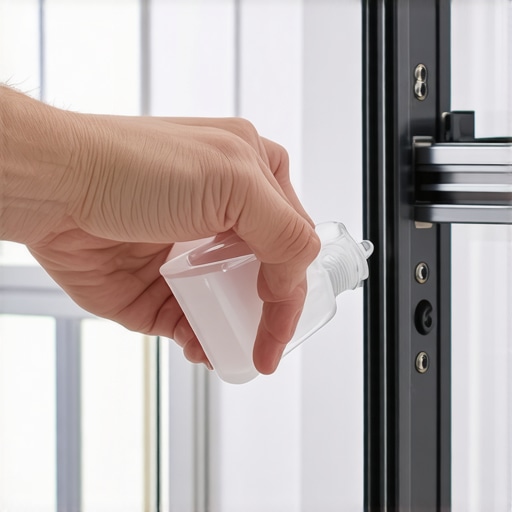
The ‘simple trick’ to silencing a squeaky track is not found in a can of WD-40. In fact, using oil-based lubricants is the fastest way to ruin a door because oil attracts dirt, creating a grinding compound. The real trick involves a two-stage process of deep decontamination and dry lubrication. First, you must use a professional-grade, non-ammoniated window cleaner to dissolve the existing sludge. This isn’t just about the glass; you must saturate the track and use a stiff nylon brush to agitate the grime within the track’s valleys. Once the track is scrubbed, use a shop vacuum to extract the liquid. This ensures that the grit is actually removed rather than just moved around.
Second, after the track is completely dry, you apply a dry PTFE (Teflon) or silicone-based spray. These lubricants leave a clear, non-stick film that does not attract dust. This reduces the coefficient of friction without the side effect of building up more gunk. If the squeak persists after this, the problem is likely internal to the roller assembly. In such cases, you may need to adjust the height of the rollers using the adjustment screws located at the bottom of the sash. By slightly lifting the door, you can often move the rollers to a fresh, unpitted section of the track, silencing the noise instantly. This is a common tactic in professional window repair that can extend the life of your door by years before you need to replace windows.
When to Repair vs. When to Replace
Not every squeak can be silenced with a cleaning ritual. If you examine the track and see deep silver gouges where the finish has been scraped away, the rollers have likely flat-spotted. A flat-spotted roller will never be silent. At this point, you are looking at a mechanical replacement. You must remove the operable sash, flip it over, and replace the tandem rollers entirely. This is also the time to inspect the glazing bead and the muntins for any signs of stress. If the frame itself is warped from years of heat exposure or poor installation without a proper sill pan, it may be time to consider high-performance replacements. When you do choose to replace windows or doors, look for fiberglass frames in hot climates. Fiberglass has a similar expansion rate to glass, meaning the whole unit moves together, reducing the likelihood of the mechanical binding that causes squeaks in the first place.
The Importance of Regular Maintenance
Maintenance is the only way to avoid the ‘caulk-and-walk’ mentality of cheap installers. A clean track is a quiet track. I recommend a full track cleaning with a vacuum and window cleaner every six months, or every three months if you live in a high-dust environment or near the coast. This prevents the accumulation of salt and grit that acts like sandpaper on your hardware. Remember, the goal of a window or door is to manage heat, light, and water. If you let the mechanics fail, you are compromising the entire thermal envelope of your home. Keep the weep holes clear, keep the track dry-lubricated, and your sliding door will glide as silently as the day it was installed. Don’t buy the marketing hype of miracle oils; buy into the science of professional maintenance.