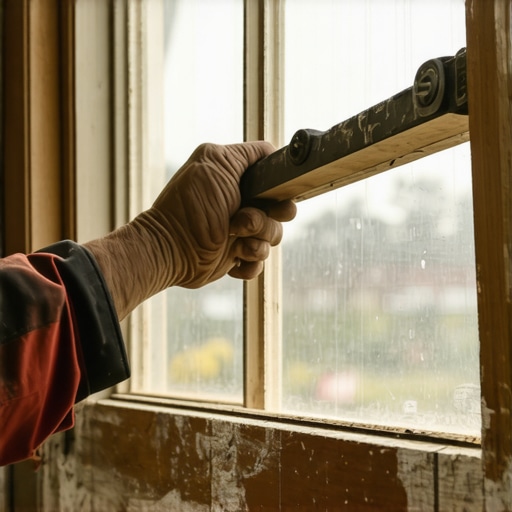
The Anatomy of a Failing Sash
In the world of professional glazing, we don’t just see a window; we see a complex thermal envelope. When you hear that distinct rattle during a winter gust, you aren’t just hearing glass move. You are hearing the failure of a mechanical system designed to separate the interior comfort of a home from the brutal reality of the exterior climate. For those in northern latitudes like Minneapolis or Chicago, a loose pane is a direct pipeline for heat loss. Many homeowners assume they need to replace windows entirely when they see a crack in the putty, but a master glazier knows that the structural integrity of a wooden sash depends on a tiny piece of metal: the glazing point.
I remember a specific case where a homeowner called me in a panic because their new windows were sweating. I walked in with my hygrometer and showed them the humidity was 60 percent. It was not the windows; it was their lifestyle choices combined with a failure to understand how the dew point interacts with the glass surface. In older wooden sashes, when the glazing points rust out or the putty becomes brittle, air bypasses the glass, hits the cold exterior, and turns into liquid water. This water then sits in the muntin profile, leading to the rapid decay of the wood. This is why window repair is a task of precision rather than a simple application of caulk.
“Installation is just as critical as the window performance itself. A high-performance window installed poorly will fail.” AAMA Installation Masters Guide
The Physics of the Seal
In cold climates, the enemy is the U-Factor. We want a low U-Factor to ensure that heat stays inside where it belongs. In a traditional single-pane wooden sash, the glass itself has a very low R-value. However, the wood frame is actually a decent insulator compared to aluminum. The problem arises at the interface. This is where the glazing point comes in. These small zinc or steel triangles are the primary mechanical fasteners that hold the glass against the sash rebate. Without them, you are relying solely on the adhesive strength of the putty, which is a recipe for disaster. When I perform a window repair, I look at the Rough Opening and the level of the shim to ensure the sash is plumb, but the magic happens at the bedding layer.
Step-by-Step Restoration: The Glazier’s Method
First, you must remove the sash from the frame. Trying to glaze an operable window while it is still hanging is a rookie mistake that leads to messy lines and poor adhesion. Once the sash is flat on the bench, use a hacking knife to carefully remove the old, petrified putty. You must be surgical here. If you gouge the muntin, you create a reservoir for future water ponding. After the glass is out, the wood must be primed. Never apply putty to raw wood. The wood will suck the linseed oil right out of the putty, leaving it brittle and prone to cracking within a year. Use a high-quality oil-based primer to seal the wood fibers first.
Next is the bedding. This is a step most DIYers skip. You must lay a thin bead of glazing compound in the rebate before you set the glass. This creates a gasket. Once the glass is pressed in, you drive your glazing points. I prefer a professional point driver that sets the points flat against the glass every 4 to 6 inches. If you are using a putty knife to push them in, you risk putting uneven pressure on the pane, which will cause a stress crack the first time the temperature drops to zero. As the ASTM E2112 standards suggest, the mechanical fastening of the glass is non-negotiable for safety and longevity.
“The glazier must ensure that the glass is fully bedded and that mechanical points are used to secure the pane before the final weather seal is applied.” ASTM E2112 Standard Practice
The Putty Application and the 45-Degree Angle
The final face-glazing is where the art meets the science. You want a smooth, consistent bead that covers the glazing points and matches the profile of the muntins on the other side. This is not just for aesthetics. The angle of the putty is designed to shed water. If the putty is too flat, water will sit on the edge. If it is too steep, it won’t provide enough coverage for the glazing bead. Once applied, you must wait for a skin to form before painting. In northern climates, this is a race against the season. You cannot paint wet putty, and you cannot leave unpainted putty exposed to the elements for more than a few weeks. The paint must slightly overlap the glass, about a sixteenth of an inch, to create a final weather seal that prevents water from getting behind the putty.
Why Maintenance Beats Replacement
A window cleaner will tell you that they can always spot a well-maintained sash. The glass stays clear, and the wood stays firm. Many sales reps will try to convince you that your old windows are energy drains and that you need to replace windows with expensive vinyl units. While modern triple-pane units have their place, a restored wooden sash with a high-quality storm window can often match the thermal performance of a mid-grade replacement at a fraction of the cost. The key is the maintenance of the glazing points and the putty. By keeping the air from infiltrating the sash, you eliminate the drafts that make a room feel cold even when the thermostat is set to 70 degrees. This is about thermal comfort, not just a line item on a utility bill.
Tools of the Trade
To do this correctly, you need the right kit. This includes a flexible putty knife, a stiff hacking knife, a point driver, and high-quality linseed oil-based glazing compound. Avoid the latex-based “glazing” found in squeeze tubes at big-box stores. It dries too fast and lacks the elasticity required to handle the expansion and contraction of a wooden sash. Wood is a living material; it moves. Your glazing system needs to move with it. If you use a rigid, non-oily product, it will pull away from the wood, leaving a gap for moisture to enter and rot the sill pan and the lower rail of the sash.
Conclusion: The Glazier’s Legacy
Restoring a window is an act of preservation. When you replace those rusted points and lay a fresh bed of putty, you are extending the life of that structure by decades. You are preventing the weep hole from clogging and ensuring that the Rough Opening stays dry. It is a technical, demanding process that rewards patience and precision. Don’t fall for the “caulk-and-walk” shortcuts. Do it right, bed the glass, drive the points, and seal the weather out.