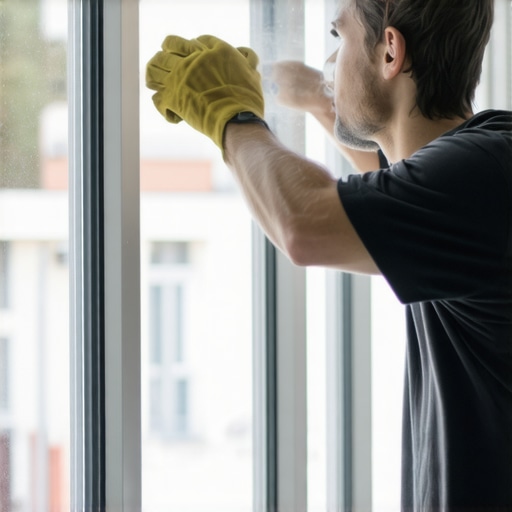
The Hidden Dangers of Post-Construction Glass Care
I pulled a vinyl window out of a house in Milwaukee and the header was completely black with rot. Why? The previous installer relied on the nailing fin instead of proper flashing tape, but the real kicker was the state of the glass and the drainage system. The weep holes were completely plugged with hardened mortar from the bricklayers, which turned the entire frame into a bathtub during the first autumn rain. This is the reality of construction sites: they are hostile environments for high-performance glazing. When you replace windows, you aren’t just buying a product; you are installing a complex thermal barrier that must be protected from the very environment it is meant to inhabit. Construction debris like Portland cement, drywall mud, and silicone overspray are not just unsightly. They are chemically aggressive and mechanically abrasive threats to your U-Factor and your long-term window repair budget.
“Installation is just as critical as the window performance itself. A high-performance window installed poorly will fail, and improper cleaning of construction debris can lead to permanent damage that voids warranties.” – AAMA Installation Masters Guide
The Physics of Glass and Alkaline Etching
To understand why you cannot just grab a standard window cleaner and a squeegee after a renovation, you must understand the chemistry of the debris. Concrete and mortar are highly alkaline. They contain calcium hydroxide which has a high pH. When these materials land on a glass pane, they begin a process of chemical etching. If they are hydrated by rain and then allowed to dry, they can literally eat into the silica structure of the glass. This is not a surface stain; it is a permanent change to the glass topography. In colder northern climates, where we rely on a Low-E coating on Surface #3 to reflect long-wave infrared radiation back into the home, any compromise to the glass surface can lead to thermal stress cracks. If the glass surface is weakened by etching or deep scratches from silica-heavy drywall dust, the structural integrity of the pane is at risk when the temperature drops to sub-zero levels and the Argon gas fill begins to contract.
The Installation Autopsy: Why Debris Matters
In my 25 years as a glazier, I have seen more windows ruined by the cleanup crew than by the installers. We call it the Installation Autopsy when we have to tear out a brand new sash because a laborer used a metal scraper on tempered glass. Tempered glass often has microscopic imperfections known as ‘fabrication debris’—tiny nodules of glass that fused to the surface during the tempering process. When a scraper hits these, it drags them across the pane, creating a ‘glass cancer’ of scratches that are only visible when the sun hits the window at a low angle in January. This is why a professional window repair specialist will always test a small area first. We look at the Rough Opening to ensure the Shim placement hasn’t bowed the frame, which can make the Sash sit unevenly and trap more debris in the Glazing Bead.
“The interface between the window and the wall is the most vulnerable point for water intrusion, often exacerbated by debris-clogged drainage paths.” – ASTM E2112 Standard Practice
Step-by-Step Restoration Protocol
First, you must flood the window with water. Do not touch the glass yet. You need to hydrate the debris to break the ionic bond it has formed with the glass. This is especially true for stucco or mortar. Once the debris is saturated, use a soft plastic tool to gently nudge the larger chunks. Never use a dry cloth; you will essentially be using the construction dust as sandpaper. Focus on the Weep Hole areas first. If these are blocked, the water you are using to clean will back up into the Sill Pan and potentially soak into your Flashing Tape or Rough Opening. In northern regions, trapped water in the frame will freeze, expand, and can actually crack the vinyl or wood frame over a single winter cycle.
Managing the Thermal Envelope
When we talk about the U-Factor, we are talking about the rate of heat loss. A clean, pristine window is essential for the Solar Heat Gain coefficients to work as designed. If your new windows are covered in a film of fine masonry dust, you are effectively changing the emissivity of the glass. This might seem minor, but across a whole house of Operable windows, it adds up. Furthermore, the Muntin bars and Glazing Bead must be cleared of all dust to ensure the factory seals remain intact. If dust is allowed to sit in the Sash tracks, it acts as an abrasive every time you open the window, eventually wearing down the weatherstripping and leading to the very drafts you paid thousands of dollars to eliminate. Don’t let a ‘caulk-and-walk’ mentality ruin your investment. Proper debris removal is the final, critical step of a professional installation.
The Myth of the Quick Fix
Many homeowners think a high-pressure power washer is the answer to construction grime. This is a catastrophic mistake. The pressure can blow past the Glazing Bead and saturate the internal spacers, leading to premature seal failure and fogging between the panes. The only way to clean new glass is through patience, massive amounts of water, and pH-neutral lubricants. You are protecting the microscopic Low-E layers and the integrity of the Argon or Krypton gas fill. Remember, a window is not just a piece of glass; it is a precision-engineered component of your home’s thermal skin. Treat it with the technical respect it deserves, or you will be calling for a window repair professional far sooner than you anticipated.