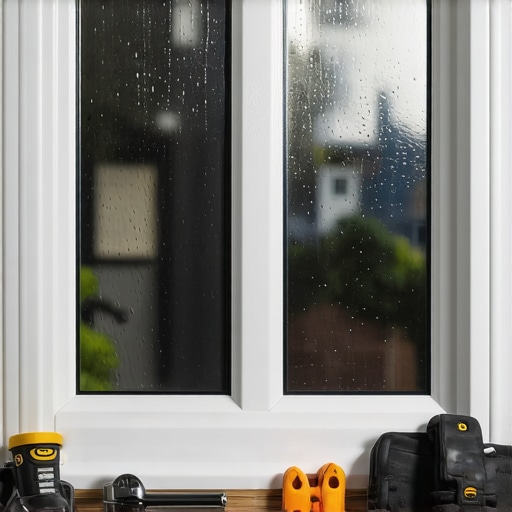
The Autopsy of a Window: Why Moisture and Air Are Winning
You notice it on a Tuesday morning in late October. There is a faint, stubborn fog between the panes of your bedroom window. You try to wipe it away, but your hand hits the interior glass surface and the moisture remains teasingly out of reach. As a glazier with over two decades in the field, I can tell you that this is not just a cosmetic nuisance. This is a terminal diagnosis for your Insulated Glass Unit (IGU). When the hermetic seal fails, the window ceases to be a thermal barrier and becomes a failing component in your home’s envelope. Water on the sill or black spots appearing on the drywall corners are the final stages of a systemic failure that often starts years before with a poor installation or a misunderstood maintenance routine.
“Installation is just as critical as the window performance itself. A high-performance window installed poorly will fail.” – AAMA Installation Masters Guide
The Condensation Crisis: A Narrative Reality Check
A homeowner called me in a panic because their new windows were ‘sweating’ across the entire lower rail. They were convinced the seal had blown on thirty different units simultaneously. I walked in with my hygrometer and showed them the humidity was 60 percent. It was not the windows; it was their lifestyle. They had a humidification system running in a tightly sealed house during a cold snap. In the North, where the U-Factor is the metric of survival, the glass temperature will always be lower than the room temperature. When warm, moist air hits that cold surface, physics takes over. However, when that moisture is inside the unit, the desiccant has reached its saturation point. I had to explain that while window repair can address hardware, a saturated IGU is a one-way trip to the glass shop for a full replacement.
The Science of Solar Pumping and Seal Failure
To understand why double glazing fails, we must look at the physics of the IGU. An IGU consists of two lites of glass separated by a spacer bar and sealed with a primary seal of polyisobutylene (PIB) and a secondary seal of silicone or polysulfide. The failure usually begins with a phenomenon called solar pumping. Every day, the sun hits the glass, heating the air or gas (Argon or Krypton) inside the cavity. This gas expands, causing the glass to bow outward. At night, the unit cools and the glass contracts. This constant movement puts immense mechanical stress on the sealant. Over time, microscopic fissures develop. Once the seal is breached, the desiccant beads hidden inside the spacer bar begin to absorb moisture from the outside air. Once those beads are fully saturated, the next drop of moisture becomes visible fog. This is why a cheap spacer bar is a recipe for disaster. Warm-edge spacers made of structural foam or composite materials flex with this movement, whereas old-fashioned aluminum spacers are rigid and brittle, leading to premature seal rupture.
Thermal Logic: Why Your Climate Dictates Failure
In cold climates like Chicago or Minneapolis, the enemy is heat loss. We focus heavily on the U-Factor, which measures the rate of heat transfer. A lower U-Factor means better insulation. In these regions, we utilize Low-E coatings on Surface #3 (the exterior-facing side of the interior lite). This reflects long-wave infrared radiation (room heat) back into the house while allowing short-wave solar radiation to enter and provide passive heating. When these units fail, the loss of Argon gas significantly spikes your heating bills. If the installer did not use proper flashing tape or failed to set the window into a proper sill pan, the rough opening becomes a reservoir for snowmelt. This water sits against the bottom rail, saturating the wood or corroding the metal, eventually compromising the glazing bead that holds the glass in place.
The Anatomy of a Proper Installation
Most window failures are not the fault of the manufacturer but the installer. A “caulk-and-walk” specialist ignores the shingle principle, which dictates that every layer of the building envelope must overlap the one below it. When I perform a window repair or a full tear-out to replace windows, I look at the rough opening first. It must be level, square, and plumb. We use high-density plastic shims to support the frame, ensuring they are placed directly under the vertical members of the sash to prevent frame sag. A critical component often missed is the weep hole. Many homeowners, thinking they are being helpful, caulk these holes shut. Weep holes are designed to allow water that enters the glazing pocket to escape to the exterior. If you block them, the water stays in contact with the IGU seal, leading to rapid chemical breakdown and failure.
“Thermal performance and moisture resistance are inextricably linked; you cannot have one without the other in a sustainable building envelope.” – NFRC Performance Standards
How to Extend the Lifespan of Your Windows
Longevity is a matter of chemistry and mechanics. First, be a discerning window cleaner. Avoid using high-pressure hoses or harsh ammonia-based cleaners on the exterior. High pressure can force water past the glazing bead and into the IGU pocket, while ammonia can degrade the secondary seal of the glass unit over time. Use a pH-neutral soap and a soft squeegee. Second, inspect your caulking annually. If the sealant between the window frame and the siding is cracked, it allows water to bypass the flashing and reach the raw wood of the rough opening. Third, manage your interior humidity. Keeping your home between 30 and 40 percent humidity during winter reduces the stress on the glass surface and prevents the mold growth that destroys sash components. Finally, ensure your muntin bars are secure and not trapping water against the glass. By maintaining the perimeter and the drainage path, you can push a twenty-year window to a thirty-year lifespan.