The Invisible Destruction of Smoke Residue on Professional Glazing
In my twenty-five years of handling everything from historic wood sash restorations to modern curtain wall installations, I have seen homeowners make the same mistake after a fire: they treat smoke residue like common household dust. It is not. Smoke is a chemically complex slurry of carbon, ash, and volatilized resins that can permanently etch the amorphous structure of your glass if not handled with technical precision. When a fire occurs, the heat expands the glass, opening up microscopic pores in the surface. As the glass cools, it traps these acidic particles inside those pores. This is why a simple window cleaner spray and a paper towel often fail, merely smearing the soot and pushing it deeper into the glazing bead.
The Narrative Reality: A Lesson in Humidity and Residue
A homeowner called me in a panic because their new windows were ‘sweating’ and turning a muddy gray after a small kitchen fire. I walked in with my hygrometer and showed them the humidity was 60%. It wasn’t the windows; it was their lifestyle combined with the way the smoke had bonded to the condensation on the glass. The moisture had acted as a carrier, pulling the carbon deep into the perimeter of the frame near the shims. This ‘sweating’ was actually a chemical reaction between the acidic soot and the indoor humidity, creating a mild sulfuric acid that was beginning to eat into the Low-E coating. We weren’t just looking at a cleaning job; we were looking at a race against time before the glass needed a full window repair or total replacement.
“Installation is just as critical as the window performance itself. A high-performance window installed poorly will fail.” – AAMA Installation Masters Guide
The same logic applies to restoration. If you do not understand the shingle principle of water and particulate management, you will wash the soot into the rough opening, causing rot and mold that won’t show up for years. You have to clean from the top down, ensuring that the weep holes in the bottom of the frame remain clear so that cleaning agents and neutralized soot can exit the system rather than pooling against the sill pan.
The Chemistry of Smoke and Glass Performance
Glass is often misunderstood as a solid, impenetrable block. In the glazing world, we know it is more like a very dense sponge. When we talk about how to clean glass after a fire to remove smoke residue, we are talking about ion exchange and surface tension. Smoke from synthetic materials like plastics or electronics produces oily, high-pH soot. Wood smoke produces more particulate-heavy, acidic residue. To clear this, a standard window cleaner is insufficient because it cannot break the molecular bond between the oil and the glass surface. For professional-grade results, we look toward trisodium phosphate (TSP) or specialized degreasers that can reach into the valleys of the glass texture. If you have high-performance windows in a northern climate like Chicago or Minneapolis, your U-Factor is your primary concern. A layer of soot acts as an unintended heat sink, absorbing radiant heat and potentially causing thermal stress cracks in the glass if the sun hits the darkened pane too intensely in the morning.
The Northern Climate Context: U-Factor and Condensation
In cold climates, the U-Factor (the rate of heat loss) is king. We typically install triple-pane units with an argon or krypton gas fill and a Low-E coating on Surface #3 to reflect heat back into the room. When smoke covers that glass, it disrupts the thermal emissivity. Furthermore, in the winter, the cold exterior pane meets the warm, smoke-laden interior air, causing instant condensation. This creates an acidic sludge that sits on the glazing bead. If this sludge is not neutralized, it can degrade the secondary seal of the Insulated Glass Unit (IGU). Once that seal fails, your argon gas escapes, and you are left with permanent fogging. This is why a window repair often turns into a necessity to replace windows after a fire, even if the glass looks intact. The thermal shock can warp the sash or compromise the flashing tape around the rough opening.
“The chemical composition of smoke varies depending on the fuel source, but the resulting soot often contains acidic components that can permanently etch glass surfaces if not neutralized quickly.” – ASTM E2112 Installation Standards Context
The Master Glazier’s Step-by-Step Restoration Process
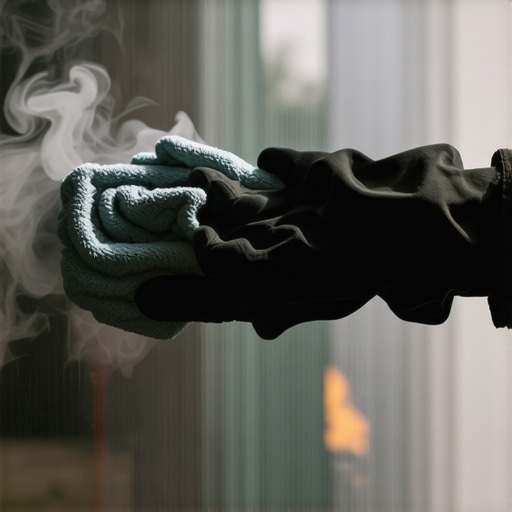
First, we inspect the operable parts of the window. If the fire was hot enough, the vinyl frames may have warped, or the wood may have charred behind the muntins. We begin by dry-vacuuming the soot with a HEPA-filter vacuum. Never wet the smoke first; that creates a permanent stain. Once the loose particulate is gone, we address the glazing bead. This is the strip of plastic or wood that holds the glass in the sash. Smoke loves to hide here. We use a soft-bristled brush to agitate the soot out of the crevices. Next, we use a mixture of warm water and a heavy-duty degreaser. We apply this with a microfiber cloth, moving in one direction. We do not use circular motions, as that can grind the ash into the glass, acting like sandpaper. For the frame, especially if it is vinyl or fiberglass, we must check for ‘yellowing’ caused by heat. If the structural integrity of the frame is compromised at the corner welds, cleaning is futile, and you must replace windows to maintain the building envelope’s safety.
Why Your Window Cleaner Isn’t Enough
Most retail window cleaner products are designed for finger grease and dust. They are mostly water and a bit of alcohol or ammonia. In a post-fire scenario, ammonia can react poorly with certain soot types and can actually damage some Low-E coatings if they are the ‘hard coat’ variety. A professional glazier will often use a sacrificial layer of cleaning solution that ‘lifts’ the soot. We also pay close attention to the weep holes. If you spray a high-pressure hose at the window to clean the smoke, you will force water and soot past the gaskets and into the wall cavity. This is where the ‘caulk-and-walk’ installers fail. They don’t realize that windows are designed to manage water that gets past the first layer of defense. If the sill pan is clogged with soot, the water has nowhere to go but into your drywall.
Final Technical Verdict: When to Repair vs. Replace
If you see a rainbow-like sheen on the glass after cleaning, that is not a ‘clean’ window; that is etching. The acid has fundamentally changed the glass surface. At this point, the glass is structurally weaker and more prone to shattering. If your window repair specialist finds that the weatherstripping has melted or the shims have shifted due to the heat, the window is no longer performing to its NFRC rating. You are essentially living with a hole in your wall. In these cases, we recommend a full-frame replacement rather than a pocket replacement. A pocket replacement leaves the old, potentially smoke-damaged rough opening and flashing in place. A full-frame tear-out allows us to inspect the flashing tape and ensure the shingle principle is intact, protecting your home from future water intrusion. Don’t buy the marketing hype of ‘magic’ cleaners; buy into the physics of proper glazing and moisture management.