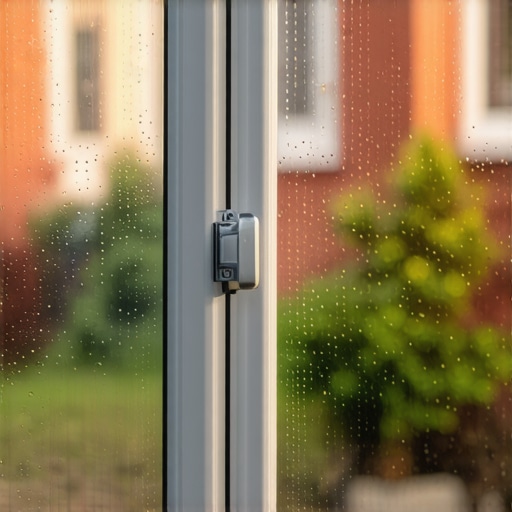
The Ghost in the Glass: Understanding Internal Condensation
When you look through your window and see a persistent fog that you cannot wipe away, you are not looking at a dirty surface. You are witnessing a catastrophic failure of the Insulated Glass Unit, or IGU. As a master glazier, I have seen homeowners spend hundreds on a professional window cleaner only to realize the haze is trapped between the panes. This is not a matter of cleaning: it is a matter of physics and material fatigue. When the seal that binds two sheets of glass together breaks, the unit begins to breathe. This breathing process, known as solar pumping, draws in moisture-laden air every time the sun warms the window and expels it as the temperature drops. Over time, the internal desiccant becomes saturated and the moisture has nowhere to go but onto the glass surface.
“Installation is just as critical as the window performance itself. A high-performance window installed poorly will fail.” – AAMA Installation Masters Guide
The Condensation Crisis: A Real-World Diagnostic
A homeowner recently called me in a panic because their three-year-old windows were ‘sweating’ during a cold snap. I walked in with my hygrometer and showed them the interior humidity was 60 percent. In that specific case, it was a ventilation issue. However, one specific sash in their bedroom remained foggy even after we dropped the humidity. I pulled the glazing bead and found the culprit: the previous installer had blocked the weep hole with excess caulking. Water had pooled in the glazing pocket, sitting against the primary seal for months. This constant exposure to standing water eventually dissolved the adhesive, leading to the internal moisture. It was a classic example of how a simple installation error can force a homeowner to replace windows decades before their time.
The Anatomy of a Failed Seal
To understand why window repair often requires a full glass replacement, you must understand the IGU construction. An IGU consists of two or more panes of glass separated by a spacer bar. This spacer is filled with a molecular sieve, a desiccant designed to absorb any residual moisture trapped during manufacturing. The unit is sealed with a primary seal of polyisobutylene (PIB) and a secondary seal of silicone or polysulfide. In northern climates where heat loss is the primary enemy, we prioritize the U-Factor. A low U-Factor indicates better insulation. When the seal fails, the argon or krypton gas used to improve that U-Factor escapes, replaced by humid air. This significantly degrades the thermal performance of your home, making your rooms colder and your energy bills higher.
The Science of Solar Pumping
Solar pumping is the engine of seal failure. During the day, the sun hits the glass and the gas inside the cavity expands, putting outward pressure on the seals. At night, the gas contracts, creating a vacuum effect. This constant movement is why the quality of the spacer and sealant is vital. If the spacer is a rigid aluminum bar, it does not move with the glass as well as a warm-edge foam spacer. This differential movement eventually creates micro-cracks in the PIB seal. Once that happens, the unit is on a countdown to failure. Once the desiccant is overwhelmed, the moisture will condense on the coldest surface, which is usually the center of the glass during a winter night.
“The U-factor of a window is the rate at which it conducts non-solar heat flow. Lower numbers indicate better insulation.” – NFRC Performance Standards
Why You Cannot Just Fix the Fog
Many companies offer a window repair service that involves drilling small holes in the glass to ‘vent’ the moisture. From a glazier’s perspective, this is a temporary aesthetic fix that ignores the underlying problem. While it may clear the fog, it does nothing to restore the thermal integrity of the window. The insulating gas is gone, and the internal glass surfaces will eventually develop a permanent white haze known as silica etching. This etching occurs when the minerals in the trapped water react with the glass coating. At this point, the only solution is to replace the glass unit entirely or replace windows if the frames are also compromised. When I perform an autopsy on a failed unit, the rough opening is often found to be out of square, putting uneven pressure on the sash and accelerating the seal breach.
The Role of the Glazing Bead and Weep Holes
Proper water management within the window frame is the only defense against rot and seal failure. Every operable sash and fixed frame is designed with a drainage path. If water gets past the external gaskets, it should sit in a sloped sill pan and exit through weep holes. If these holes are clogged by debris or a careless window cleaner using heavy waxes, the water stays in contact with the IGU seals. This hydraulic pressure is more than most sealants can handle over long periods. When we shim a window during installation, we must ensure the frame is perfectly level so the water flows toward these exits rather than pooling in a corner.
Thermal Stress and Glass Selection
In cold climates, we often use Low-E coatings on Surface #3 to reflect heat back into the room. However, if the home has heavy drapes or furniture pushed against the window, heat can build up between the glass and the window treatment. This increases the thermal stress on the IGU. If the glass is not tempered or heat-strengthened, this temperature differential can cause a thermal stress crack, which immediately kills the seal. Understanding the relationship between your home’s interior environment and the exterior glass temperature is essential for preventing premature failure. You want to ensure the warm-edge spacers are doing their job of keeping the glass edge temperatures closer to the room temperature, which prevents the dew point from being reached on the internal surfaces. Not every window needs to be replaced, but when the internal moisture appears, the clock has run out on that specific unit’s efficiency.