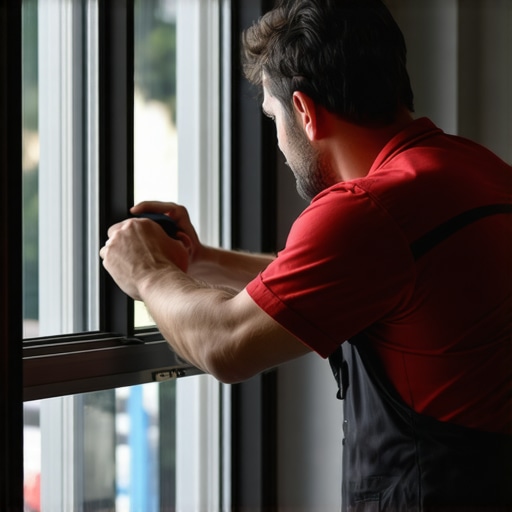
The Autopsy of a Stuck Sash: Why Your High-Performance Frames are Failing
I have spent twenty-five years staring at holes in walls. Most people look through a window to see the garden or the street; I look at the Rough Opening and see a battlefield of physics. When a homeowner calls me because their brand-new, high-spec 2026-style composite frame is binding, they expect a simple fix. What they often get is a lesson in Hydrostatic Pressure and thermal expansion coefficients. A window is not a static object. It is a dynamic machine that must manage the Dew Point while resisting the structural loads of the building. When that machine grinds to a halt, it is rarely the glass’s fault—it is almost always an installation failure that ignored the fundamental ‘Shingle Principle’ of water management.
“Installation is just as critical as the window performance itself. A high-performance window installed poorly will fail.” – AAMA Installation Masters Guide
A homeowner called me in a panic because their new windows were ‘sweating’ and wouldn’t slide open. I walked in with my hygrometer and showed them the humidity was 60%. It wasn’t the windows; it was their lifestyle choices combined with a poorly calibrated HVAC system. However, the binding was real. The frame had bowed because the installer had packed the Shim space so tight with low-expansion foam that the Sash had no room to breathe. In the industry, we call this ‘bowing the jamb,’ and in the cold climates of the North, where the U-Factor is king, this leads to catastrophic seal failure and a complete loss of the insulating Argon gas fill.
The Physics of the Bind: Thermal Expansion in 2026 Composites
In 2026, we are seeing a massive shift toward high-density polymer composites. These materials are designed to have a U-Factor below 0.20, but they come with a catch: they move. In colder climates, like Minneapolis or Chicago, the temperature delta between the interior 70°F and the exterior -10°F creates a massive thermal stress on the Glazing Bead. If the frame is not perfectly level, square, and plumb—within a 1/16th of an inch tolerance—the Sash will migrate toward the side of least resistance. This is where window repair moves from being a handyman’s task to a glazier’s science. You aren’t just ‘fixing a stick’; you are recalibrating a thermal envelope.
Tactic 1: The Precision Shim Realignment
The first tactic in modern window repair involves the Rough Opening. Most DIYers think a Shim is just a piece of wood to hold the window in place. To a master glazier, a shim is a structural adjustment tool. If your window is binding at the top right, the house has likely settled, or the Sill Pan was not level. To fix this without a full replace windows project, you must access the Nailing Fin or the through-frame adjustment screws. By incrementally adjusting the pressure at the mid-point of the jamb, you can pull the frame back into square. This relieves the pressure on the Operable sash and restores the airtight seal. If you find that the frame has bowed inward, you may need to ‘back-out’ the fasteners and reset the Flashing Tape to ensure no moisture bypasses the Sill Pan.
Tactic 2: Lubrication and the Chemical Integrity of the Glazing Bead
I often see homeowners ruin their hardware by using the wrong window cleaner. Many retail cleaners contain ammonia or harsh solvents that strip the factory-applied Teflon coating from the Sash tracks and degrade the Glazing Bead. When these chemicals interact with the high-performance seals of 2026 frames, they create a ‘tacky’ surface that increases friction. The repair here is a thorough cleaning with a pH-neutral solution, followed by the application of a dry-film silicone lubricant. Never use oil-based lubricants; they attract dust and grit, which act like sandpaper against the Muntin and Sash, eventually leading to a mechanical bind that no amount of force can overcome.
Tactic 3: The Weep Hole and Drainage Audit
If a window is binding only during wet or humid months, you have a drainage crisis. Every modern window is designed to take on a small amount of water, which is then directed back outside through the Weep Hole system. If these holes are clogged by debris or improper window cleaner residue, water backs up into the Sill Pan. In wood-clad or composite frames, this moisture causes the material to swell.
“Water management is the primary goal of any fenestration installation. The failure to provide a clear path for moisture egress is the leading cause of structural rot and sash binding.” – ASTM E2112 Standard Practice
Cleaning the Weep Hole with a small piece of wire or compressed air can often solve a binding issue in minutes. This prevents the ‘Shingle Principle’ from being reversed, where water is forced into the interior Rough Opening, causing the Header to rot—a nightmare scenario that I’ve seen turn a simple repair into a $20,000 structural overhaul.
Why You Shouldn’t Just ‘Replace Windows’
Salesmen will tell you that a binding window means it’s time to replace windows entirely. They want to sell you on the latest triple-pane technology with a Surface #3 Low-E coating. But if the Rough Opening is compromised, new windows will bind just like the old ones. True window repair is about understanding the Solar Heat Gain Coefficient (SHGC) and how it affects frame expansion. In northern climates, we want a higher SHGC to harvest winter sun, but that heat also means the frame will expand more on the sunny side of the house. A professional glazier accounts for this by leaving a ‘thermal expansion gap’ during installation—something the ‘caulk-and-walk’ crews never do. Before you sign a contract for a full replacement, ensure your installer understands the ASTM E2112 standards. The performance of your home depends on the precision of the installation, not just the brand of the glass.