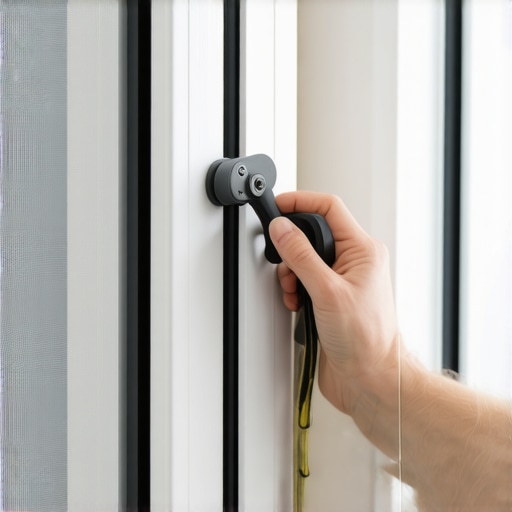
The Frustration of the Spinning Crank
You go to close your casement window as a summer storm rolls in, but instead of the satisfying cinch of the sash against the weatherstripping, you feel a sickening pop. Then, the handle just spins. You are now a victim of a stripped operator, a common but maddening mechanical failure. As a glazier who has spent nearly three decades in the field, I can tell you that a stripped handle is rarely just about the handle itself. It is a symptom of a larger systemic issue involving the rough opening, the sash alignment, or even the chemical environment inside your home.
A homeowner once called me in a panic because their new windows were ‘sweating.’ I walked in with my hygrometer and showed them the humidity was 60 percent. It was not the windows; it was their lifestyle choices, specifically a massive indoor garden and a lack of ventilation. That same excess moisture was not just fogging the glass; it was migrating into the hardware cavities. Over time, that humidity accelerates the oxidation of the zinc alloys used in many crank handles. When that oxidation meets the resistance of a heavy, triple-pane sash, the metal teeth inside the handle simply give up. This is where the mechanical failure begins.
“Installation is just as critical as the window performance itself. A high-performance window installed poorly will fail.” AAMA Installation Masters Guide
The Anatomy of the Stripped Spline
To understand why your handle is failing, we must look at the spline. The spline is the ridged metal post that sticks out from the window operator. The handle fits over this post, and its internal teeth mesh with the ridges of the spline. Most handles are made of a softer metal than the operator spline to ensure that the handle fails before the expensive internal gear mechanism does. It is a sacrificial lamb in the world of window repair. If you turn the handle and it spins freely, the internal teeth of the handle have likely been ground down to a smooth surface. This happens when the torque required to move the sash exceeds the shear strength of the handle material.
Why is the torque so high? In Northern climates like Chicago or Minneapolis, the enemy is often heat loss and the subsequent contraction of materials. When the temperature drops, the vinyl or wood sash can contract at a different rate than the rough opening. If the window was not shimmed perfectly during the initial window repair or installation, the frame can become slightly out of square. This puts immense pressure on the locking points. When you try to crank that window shut, you are fighting against a frame that is literally squeezing the sash. You are not just closing a window; you are trying to force a square peg into a slightly rhomboid hole.
Climate Logic: The Cold Weather Factor
In colder regions, the U-Factor is the most critical metric on your NFRC label. A lower U-Factor means better insulation, but it also usually means a heavier glass package. Modern high-efficiency windows often use triple-pane units with argon or krypton gas fills. This extra weight puts more stress on the operator arm and the handle. If your warm-edge spacers are doing their job, the interior glass surface stays warm, but the exterior hardware is still subjected to brutal temperature swings. This thermal gradient can cause lubricants to thicken, increasing the friction within the worm gear of the operator. If you have not performed regular maintenance, that friction is the primary cause of a stripped handle spline.
“The assembly shall be installed in a manner that protects the rough opening from water penetration and air leakage.” ASTM E2112 Standard Practice
The Fix: More Than Just a New Handle
Before you rush to replace windows, you can often solve the issue with a focused repair. First, remove the set screw on the base of the handle. Pull the handle off and inspect the spline. If the spline ridges are still sharp but the handle interior is smooth, you only need a new handle. However, if the spline itself is rounded off, you must replace the entire operator mechanism. This involves removing the glazing bead or the interior trim to access the mounting screws. During this process, I always check the weep hole. If a weep hole is clogged, water can back up into the sill pan, leading to corrosion of the operator base. A clean window cleaner solution can be used to flush these channels, but avoid anything with ammonia, as it can degrade the protective coatings on your hardware.
The Role of the Rough Opening and Shims
If you find that you are replacing handles every two years, your window is likely out of square. I have seen cases where the flashing tape was applied so thickly that it created a hump in the sill, causing the entire frame to bow upward. This is why the shingle principle is so important in water management and mechanical longevity. Every component must overlap correctly to shed water and maintain structural integrity. If the sash is not sitting level on the shims, the weight of the glass will cause the operator to bind. No amount of new handles will fix a poorly shimmed window. You must address the foundation of the installation within the rough opening to ensure the operable parts can move without excessive force.
The Final Word on Hardware Longevity
Proper window repair is an exercise in physics and patience. Do not just slap a new handle on a window that is difficult to close. Investigate why the resistance exists. Is the sash dragging on the sill pan? Are the muntins hitting the frame? Is the weatherstripping bunched up in a corner? By addressing the root cause of the friction, you protect the mechanical heart of your window. Remember, a window is a complex system designed to manage the boundary between your controlled indoor environment and the chaos of the outdoors. Treat the hardware with the same respect you give the glass, and it will serve you for decades.
[{“@context”:”https://schema.org”,”@type”:”HowTo”,”name”:”How to Fix a Stripped Window Handle”,”step”:[{“@type”:”HowToStep”,”text”:”Remove the set screw from the base of the handle using a hex key or screwdriver.”},{“@type”:”HowToStep”,”text”:”Pull the handle off the operator spline and inspect for metal shavings or smoothed teeth.”},{“@type”:”HowToStep”,”text”:”Clean the spline with a wire brush to remove debris and old metal fragments.”},{“@type”:”HowToStep”,”text”:”If the spline is intact, press a new handle onto the post and tighten the set screw.”},{“@type”:”HowToStep”,”text”:”Lubricate the operator arm and sash tracks with a dry silicone spray to reduce friction.”}],”totalTime”:”PT15M”}]