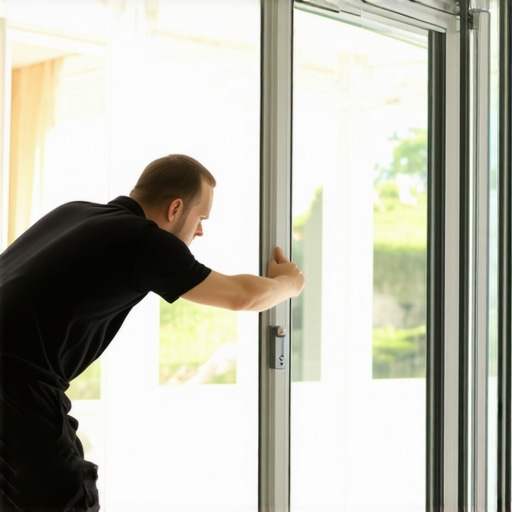
The Gravity of the Situation: Why Your Slider is Failing
You approach your sliding patio door, grab the handle, and prepare to step out into the backyard. Instead of a smooth, effortless glide, you are met with a resistance so stiff it feels like you are trying to move a vault door. You put your shoulder into it, the glass rattles in the frame, and with a grinding screech, it moves six inches. This is not just an inconvenience; it is a mechanical failure of a complex fenestration system. As a glazier who has spent two decades diagnosing failed openings, I can tell you that a heavy door is rarely just about dirt in the track. It is about physics, structural deflection, and the inevitable degradation of inferior components. When homeowners ask if they should replace windows or just fix the door, the answer lies in the autopsy of the installation.
The Narrative: A Lesson in Hidden Decay
I remember a specific job in Charlotte where a homeowner complained their sliding door was nearly impossible to budge. I pulled that vinyl door out of the house and the header was completely black with rot. Why? The previous installer relied on the nailing fin instead of proper flashing tape and a dedicated sill pan. Water had been wicking behind the siding for five years, rotting the structural header. The weight of the house was no longer being distributed around the opening; instead, the sagging header was literally crushing the door frame. No amount of window cleaner or lubricant was going to fix a structural collapse. This is why I have a visceral reaction to ‘caulk-and-walk’ installers who ignore the Rough Opening tolerances and the Shingle Principle of water management.
“Installation is just as critical as the window performance itself. A high-performance window installed poorly will fail.” AAMA Installation Masters Guide
The Mechanics of Friction: Rollers and Tracks
To understand why your door feels like it weighs five hundred pounds, we have to look at the tandem roller assemblies. Most standard sliding doors rely on two small sets of rollers. If you have a door that is eight feet tall, you are looking at nearly 150 pounds of tempered glass resting on four small wheels. Over time, the ball bearings inside these rollers corrode or the nylon wheels develop flat spots. When the roller stops spinning, it starts sliding. This turns your track into a sacrificial anode. In many cases of window repair, we find that the stainless steel track cover has been gouged by a frozen roller, creating a permanent ‘speed bump’ that prevents smooth operation. If your door is ‘jumping’ as it moves, your rollers have likely disintegrated.
The Thermal Reality: Why Your Glass Choice Matters
In hot, southern climates, the glass package is your primary defense against radiant heat. A sliding patio door is essentially a giant hole in your thermal envelope. If you are feeling immense heat radiating from the glass, your Solar Heat Gain Coefficient (SHGC) is too high. For these environments, I always specify a Low-E coating on Surface #2. This reflects the infrared spectrum back outside before it can even cross the argon-filled airspace. We are not just looking for a low U-Factor; we are looking for a shield. When the glass gets too hot, the vinyl frame expands. In cheaply made doors, this thermal expansion can cause the frame to bow, pinching the sash within the tracks and making it even harder to slide.
The Installation Autopsy: Why Level and Square Are Not Enough
A door can be perfectly level and still be a disaster if it is not ‘in plane.’ If the bottom of the frame is kicked out half an inch compared to the top, the door will bind. This is where Shim placement becomes an art form. You must support the sill every six inches to ensure the weight of the glass doesn’t cause the track to dip. If the sill dips, the rollers are constantly trying to climb an uphill battle. Furthermore, without a proper Sill Pan with an integrated rear dam, any water that enters the track (which it will, by design) has nowhere to go but into your subfloor. We check the Weep Hole efficiency during every inspection. If those holes are clogged with debris or paint, water backs up, rusts the rollers, and begins the rot process we discussed earlier.
“Water penetration is the leading cause of fenestration failure. A system must be designed to manage water, not just block it.” ASTM E2112 Standard Practice
The Math of Replacement: Is It Worth It?
Homeowners often hesitate to replace windows or doors because of the upfront cost. They look at the energy savings and realize the ROI might take a decade. But you cannot put a price on the structural integrity of your home or the daily frustration of a failing door. A modern fiberglass sliding door has a much lower coefficient of thermal expansion than vinyl, meaning it stays square and easy to operate whether it is 20 degrees or 100 degrees outside. When we perform a window repair, we are often just delaying the inevitable if the frame itself has warped. If you are fighting your door every day, you are putting unnecessary stress on the Muntin bars and the Glazing Bead, which can eventually lead to a seal failure and fogged glass.
The Maintenance Protocol: Beyond the Spray Bottle
While a window cleaner can make the glass sparkle, it does nothing for the mechanical health of the system. You need to vacuum the tracks weekly. Debris acts like sandpaper on the rollers. Avoid using heavy grease or WD-40, which attracts more grit and creates a grinding paste. Instead, use a dry silicone spray on the tracks after cleaning. If the door still feels heavy, it is time to check the adjustment screws at the bottom of the sash. Most doors allow you to raise or lower the rollers with a screwdriver. If you find yourself bottoming out the adjustment and the door is still dragging, the rollers have collapsed and must be replaced. This is a technical job that involves removing the Operable sash, which can be dangerous for a DIYer due to the sheer weight of the glass.