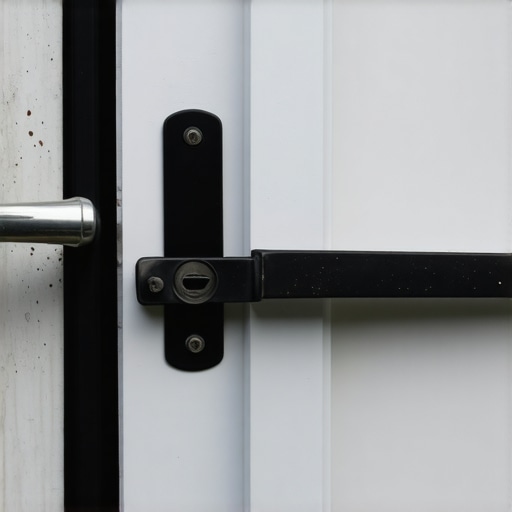
When you slide your patio door and hear that sickening crunch or feel a vibration through the handle that feels like dragging a blade across a brick, you are feeling the slow death of a mechanical system. As a glazier with over two decades in the field, I can tell you that a gritty lock or a rough glide is rarely just about the lock itself. It is a symptom of a systemic failure in the window and door assembly, often involving the track, the tandem rollers, and the environmental management of the rough opening.
The Anatomy of the Grit
I remember a call-out to a high-end coastal property where the owner complained that their multi-point locking system was impossible to turn. They were ready to replace windows throughout the entire house because they believed the frames had warped in the heat. I arrived with my hygrometer and a set of shims. After a quick inspection, I found that the problem wasn’t the frame material. The homeowner had been using a standard window cleaner that contained high levels of ammonia, which had reacted with the salt spray to create a sticky, abrasive paste inside the mortise lock. This paste had migrated into the internal springs, causing the gritty sensation they felt every time they tried to secure their home.
“Installation is just as critical as the window performance itself. A high-performance window installed poorly will fail.” – AAMA Installation Masters Guide
This situation illustrates why understanding the chemistry and physics of your glazing is vital. A sliding door is a heavy operable sash that relies on precision engineering. When debris enters the weep hole or settles on the sill pan, it isn’t just an aesthetic issue. It becomes a mechanical obstruction. If you are in a southern climate where the sun beats down on that door for twelve hours a day, the Solar Heat Gain Coefficient (SHGC) becomes a factor. High heat causes the aluminum or vinyl to expand. If the door was not installed with the correct tolerances in the rough opening, that expansion narrows the gap between the sash and the frame, compressing the grit further into the hardware.
Why Lubrication Often Fails
The most common mistake I see in window repair is the use of the wrong lubricant. A homeowner feels friction and reaches for a can of standard penetrating oil. This is a disaster. Standard oils are magnets for dust and dander. Within months, that oil turns into a grinding compound that will eat through the zinc plating of a mortise lock. For a professional fix, you must first remove the grit, not just cover it. You need to use a vacuum with a narrow crevice tool to clear the track, then a pressurized air canister to blow out the lock body. Only then should you apply a dry-film PTFE or a high-grade silicone lubricant. These do not attract the particulate matter that causes the gritty feeling in the first place.
The Role of the Sill and Track
The track is the foundation of the sliding door. If the track is scarred or pitted, no amount of window repair will make it feel smooth. This is where we look at the rollers. Most modern sliding doors use tandem steel or nylon rollers. When these rollers get clogged with hair and dirt, they stop rolling and start sliding. This flat-spots the roller and grinds the track. If you feel a rhythmic thumping along with the grit, your rollers are shot. Replacing these requires removing the entire operable sash, a task that demands a steady hand and an understanding of how to protect the glazing bead from popping out during the process.
“The integrity of the water-resistive barrier at the rough opening is the primary defense against structural degradation and mechanical hardware failure.” – ASTM E2112 Standard Practice
In hot, southern climates like Florida or Arizona, the enemy is not just grit but the heat itself. If your door faces west, you need to ensure your glass has a Low-E coating on Surface #2. This reflects the infrared energy before it can penetrate the home and heat up the internal hardware. When the internal temperature of a lock reaches 140 degrees Fahrenheit, the factory grease can liquefy and run out, leaving the metal-on-metal components to grind against each other. If you are at the point where you need to replace windows or doors, looking at the SHGC is just as important as the lock type. You want a low SHGC to keep the hardware cool and functioning within its designed thermal range.
A Step-by-Step Recovery for Gritty Locks
First, inspect the strike plate. Often, what feels like grit is actually the latch hitting the strike plate at an incorrect angle because the door has dropped. You can usually find an adjustment screw on the bottom of the sash. By turning this screw, you move the internal shim that raises or lowers the rollers. This can realign the lock and eliminate the friction. Second, clean the tracks with a dedicated window cleaner that is pH-neutral. Avoid anything with harsh solvents that could degrade the weatherstripping. Third, check the weep hole. If water cannot exit the track, it will pool around the bottom of the lock, leading to oxidation and that crunchy, gritty feel. Finally, if the hardware is pitted, it is time for a full replacement of the mortise lock assembly. Do not settle for a cheap knock-off. A high-quality stainless steel lock is the only way to ensure longevity in a coastal or high-humidity environment. Proper water management and thermal control are the keys to a door that glides with a single finger rather than a struggle.