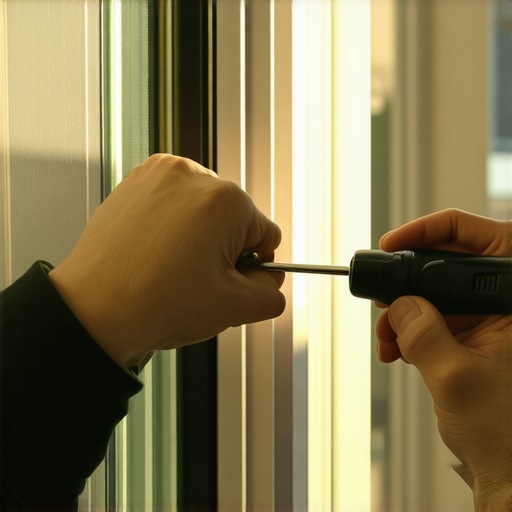
The Physics of the Sag: Why Your Window Hinge Is Failing
When an operable sash begins to drag against the sill, most homeowners assume the house is settling. As a glazier with over two decades in the field, I can tell you that the culprit is rarely the foundation; it is the lever arm physics of the window hinge. A standard double-pane insulated glass unit can weigh upwards of 50 to 100 pounds. All that weight is suspended by a few stainless steel screws driven into a rough opening that might not have been perfectly square to begin with. Over time, the constant cycle of opening and closing, combined with the thermal expansion of the frame, causes those fasteners to back out. If you ignore it, you are looking at a full window repair or, worse, a complete structural failure that forces you to replace windows prematurely.
The Condensation Crisis: A Diagnostic Tale
I recall a homeowner in a drafty suburb who called me in a panic because their new casement windows were ‘sweating’ and refusing to lock properly. They were convinced the seals had failed. I walked in with my hygrometer and a feeler gauge. I showed them the humidity was hovering at 60 percent, which was high, but the real issue was mechanical. I could see a sliver of daylight at the top corner of the sash. It wasn’t the windows; it was a single hinge screw that had loosened, causing the sash to tilt just enough to break the weatherstripping contact. The ‘sweat’ they saw was actually localized condensation forming where the warm indoor air met the freezing infiltration point. It was a five-minute fix with a driver and a bit of technical know-how, saving them thousands in unnecessary replacements.
“Installation is just as critical as the window performance itself. A high-performance window installed poorly will fail.” – AAMA Installation Masters Guide
The Anatomy of a Stripped Fastener
The fear of stripping a screw is legitimate. In the world of window repair, a stripped screw head is a nightmare that often requires specialized extraction tools or drilling out the fastener entirely, which can damage the glazing bead or the frame itself. Most window screws are made of stainless steel to prevent corrosion, but stainless is surprisingly soft. If you use a worn-out Phillips #2 bit on a screw that requires a Pozidriv or a specific square drive, you will round out the internal geometry in seconds. Furthermore, the substrate matters. In older wood windows, the wood fibers can become friable over time. In vinyl windows, the screw is often only biting into a thin wall of uPVC unless there is a dedicated metal reinforcement chamber. When you apply too much torque, you aren’t just turning the screw; you are shredding the very material meant to hold it.
Thermal Stress and the North/Cold Climate Logic
For those of us working in northern climates like Chicago or Minneapolis, the U-Factor is the most important number on that NFRC label. We need our windows to hold heat in. However, the extreme temperature swings from -20°F in January to 95°F in July mean your window frames are constantly breathing. A vinyl frame can expand and contract up to half an inch over its length. This constant movement puts immense ‘pull-out’ stress on the hinges. If the shim placement behind the frame is inadequate, the frame will bow, putting even more lateral pressure on those hinge screws. This is why a regular check-up by a window cleaner or a maintenance specialist is vital; they can spot the early signs of screw migration before the sash becomes unaligned.
Step-by-Step: The Professional Approach to Tightening
First, you must support the weight of the sash. Never attempt to tighten a hinge while the window is hanging under its own gravity. Use a flat bar or a wooden block to take the tension off the hinge. Second, inspect the screw hole. If the screw spins freely, the hole is stripped. In wood frames, the old glazier’s trick of using a toothpick and wood glue to rebuild the hole is effective, but for high-performance units, I prefer a two-part epoxy filler. In vinyl or aluminum frames, you may need to move up to a slightly larger gauge ‘repair’ screw, but you must ensure the head of the screw still sits flush in the hinge countersink, or it will bind when the window closes. Third, use a manual screwdriver. Impact drivers have no place near a window hinge. You need to feel the ‘seat’ of the fastener. Once you feel resistance, give it a quarter turn more and stop. This is about friction, not brute force.
“Maintenance of fenestration products is essential to ensure long-term performance and to mitigate the risk of air and water infiltration.” – ASTM E2112
The Myth of Energy Savings vs. Mechanical Integrity
Salesmen love to talk about how triple-pane krypton-filled units will pay for themselves in energy savings. As an installer, I focus on the mechanical reality. A triple-pane unit is heavy. If your hinges aren’t rated for that load, or if they aren’t maintained, that expensive glass is useless because the air will leak around the frame. When you replace windows, you aren’t just buying glass; you are buying a mechanical system. If that system isn’t calibrated, your ROI is zero. Proper maintenance, including cleaning the weep holes and lubricating the hinges with a dry-film silicone, ensures the hardware can do its job of compressing the gaskets to keep the weather out. Don’t buy the marketing hype; buy a window with heavy-duty, adjustable 4-bar hinges and learn how to keep them tight.