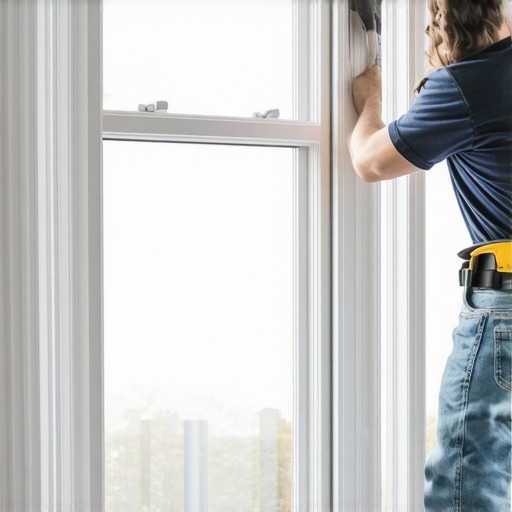
The Invisible Thief: Understanding Air Infiltration in Historic Windows
You feel it before you see it. You are sitting on the sofa in January, and a phantom finger of ice-cold air strokes the back of your neck. You look at your beautiful, historic double-hung windows and wonder why your heating bill is astronomical despite having the thermostat set to a modest sixty-eight degrees. As a master glazier with twenty-five years in the field, I can tell you that a drafty sash window is not just a nuisance; it is a complex engineering failure of the thermal envelope. A homeowner once called me in a panic because their new windows were sweating. I walked in with my hygrometer and showed them the humidity was sixty percent. It was not the windows; it was their lifestyle combined with a lack of proper ventilation. However, when we talk about drafts in old wood sashes, we are usually dealing with the physical degradation of components designed a century ago.
“Installation is just as critical as the window performance itself. A high-performance window installed poorly will fail.” – AAMA Installation Masters Guide
The primary culprit in a drafty sash window is rarely the glass itself, unless it is cracked. The enemy is air infiltration. In the glazing industry, we measure this in cubic feet per minute per square foot of window area. A standard operable window must meet strict requirements, but an old wood sash with shrunken members can exceed these limits by a factor of ten. When the wood of the sash or the frame dries out over decades, it loses mass and changes shape. This creates gaps at the meeting rail, the parting bead, and the sill. If your sash does not sit tight against the stool, you have a direct bypass for exterior air to enter your living space.
The Anatomy of a Draft: The Weight Pocket and the Stack Effect
To understand why you need a window repair rather than a total replacement, you must understand the weight pocket. In traditional double-hung windows, the sashes are counterbalanced by cast iron weights hidden inside the wall. These weight pockets are essentially hollow chimneys. If the pocket cover is not sealed or if the sash cord pulleys are wide open to the elements, you are not just losing heat; you are facilitating the stack effect. Cold air is sucked in at the bottom of the house and warm air escapes through these cavities at the top. This is why a window cleaner might notice dust patterns around the pulleys; that is the soot and debris of the outside world being filtered through your window frame.
When we examine the rough opening during a forensic window repair, we often find that the void between the window jamb and the house framing is completely uninsulated. Back in the day, they did not use spray foam or flashing tape. They might have stuffed some old newspapers or horsehair in there, but usually, it is just empty space. To properly seal these, we have to look at the shim space. If the window has shifted, the sash will not meet the rail squarely, leaving a wedge-shaped gap that no amount of sash lock tightening can close. We use high-density plastic shims to relevel the unit before we even think about weatherstripping.
The Physics of Heat Loss in Cold Climates
In northern climates like Chicago or Minneapolis, the U-Factor is the most critical metric on your NFRC label. The U-Factor measures the rate of non-solar heat loss. For a sash window, the goal is a low U-Factor. While a single pane of glass has a U-Factor of around 1.1, a modern double-pane unit with a Low-E coating on surface three can drop that to 0.30 or lower. But if you have historic windows, you are likely dealing with that 1.1 value. The draft you feel is often a convection current. The air near the cold glass cools down, becomes denser, and sinks, creating a rolling cycle of air that feels like a draft even if the window is perfectly airtight.
“The primary purpose of a window is to provide light and ventilation, but its secondary role as a thermal barrier is often compromised by improper perimeter sealing.” – ASTM E2112-19
To combat this without doing a full replace windows project, you must address the glazing bead and the putty. Old linseed oil putty becomes brittle and falls out, leaving the glass to rattle in the sash. This rattle is a sign that the glazing is no longer doing its job. Applying a fresh bed of glazing compound is a tedious task but essential for restoring the thermal integrity of the unit. You must also check the weep hole in the exterior sill if you have storm windows attached. If these are clogged, water will back up, rot the sill, and create even larger gaps for air to penetrate.
Step-by-Step Restoration: How to Seal the Gaps
If you are committed to window repair over replacement, your first step is the meeting rail. This is where the two sashes overlap in the middle. Most drafts occur here because the sash locks are either misaligned or broken. By installing a heavy-duty cam-action sash lock, you can pull the two sashes together, compressing any weatherstripping between them. For the vertical gaps, we use V-strip or spring bronze. This is a metal or plastic strip shaped like a ‘V’ that sits in the channel where the sash slides. When the window is closed, the ‘V’ is compressed, creating a physical barrier that is much more durable than cheap foam tape.
Next, consider the parting bead. This is the thin strip of wood that separates the upper and lower sashes. If this is rotted or missing, the sashes will wobble. Replacing the parting bead with a modern version that includes a built-in brush seal can significantly reduce air leakage. Finally, address the weight pockets. If you do not mind losing the functionality of the weights, you can blow dense-pack cellulose or use low-expansion foam in the pockets. However, if you want to keep the windows operable, you should install a spring-balance system and insulate the cavity completely. This removes the chimney effect and seals the rough opening from the interior environment.
When to Stop Repairing and Start Replacing
There comes a point where window repair is no longer cost-effective. If the muntins are rotted through or the frame has lost its structural integrity, you are fighting a losing battle. When you decide to replace windows, do not just look at the price tag. Look at the spacer technology between the glass panes. A stainless steel or structural foam spacer is a warm-edge technology that prevents condensation at the edges of the glass. Avoid cheap aluminum spacers which act as a thermal bridge, conducting cold directly into your home. A master glazier knows that the window is only as good as its installation. Ensure your installer uses a proper sill pan and integrates the window into the house’s water-resistive barrier with high-quality flashing tape. Anything less is just a temporary fix for a permanent problem.