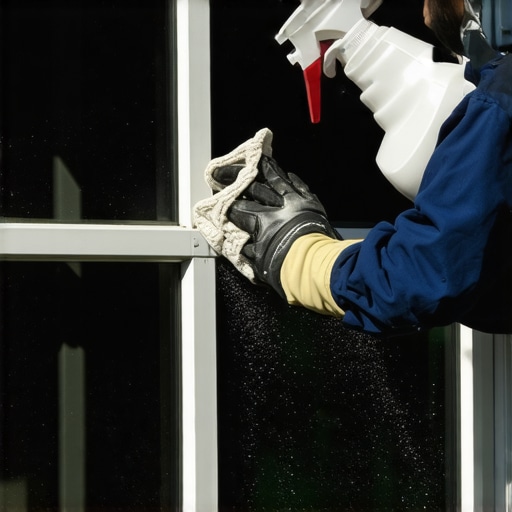
A homeowner called me in a panic because their new windows were ‘sweating.’ I walked in with my hygrometer and showed them the humidity was 60 percent. It wasn’t the windows; it was their lifestyle. However, the situation escalated when they tried to solve the ‘visibility issue’ themselves. They had recently hired a budget painter who left a fine mist of white acrylic across three massive architectural sashes. In their attempt to clean it, they used a green scouring pad, effectively etching the glass surface and destroying the low-emissivity performance. This is the reality of window maintenance: speed without technique is the fastest way to turn a simple window cleaner job into a full window repair or total replacement. When you see paint over-spray, your instinct is to scrub. As a master glazier with 25 years in the field, I am here to tell you that friction is your enemy. Glass is an amorphous solid with a molecular structure that, while hard, is susceptible to microscopic fissures. When paint particles bond to the silicate surface, they create a mechanical lock that is tightened by solar radiant heat.
“Installation is just as critical as the window performance itself. A high-performance window installed poorly will fail.” – AAMA Installation Masters Guide
The Science of the Bond: Why Over-Spray Stays Put
In hot climates like Phoenix or Texas, the Solar Heat Gain Coefficient (SHGC) is not just a number on an NFRC label; it is a measure of the thermal stress your glass undergoes. When paint over-spray hits a window in these regions, the sun bakes the resins into the glass pores almost instantly. If you are dealing with a high-performance window, the paint is likely sitting on Surface #1 (the exterior). If that window has a hard-coat Low-E on the outside, traditional scraping could permanently alter the U-Factor by removing the metallic oxide layer. You must understand the ‘Shingle Principle’ of cleaning: everything must flow down and away without compromising the glazing bead or the weep hole system. If you clog a weep hole with paint residue or cleaning slurry, you are inviting hydrostatic pressure to push water into the rough opening, eventually rotting the wooden shim and the framing beneath the sill pan.
The Precision Razor Protocol
To get rid of paint over-spray fast, you need a brand-new 4-inch carbon steel scraper. Do not use stainless steel; it is too flexible and can ‘chatter’ across the glass, leaving rhythmic scratches. Before the blade touches the glass, you must lubricate the surface with a solution of water and a surfactant. This creates a thin film that allows the blade to glide, lifting the paint via shear force rather than abrasion. Hold the blade at a 45-degree angle. Anything steeper risks ‘digging’ into the glass, especially if the pane is tempered. Work only in one direction. Never pull the blade backward, as this traps debris under the edge and creates ‘drag lines.’ If the window has muntins or decorative grids, you must be extremely careful near the glazing bead. If you nick the EPDM rubber seal or the silicone glazing, you compromise the integrity of the Insulated Glass Unit (IGU), leading to premature seal failure and that dreaded internal condensation.
“Proper flashing and seal integrity are the only defenses against moisture intrusion in the building envelope.” – ASTM E2112 Standard Practice
Chemical Solvents and Seal Safety
Sometimes mechanical removal is not enough, particularly with oil-based primers. You might reach for a solvent, but as a glazier, I warn you: check your frame material first. If you have vinyl (PVC) frames, solvents like acetone or lacquer thinner will melt the profile, causing permanent structural and aesthetic damage. Fiberglass frames are more resilient, but the finish can still be dulled. When applying any solvent to an operable sash, ensure it does not drip into the track or the balance system. The lubricants in your window hardware are carefully calibrated; a harsh chemical will strip them, leading to a window that sticks or a failed constant-force balance. For southern climates, where the sun is relentless, ensure you are not cleaning in direct sunlight. The heat causes the cleaner to evaporate before it can emulsify the paint, often leaving a hazy residue that is harder to remove than the original over-spray.
When Maintenance Becomes Repair
If you find that the paint has been on the glass for years, or if the over-spray is actually ‘pitting’ from nearby grinding or welding, a window cleaner is no longer what you need. You are in the realm of glass restoration or window repair. In some cases, the cost of the labor to safely remove the contamination exceeds the cost of a pocket replacement. However, if the window is a custom size or has high-end features like krypton gas fills or stainless steel warm-edge spacers, preservation is the priority. Always inspect the rough opening and the flashing tape after any major cleaning or repair. If you see water stains on the drywall under the window, the over-spray is the least of your problems. It means the interface between the window frame and the building envelope has failed, likely because a previous installer relied on caulk instead of a proper sill pan and head flashing.
{“@context”:”https://schema.org/”,”@type”:”HowTo”,”name”:”How to Remove Paint Over-Spray from Glass Safely”,”description”:”A professional glazier’s guide to removing paint from window glass without damaging coatings or seals.”,”step”:[{“@type”:”HowToStep”,”text”:”Lubricate the glass with a mixture of water and dish soap to reduce friction.”,”name”:”Lubrication”},{“@type”:”HowToStep”,”text”:”Use a new 4-inch carbon steel razor at a 45-degree angle to lift paint in one-way strokes.”,”name”:”Mechanical Removal”},{“@type”:”HowToStep”,”text”:”Clean the perimeter glazing beads and ensure weep holes are free of debris.”,”name”:”Seal Inspection”}]}