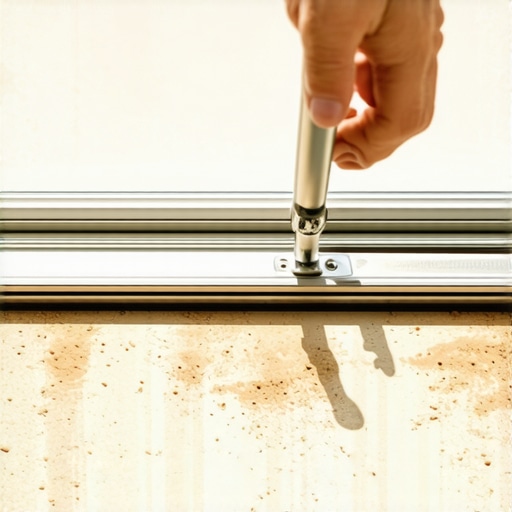
A sliding patio door is a complex piece of engineering designed to manage thousands of pounds of structural pressure while providing a transparent portal to the outdoors. When that door becomes difficult to move, it is not merely a nuisance; it is a mechanical failure that signals a breakdown in the system of rollers, tracks, or the building envelope itself. In my 25 years of glazing, I have seen homeowners struggle with doors that require a linebacker’s strength to budge, often because they overlook the microscopic physics at play within the rough opening.
“Installation is just as critical as the window performance itself. A high-performance window installed poorly will fail.” AAMA Installation Masters Guide
A homeowner called me in a panic because their new sliding glass doors were ‘sweating’ and sticking in the tracks. I walked in with my hygrometer and showed them the humidity was 60 percent. It wasn’t just the door; it was their indoor climate management. The excessive moisture was condensing on the cold aluminum track, mixing with household dust to create a thick, abrasive paste. This sludge had worked its way into the tandem roller bearings, causing them to seize. It was a classic case where the homeowner thought they needed a window repair, but they actually needed to calibrate their dehumidifier and change their cleaning habits.
The Anatomy of Friction: Why Rollers Fail
The heart of any operable sliding door is the roller assembly. These are typically tandem wheels made of nylon, steel, or stainless steel, housed in a metal carriage. Over time, the constant weight of the Insulated Glass Unit (IGU) compresses these rollers. If you are in a northern climate, the thermal cycling from sub-zero winters to humid summers causes the frame to expand and contract. This movement can slightly shift the Shim placement within the Rough Opening, leading to an uneven distribution of weight. When a roller is forced to carry more than its designed load, the internal bearings flat-spot, creating that characteristic grinding sound and the resistance you feel when trying to exit to your deck.
Many people reach for a window cleaner or a generic lubricant like WD-40 when a door sticks. This is a critical error. Oil-based lubricants attract more dirt and debris, eventually forming a grinding compound that will permanently score the stainless steel or aluminum track. A master glazier uses only dry silicone spray or Teflon-based lubricants that do not leave a tacky residue. If the track is already scored, no amount of cleaning will restore the smooth glide; at that point, you are looking at a track cover or a full-frame window repair to replace the sill.
The Physics of the Rough Opening and Structural Sag
Sometimes the issue isn’t the rollers at all, but the house itself. The Rough Opening is the structural framing that holds the door. If the header above the door was undersized or if the house has settled, the weight of the wall can press down on the top of the door frame. This is known as header sag. In this scenario, the Sash becomes pinched between the head and the sill. You can diagnose this by looking at the reveal—the gap between the door and the frame—when the door is nearly closed. If the gap is wider at the top than the bottom, your door is out of square. Adjusting the height of the rollers can sometimes compensate for this, but if the sag is significant, you may need to replace windows and doors to address the underlying structural failure.
“Water penetration is the most common cause of window and door assembly failure, often resulting from improper integration with the building envelope.” ASTM E2112 Standard Practice
Water management is the silent killer of sliding door functionality. A proper installation requires a Sill Pan and Flashing Tape integrated in a weather-lapped fashion, following the Shingle Principle where every layer overlaps the one below it. If the Weep Hole system in the bottom track becomes clogged with debris, water will back up into the track. This moisture accelerates the corrosion of non-stainless steel rollers and can eventually rot the subfloor beneath the door. Once the subfloor rots, the sill loses its level foundation, causing the track to dip and the door to bind. This is why a professional window cleaner should always ensure the weep channels are clear of organic matter.
Thermal Performance and the Dew Point Factor
In colder regions, the U-Factor of your glass plays a significant role in how well your door slides. The U-Factor measures the rate of heat loss; the lower the number, the better the insulation. If you have a high U-Factor (poor insulation), the interior surface of the glass and the metal track will stay much colder than the room air. When warm, moist indoor air hits that cold surface, it reaches the dew point and turns into liquid water. This constant moisture on the track is what leads to the ‘sweating’ issue I mentioned earlier. Upgrading to a door with a Low-E coating on Surface #3 will reflect heat back into the room, keeping the track warmer and reducing the condensation that causes mechanical drag. If your current doors are single-pane or have failed seals (evidenced by fogging between the panes), the most cost-effective long-term solution is to replace windows with modern, argon-filled IGUs that feature warm-edge spacers.
Maintaining the Glazing Bead and Weatherstripping
The Glazing Bead is the strip of vinyl or metal that holds the glass in the sash. If this becomes loose or cracked, it can allow the glass to shift, throwing off the balance of the door. Similarly, the weatherstripping—the fin-seal or bulb-seal that stops air infiltration—can become brittle and create friction. High-quality weatherstripping is designed to compress just enough to seal out the wind without hindering the movement of the door. When it fails, it can bunch up or ‘fish-mouth,’ creating a physical obstruction in the track. Part of any comprehensive window repair involves inspecting these sacrificial components and replacing them before they cause a total system failure. Remember, a sliding door is a machine, and like any machine, it requires precision alignment and clean interfaces to function at its peak performance. Don’t settle for a door that won’t move; understand the science behind the slide and treat your home’s envelope with the technical respect it deserves.