The Science of Glass Clarity and the Master Glazier’s Secret
As a master glazier with over 25 years in the field, I have seen every possible failure of the building envelope. From failing sill pans to improperly shimmed rough openings, the integrity of a window system is a complex interplay of physics and chemistry. However, one of the most common complaints I receive from homeowners doesn’t involve structural failure but rather a degradation of the glass itself: hard water stains. These white, cloudy deposits are more than just an eyesore; they represent a chemical challenge to the silica matrix of your glazing. While many people immediately think they need a full window repair or to replace windows entirely when they see this scaling, the solution is often found in a common household item: the used dryer sheet.
The Condensation Crisis: A Master Glazier’s Perspective
I recall a specific instance where a homeowner in a high-humidity environment called me in a panic because their brand-new, high-performance windows were ‘sweating’ and developed a permanent haze within months. I walked in with my hygrometer and showed them the interior humidity was holding steady at 60 percent. It wasn’t a failure of the window seal; it was their lifestyle and HVAC settings. The condensation was running down the glass, pooling at the glazing bead, and leaving behind concentrated mineral deposits as it evaporated. They were ready to sue the manufacturer, but the issue was environmental. This ‘fog’ they saw was actually stage-one corrosion from calcium and magnesium ions bonding to the glass surface. This is where the technical application of a used dryer sheet comes into play.
“Installation is just as critical as the window performance itself. A high-performance window installed poorly will fail.” AAMA Installation Masters Guide
Understanding the Chemistry of Hard Water on Glazing
To understand why a dryer sheet works, we must first perform some ‘glazing zooming’ into the molecular level of the glass. Most residential windows are made of soda-lime-silica glass. While it appears smooth to the naked eye, under a microscope, glass is a porous, irregular surface. When hard water hits this surface, minerals like calcium carbonate and magnesium silicates find purchase in these microscopic pits. If left untreated, these minerals undergo a process called ion exchange with the glass itself, leading to permanent etching that no window cleaner can remove. The used dryer sheet is a unique tool because it utilizes cationic surfactants. These surfactants are designed to reduce static and soften fabrics, but in the world of glass maintenance, they act as a chemical wedge that breaks the ionic bond between the mineral deposit and the silica surface. We use a ‘used’ sheet specifically because the initial high concentration of tallow-based softening agents has been depleted, leaving just enough surfactant to work without leaving a waxy residue that would interfere with the visible transmittance of the glazing.
The Mechanical Advantage: Polyester Mesh and the Mohs Scale
Beyond the chemistry, there is the mechanical aspect of the dryer sheet. A professional window cleaner knows that you cannot simply use any abrasive. Glass has a hardness of about 5.5 to 7 on the Mohs scale. Many ‘scrubby’ pads used in kitchens are actually hard enough to leave micro-scratches on the glass, which then catch more dirt and minerals. The polyester fibers in a dryer sheet are significantly softer than the glass but provide enough mechanical friction to dislodge the crystalline structure of the calcium deposits. When you use a used dryer sheet, you are applying a non-woven polyester mesh that acts as a gentle agitator. This is particularly important when dealing with the sash and the glazing bead area, where buildup is heaviest and where a scraper might damage the finish of the frame or the integrity of the seal.
Thermal Dynamics and Surface Coatings
In colder climates, we often see these stains on the interior due to the dew point being reached on the glass surface. When the glass temperature drops below the dew point of the interior air, moisture forms. As this moisture cycles through evaporation and condensation, it concentrates minerals. If your window has a Low-E coating on Surface #1 (the exterior-facing surface), you must be extremely careful. Most modern high-performance windows have the coating on Surface #2 or #3 (inside the insulated glass unit) to protect it. However, if you are performing a window repair on an older system or a specialized hard-coat Low-E surface, using harsh chemicals can strip the metallic oxides. The dryer sheet method is generally safe because it lacks the acidic or basic extremes of industrial cleaners. It allows the glazier to maintain the U-factor performance by keeping the glass clear without compromising the microscopic layers of silver or tin oxide that reflect infrared radiation.
“The performance of the fenestration system is dependent upon the proper integration of the window with the water-resistive barrier.” ASTM E2112 Standard Practice
When to Clean and When to Replace Windows
There comes a point where no amount of scrubbing with a dryer sheet will save the glass. This is the distinction between ‘staining’ and ‘etching.’ If the minerals have sat on the glass for years, they can cause a chemical reaction that actually eats into the glass. If you run your fingernail across the glass and feel a physical dip or if the glass remains cloudy after a deep clean, the silica matrix is compromised. At this stage, you are no longer looking at a cleaning job; you are looking to replace windows. A professional glazier will look at the weep hole functionality and the sill pan during this evaluation. Often, the hard water stains are a symptom of a larger drainage failure. If the weep holes in the frame are clogged with debris, water sits against the bottom of the glass and the glazing bead, leading to rapid mineral accumulation and potential seal failure of the insulated glass unit (IGU).
The Correct Technique for Professional Results
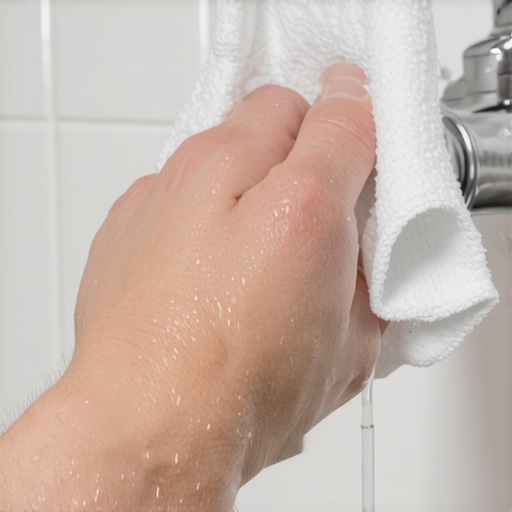
To use this method effectively, you should lightly dampen the used dryer sheet. Do not use a fresh sheet out of the box, as the excess fragrance and softening agents will create a smeary mess that is difficult for any window cleaner to remove. Rub in a circular motion on the affected area of the sash. You will often feel the ‘grit’ of the minerals at first, and then the sheet will start to glide as the surfactants break the bonds. Once the mineral buildup is loosened, it is vital to rinse the area with deionized water or a professional-grade squeegee solution to ensure no surfactants remain to attract new dust. This process is a staple in high-end window repair and maintenance because it preserves the glass without the risks associated with pumice pastes or hydrofluoric acid treatments. By managing the glass at a molecular level, we extend the life of the fenestration system and maintain the thermal performance of the home.