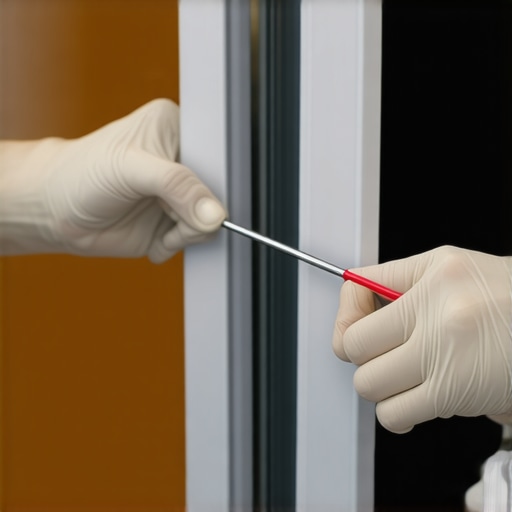
The Anatomy of Friction: Why Your Sliding Door is Failing
As a master glazier with a quarter-century of experience, I have seen more homeowners ruin their high-end patio doors with a lack of maintenance than through accidental breakage. A sliding door is a heavy piece of machinery, often weighing three hundred pounds or more, suspended on two small sets of rollers. When that door starts to stick, most people reach for a can of WD-40, which is the absolute worst thing you can do. Instead, you should be reaching for a dental pick. I pulled a vinyl sliding door out of a house in Scottsdale last year and the header was completely black with rot. The previous installer had failed to account for the threshold drainage, but the primary culprit was a track so clogged with desert silt that the weep holes had been sealed shut. This caused water to back up into the rough opening, eventually destroying the subfloor. This is why precision cleaning is not an optional aesthetic choice: it is a structural necessity.
The Science of the Track and Roller Assembly
To understand why a dental pick is the superior tool for a window cleaner or a maintenance specialist, one must understand the tolerances involved in modern glazing. A high-performance sliding door operates on a stainless steel or aluminum rail. The rollers, typically made of nylon or stainless steel, have a concave profile designed to mate perfectly with that rail. When a single grain of sand or a shard of glass enters that track, the weight of the sash creates a point of extreme pressure. This can lead to ‘flat-spotting’ on the roller. Once a roller has a flat spot, the door will bounce and stutter, leading the homeowner to believe they need to replace windows entirely when a simple cleaning and window repair would have sufficed. The dental pick allows us to reach into the tightest corners of the track where a standard shop vacuum or a brush simply cannot penetrate. We use it to dislodge the compacted debris that hides in the ‘dead zones’ at the ends of the track where the door rests in its closed position.
“Maintenance and cleaning of the track and weep system are essential to ensure the design life of the fenestration product. Failure to keep these areas clear of debris can lead to premature hardware failure and water infiltration into the building envelope.” – AAMA Installation Masters Guide
The Weep Hole Crisis
In hot, arid climates like the American South, the primary enemy of a sliding door is solar heat gain and dust. We focus heavily on the Solar Heat Gain Coefficient (SHGC), opting for Low-E coatings on Surface #2 to reflect infrared energy before it can pass through the glass. However, even the most efficient glazing system fails if the frame’s drainage system is compromised. Every sliding door track is designed with weep holes: small, often baffled openings that allow water to escape to the exterior. Over time, these holes become clogged with dust and spider webs. A dental pick is the only tool precise enough to clear these paths without damaging the delicate plastic baffles inside. If these holes remain blocked, the track becomes a reservoir. During a monsoon or a heavy thunderstorm, that water has nowhere to go but over the interior leg of the track and into your hardwood floors or carpeting. This is where the line between a simple window cleaner’s job and a professional glazier’s intervention becomes blurred.
Window Repair vs. Full Frame Replacement
When I assess a door that is difficult to move, I look for signs of galvanic corrosion and rail wear. If the rail is scarred, it acts like a file, grinding down new rollers the moment they are installed. This is why we are so meticulous about the cleaning process. If we can save the rail, we can save the door. If the rail is beyond repair, the homeowner is often looking at the significant expense to replace windows and doors throughout the home. Using a dental pick to remove calcified minerals and road grime ensures that the contact point between the roller and the rail remains smooth. We also use the pick to inspect the glazing bead and the weatherstripping. Over time, the felt pile or EPDM rubber gaskets can become brittle from UV exposure. By using a fine pick, we can lift the edge of the weatherstripping to check for the presence of mold or moisture trapped behind the seal, which is often the first sign of a failing secondary seal in the IGU (Insulated Glass Unit).
“Water management is the most critical aspect of window and door installation and maintenance. The shingle principle must be maintained throughout the life of the product to prevent structural damage.” – ASTM E2112 Standard Practice
The Professional Maintenance Protocol
For those looking to avoid a costly window repair, the process begins with a vacuum, followed by a damp microfiber cloth, and finally, the surgical application of the dental pick. We focus on the corners where the vertical stiles meet the horizontal sill. This is where the most debris accumulates and where the most damage occurs. Once the track is clinically clean, we apply a dry silicone lubricant. Never use grease or oil-based products, as they attract dust and create a grinding paste that will destroy the rollers in a matter of months. In our coastal regions, the salt air makes this even more critical. Salt crystals are highly abrasive and corrosive; they can pit stainless steel in a single season if not removed. The precision of the dental pick allows us to scrape these crystals out of the minute grooves in the track before they can bond to the metal. This level of detail is what separates a professional glazier from a handyman. It is about understanding the physics of the opening and the chemistry of the materials involved. A sliding door is a hole in your wall that you expect to be weather-tight, and maintaining that integrity requires more than just a quick wipe down. It requires a deep understanding of how water and air move through the assembly and a commitment to using the right tools for the job, even if that tool is as small as a dental pick. [image_placeholder_1]