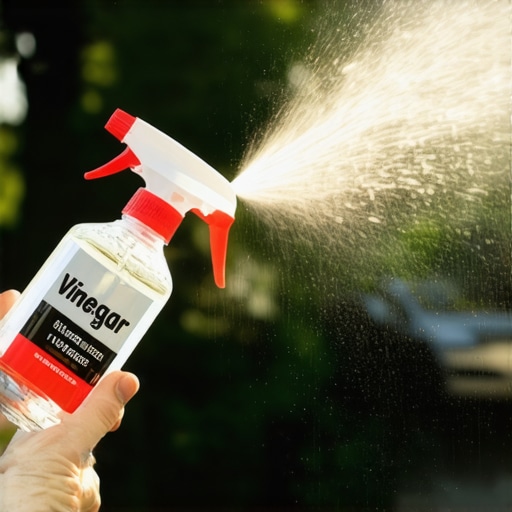
The Science of Surface Maintenance: Why Your Window Cleaner Matters
For over twenty-five years, I have stepped onto job sites where the windows were so clouded with chemical residue that the homeowners were convinced they needed a total window repair or complete replacement. They see a hazy film and assume the Insulated Glass Unit (IGU) has failed, that the argon gas has leaked out, and that the seal is gone. Often, the reality is much simpler: they have been using the wrong cleaning agents. Most store-bought blue sprays contain surfactants and perfumes that leave a microscopic film on the glass. This film acts as a magnet for dust, pollen, and soot. When I walk a homeowner through a maintenance check, I always advocate for the simplest, most effective solution: distilled white vinegar and water. This is not about being ‘green’ or saving a few dollars at the grocery store; it is about the chemistry of the glass surface and the preservation of the glazing components that keep your home dry and insulated.
The Condensation Crisis: A Lesson in Window Health
I recall a specific instance in a drafty house during a bitter January. A homeowner called me in a panic because their new windows were ‘sweating’ and they were certain the product was defective. I walked into the living room with my hygrometer and showed them the humidity was sitting at 60 percent while it was ten degrees outside. I had to explain that it wasn’t the windows failing; it was their lifestyle and the lack of proper ventilation. However, the streaks on the glass were a different story. They had been scrubbing the condensation away with ammonia-based cleaners, and the runoff was beginning to pool in the sash, threatening to degrade the glazing bead and the secondary seal of the IGU. This is where a simple vinegar solution would have saved them a headache. Ammonia is a harsh solvent that can cause the rubber and silicone components of a window frame to become brittle over time. When these components fail, you are no longer looking at a simple cleaning job; you are looking at an expensive window repair to prevent water from reaching the rough opening and causing structural rot.
“Installation is just as critical as the window performance itself. A high-performance window installed poorly will fail.” – AAMA Installation Masters Guide
The Physics of Glass: Why Acetic Acid Wins
Glass is not the perfectly smooth surface it appears to be to the naked eye. At a molecular level, float glass has a series of peaks and valleys. When you use a standard window cleaner, the synthetic detergents fill these valleys and create a static charge that attracts debris. Distilled white vinegar, which is about 5 percent acetic acid, works on a different principle. The acid effectively dissolves mineral deposits, specifically calcium carbonate and magnesium, which are common if you have hard water or if your windows are frequently hit by a garden sprinkler. This is critical for maintaining the Visible Transmittance (VT) of your glazing. In northern climates, where we rely on the sun to help heat the home during the winter, maintaining a clear path for light is a matter of thermal efficiency. A clean window allows the Low-E coating, usually located on Surface 3 of the glass in cold regions, to do its job by reflecting long-wave infrared radiation back into the room while admitting short-wave solar radiation.
Understanding the Climate Context: Heat Loss and Condensation
In cold climates like Minneapolis or Chicago, the primary enemy is heat loss. We focus heavily on the U-Factor, which measures the rate of heat transfer. A lower U-Factor means the window is a better insulator. When a window is dirty, the psychological impact of the ‘draft’ feels worse. If you are constantly seeing streaks or fog, you are more likely to ignore the real warning signs of a failed window. When I inspect an operable sash, I am looking for more than just clean glass. I am looking at the weatherstripping and the condition of the shim space. Using a vinegar and water solution allows you to clean the entire assembly, including the vinyl or fiberglass frames, without leaving a sticky residue that can gunk up the weep holes. Weep holes are the small drainage ports at the bottom of the frame designed to let water escape. If these are blocked by a slurry of dust and chemical cleaner, water will back up into the sill pan and eventually find its way into your drywall.
“The primary purpose of a window is to provide light and ventilation while maintaining a thermal barrier. Any degradation of the glass surface or the frame seals compromises this mission.” – NFRC Performance Standards
The Math of Window Maintenance: Repair vs. Replace
Homeowners often ask me about the ROI of trying to replace windows versus repairing them. The truth is that if your frames are structurally sound and your IGU seals are intact, a professional-grade cleaning and minor window repair can extend the life of your windows by a decade. Replacing an entire house of windows is a massive capital expenditure that might take twenty years to pay back in energy savings alone. However, the comfort of a warm room in January is hard to put a price on. By using a 50/50 mix of distilled vinegar and water, you are ensuring that you don’t accelerate the aging process of your windows. You are protecting the muntins, the glazing bead, and the delicate Low-E coatings that are often applied to the interior surfaces of modern high-performance glass. If you see a rainbow effect on your glass or a permanent ‘fog’ that you cannot wipe away, that is a sign of a ‘blown’ seal where the argon has been replaced by moisture-laden air. At that point, no amount of vinegar will help; you are looking at a glass replacement or a full frame tear-out.
The Master Glazier’s Method for a Streak-Free Finish
To clean like a professional, you need to understand the mechanics of the process. Do not clean your windows in the direct sun. The heat will cause the water to evaporate too quickly, leaving the acetic acid to dry before you can wipe it away, which creates the very streaks you are trying to avoid. Instead, wait for a cloudy day or work in the shadows. Use a lint-free microfiber cloth or, if you want the old-school glazier’s secret, a crumpled-up piece of black-and-white newspaper. The ink acts as a mild abrasive that helps polish the glass without scratching it. Start from the top of the sash and work your way down, ensuring that you don’t let the solution sit in the bottom glazing bead where it could potentially seep into the seal. This is technical maintenance, not just a household chore. While you are at it, check your flashing tape and ensure the drip cap above the window is still shedding water correctly. A window is a complex system, and the glass is just the most visible part of it.