The $12,000 Sales Pitch Takedown
I recently sat across from a high-pressure salesman who was trying to convince a homeowner that their entire set of double-hung windows needed a full-frame replacement. His reasoning was that the locking mechanisms were ‘structurally compromised’ because they were difficult to turn. He was essentially trying to sell them a mid-sized sedan’s worth of glass for a problem that cost less than a cup of coffee to fix. I waited for him to finish his pitch, then I walked over to the window with a small $3 tube of dry graphite powder. I puffed a tiny amount of the gray dust into the cam lock and the keeper, then cycled the sash twice. The lock clicked into place with the precision of a bank vault. The ‘compromised’ window was perfectly fine; it was simply suffering from friction and neglect. This is the reality of window repair that the ‘replace windows’ industry often ignores.
The Molecular Science of Dry Lubrication
When you are performing a window repair, you have to understand the chemistry of the hardware. Most homeowners reach for a can of multi-purpose oil or silicone spray when a lock gets stuck. As a window cleaner will tell you, this is a catastrophic mistake. Liquid lubricants are ‘wet’ and ‘tacky,’ meaning they act as a magnet for dust, pet hair, and environmental particulates. Over time, this mixture creates a grinding paste that wears down the zinc or brass plating on your hardware. Graphite, on the other hand, is a dry lubricant. It consists of layers of carbon atoms that slide over each other with incredibly low friction. When you apply it to a window lock or a sliding track, you are providing a permanent layer of lubrication that does not attract the grit that leads to mechanical failure.
“Installation is just as critical as the window performance itself. A high-performance window installed poorly will fail.” – AAMA Installation Masters Guide
The Mechanics of the Sash and Rough Opening
A stuck lock is rarely just about the lock itself. It is often a symptom of the relationship between the sash and the Rough Opening. In northern climates where we deal with extreme temperature swings, the frame of the window will expand and contract. If the original installer did not leave enough space for this thermal movement, or if they failed to use the correct Shim placement, the frame can bow. This bowing puts the cam lock out of alignment with the keeper. When you force a lock that is misaligned, you are not just fighting the metal; you are fighting the physics of the entire wall assembly. Before you decide to replace windows, you must check the plumb and square of the unit. A simple adjustment of the Glazing Bead or a slight shift in the sash can often restore the alignment, allowing the graphite-lubricated lock to function as intended.
Thermal Logic and Hardware Stress
In cold environments, the U-Factor of your glass determines how much heat you lose, but it also dictates the temperature of your hardware. If you have a single-pane window or a unit with an inferior spacer, the interior lock can reach temperatures below the dew point. This causes condensation to form directly on the metal. When this moisture mixes with old grease, it creates a sludge that freezes or hardens. This is why many locks feel ‘stuck’ in January but work fine in July. By using graphite, you eliminate the medium that holds this moisture. The dry powder remains effective down to sub-zero temperatures, ensuring that your Operable windows remain functional even when the mercury drops. We also look at the Sill Pan and the Weep Hole to ensure that no moisture is backing up into the frame, which could further corrode the locking points.
“Standard practice for installation of exterior windows requires that all flashing systems manage water effectively to prevent structural rot.” – ASTM E2112
The Anatomy of a Window Repair
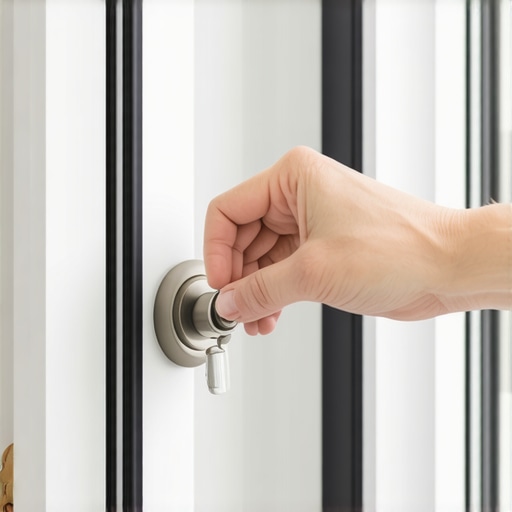
To properly fix a stuck lock, you must first clean the area. Use a vacuum with a brush attachment to remove any debris from the track and the meeting rail. If there is old, gummy oil present, clean it off with a mild solvent. Once the metal is clean and dry, apply the graphite to the internal moving parts of the cam. Unlike wet sprays, graphite needs to be worked into the surface. Cycle the lock ten to fifteen times to ensure the carbon layers have coated the friction points. If the lock still resists, you are likely looking at a ‘shimming’ issue. Check to see if the sash is sitting level. If one side of the sash is lower than the other, the lock will never line up. This often happens when the house settles or if the original installer skipped the Sill Pan. A window repair professional knows that the fix is often found in the frame, not just the hardware.
The Sustainability of Repair vs. Replacement
There is a persistent myth that new windows are the only way to achieve energy efficiency. While a modern triple-pane unit with Argon gas and a Low-E coating on Surface #3 will certainly perform better than an old single-pane unit, the ROI is often measured in decades. Maintaining your existing hardware is the most sustainable thing you can do. By keeping your locks functional and your weatherstripping intact, you maintain the air seal of the home. A locked window is a sealed window. If your locks are broken and you cannot pull the sashes tight against the meeting rail, you are essentially living with a hole in your wall. The $3 tube of graphite is not just a lubricant; it is a tool for maintaining the thermal integrity of your building envelope.
How To Apply Graphite Lubricant
1. Open the window sash to gain full access to the cam lock and the keeper. 2. Use a dry microfiber cloth to wipe away any existing dirt or old grease. 3. Insert the tip of the graphite tube into the gap where the locking handle meets the housing. 4. Give the tube a light squeeze to puff the powder into the mechanism. 5. Apply a small amount to the ‘hook’ part of the keeper on the opposite sash. 6. Cycle the lock repeatedly to distribute the powder. 7. Wipe away any excess dust with a cloth to prevent staining the trim.
{“@context”: “https://schema.org”, “@type”: “HowTo”, “name”: “How to Fix a Stuck Window Lock with Graphite”, “step”: [{“@type”: “HowToStep”, “text”: “Clean the lock and keeper of all dust and old grease using a dry cloth.”}, {“@type”: “HowToStep”, “text”: “Apply a small amount of dry graphite powder into the moving parts of the lock.”}, {“@type”: “HowToStep”, “text”: “Cycle the locking mechanism multiple times to ensure the lubricant is distributed.”}]}