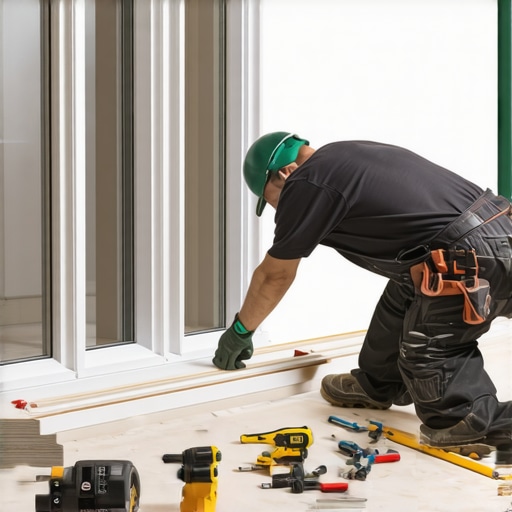
The Gravity of Professional Glazing
In the world of high-end fenestration, the difference between a window that lasts fifty years and one that fails in five is often measured in millimeters. Most amateur installers reach for a cheap bubble level, cross their fingers, and hope the framing is square. A master glazier knows better. We use the string and weight method, a technique as old as the cathedrals but as precise as a laser. When you decide to replace windows, you aren’t just buying glass; you are buying a thermal envelope. If that envelope is out of plumb by even an eighth of an inch, the entire mechanical system of the sash begins to degrade. This is particularly true in Northern climates like Chicago or Minneapolis, where the extreme temperature swings cause frame expansion and contraction that will punish any misalignment.
The Narrative of the Rotted Header
I remember a project in a historic district where I was called in for a simple window repair. The homeowner complained of a persistent musty smell. I pulled a vinyl window out of that house and the header was completely black with rot. Why? The previous installer relied on the nailing fin instead of proper flashing tape and never bothered to check if the rough opening was actually true. They had ‘shredded’ the opening to make the window fit, leaving gaps that were eventually stuffed with fiberglass insulation. That insulation acted like a sponge, holding moisture against the wood for three years. If they had used a plumb line and a proper sill pan, that water would have been directed outward according to the shingle principle. Instead, I spent three days rebuilding the structural framing before a single piece of glass could be set.
“Installation is just as critical as the window performance itself. A high-performance window installed poorly will fail.” AAMA Installation Masters Guide
The Physics of the String and Weight
The string and weight method, or the plumb bob technique, is the only way to ensure absolute verticality. You drop a weighted line from the top of the rough opening. Because gravity is constant, the line is perfectly vertical. You then measure the distance from the string to the frame at the top, middle, and bottom. If those numbers aren’t identical, your window is leaning. Why does this matter? An out-of-plumb window puts uneven pressure on the glazing bead and the weatherstripping. This leads to air infiltration. In a cold climate, air infiltration isn’t just a draft; it is the primary cause of condensation. When warm, moist indoor air hits the cold surface of a misaligned sash, you get water. That water ruins paint, breeds mold, and eventually leads to the rot I mentioned earlier.
Managing the Thermal Envelope
When we talk about windows in the North, the U-Factor is king. A lower U-Factor means the window is better at resisting non-solar heat flow. But even a triple-pane unit with a 0.20 U-Factor is useless if the rough opening isn’t sealed. We use shim blocks made of high-density plastic because wood shims can rot and compress over time. These shims must be placed at the load-bearing points, typically six inches from each corner and under every vertical mullion. This ensures the weight of the glass is transferred directly to the floor joists, preventing the frame from bowing. A bowed frame is a nightmare for any window cleaner, as the squeegee cannot maintain even pressure on a distorted pane, but more importantly, it breaks the seal of the argon gas fill.
The Technical Execution of Alignment
First, we inspect the sill. It must have a slight outward pitch. We install a sill pan, a flashing component that acts as a secondary gutter. Once the pan is set, we use the string and weight to check the side jambs. We are looking for ‘cross-corner’ measurements. If the distance from the top left to the bottom right is the same as the top right to the bottom left, the opening is square. We then set the window, using the plumb line to ensure the operable sash will slide or swing without friction. We then apply flashing tape in a specific sequence: sill first, then jambs, then the head. This follows the shingle principle where every upper layer overlaps the lower layer, ensuring water is always shed to the exterior.
“Standard Practice for Installation of Exterior Windows, Doors and Skylights requires that the fenestration product be installed plumb, level, and square within the manufacturer’s tolerances.” ASTM E2112
The Myth of Energy Savings
Many salesmen will tell you that new windows will pay for themselves in energy savings within five years. That is a lie. The real ROI for high-quality window replacement is found in comfort, acoustic dampening, and the prevention of structural damage. By using the string and weight method, we ensure that the Low-E coating, which reflects long-wave infrared radiation back into the room, is actually doing its job rather than being bypassed by air leaking through a crooked frame. We focus on the warm-edge spacers between the panes which reduce the dew point at the edge of the glass, preventing that tell-tale fogging that signifies a failed unit.
Maintenance and Longevity
Once the window is perfectly aligned and flashed, maintenance becomes simple. A professional window cleaner will appreciate a window that is square because the hardware won’t be under tension. When the sash moves freely, the weep holes can do their job of draining water out of the track. If the window is tilted, water pools in the corner, eventually bypassing the glazing bead and entering the home. Proper installation is the only way to ensure the longevity of the product. Don’t let an installer tell you that ‘expanding foam will fix the gap.’ Foam is an insulator, not a structural component or a water barrier. You want a mechanical fit, verified by gravity, and sealed with high-performance membranes. That is the difference between a glazier and a handyman.