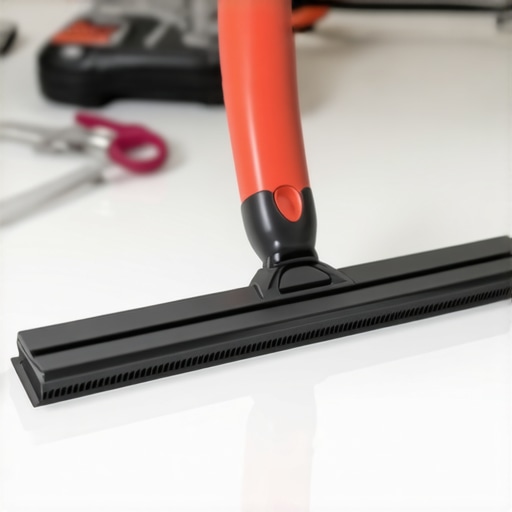
The Anatomy of a Perfect Swipe: Why Your Window Cleaner Swaps Rubber
In the world of high-end fenestration, a window is not just a piece of glass; it is a precision-engineered barrier. As a master glazier with over two decades in the field, I have seen homeowners spend $50,000 on high-performance triple-pane units only to ruin the experience by using a hardware-store squeegee with a fixed, dry-rotted blade. A professional window cleaner does not view their squeegee as a single tool, but as a chassis for the most critical component in their arsenal: the replaceable rubber strip. This distinction is the difference between a streak-free view and a scratched glazing bead or a damaged Low-E coating. To understand why these strips are replaceable, we have to look at the physics of the glass surface and the harsh reality of the job site.
“Installation is just as critical as the window performance itself. A high-performance window installed poorly will fail.” AAMA Installation Masters Guide
This industry standard applies to maintenance as well. A high-performance window maintained with substandard tools will eventually require a window repair or, in extreme cases of surface degradation, a full window replacement. I recall a specific instance that highlights the intersection of physics and maintenance. A homeowner called me in a panic because their brand-new, high-efficiency windows were ‘sweating’ and looked permanently foggy. I walked in with my hygrometer and showed them the interior humidity was over 60 percent. It was not a failure of the sash or the argon fill; it was their indoor climate. However, in their attempt to clean the ‘fog,’ they had used a cheap, fixed-blade squeegee that had trapped grit against the glass. Because the rubber was hard and non-replaceable, it didn’t flex over the microscopic debris, leading to permanent hairline scratches across the tempered surface. Had they used a professional tool with fresh, supple rubber, the debris would have been swept away rather than ground in.
The Molecular Science of Squeegee Rubber
Professional squeegees utilize replaceable strips primarily because of material fatigue. Most high-quality blades are made of EPDM (Ethylene Propylene Diene Monomer) or specialized silicone compounds. These materials are chosen for their ‘Shore A’ hardness rating, which determines how much the edge conforms to the glass. In cold northern climates, such as Chicago or Minneapolis, the glass surface temperature can drop significantly. When glass is cold, its surface tension changes, and rubber tends to harden. A professional window cleaner carries different grades of rubber for different seasons. A ‘soft’ rubber is used in winter to maintain flexibility, while a ‘hard’ rubber is used in summer so the blade doesn’t become ‘mushy’ and leave streaks behind. If the rubber were not replaceable, the professional would need to discard the entire brass or stainless steel channel every time the weather turned, which is economically and environmentally absurd.
Furthermore, the edge of a squeegee blade is a razor-sharp square. Even microscopic nicks, invisible to the naked eye, will leave a line of water on the glass. In the glazing trade, we refer to this as ‘bleeding.’ When you are dealing with a large rough opening that has been filled with expensive glass, any streak is an indictment of the installer’s or cleaner’s skill. Replacing the rubber ensures that the edge remains perfectly square. Once that edge rounds off due to friction against the glass (glass is, after all, an abrasive surface on a molecular level), it loses its ability to shear the water off the pane. This shearing action is what prevents mineral deposits from drying onto the glass, which is the leading cause of glass staining that eventually requires a professional to replace windows earlier than necessary.
Thermal Stress and the Glass Surface
In northern climates, the U-Factor is the most important number on your NFRC label. We want to keep heat inside. This is achieved through Low-E coatings, typically on Surface 3 of a double-pane unit. However, many modern high-performance windows also feature a hard-coat Low-E on Surface 4 (the interior surface) to further drive down the U-Factor. This interior coating is incredibly thin and can be sensitive to mechanical abrasion. A professional squeegee with fresh rubber is designed to glide over these coatings without compromising their integrity. A worn-out, stiff rubber blade increases the friction coefficient, which can, over time, wear down the microscopic layers of metal oxides that make the window energy efficient.
“The performance of the fenestration system is dependent upon the proper integration of all components, including the glass, the frame, and the maintenance protocols followed post-installation.” ASTM E2112 Standard Practice
When I perform a window repair, specifically regarding seal failures, I often find that the homeowner has been using aggressive chemicals and old cleaning tools. The chemicals degrade the glazing bead and the weep hole covers, while the tools put unnecessary pressure on the glass. A professional squeegee allows the user to apply minimal pressure. The chemistry of the rubber provides the ‘grip’ needed to evacuate the water. This is why you see professionals ‘fanning’ a window with rapid, overlapping strokes. This technique is only possible when the rubber is in peak condition. If the blade is even slightly nicked, the fan technique fails, and the cleaner must resort to straight pulls, which are less efficient and more likely to leave behind water that can seep into the sash and cause rot.
Why You Cannot Simply Repair a Bad Blade
Some people ask why they can’t just sand down an old squeegee blade. The reason is the ‘skin’ of the rubber. During the extrusion process, the rubber develops a smooth, non-porous outer layer. Once you sand it or once it cracks from UV exposure, you expose the porous interior of the compound. This interior structure holds onto dirt and minerals. Using a ‘repaired’ blade is essentially like using fine-grit sandpaper on your windows. In my 25 years of experience, I have seen more glass ruined by ‘frugal’ cleaning methods than by actual accidents. When you consider the cost to replace windows in a modern home, spending two dollars on a new rubber strip is the most cost-effective insurance policy you can buy. The shim and the sill pan keep the window level and dry, but the rubber strip keeps the glass clear and the coatings intact. Whether you are a professional window cleaner or a homeowner, the tool in your hand dictates the lifespan of the glass it touches. Don’t be a ‘caulk-and-walk’ DIYer; treat your glazing with the respect that precision engineering deserves.