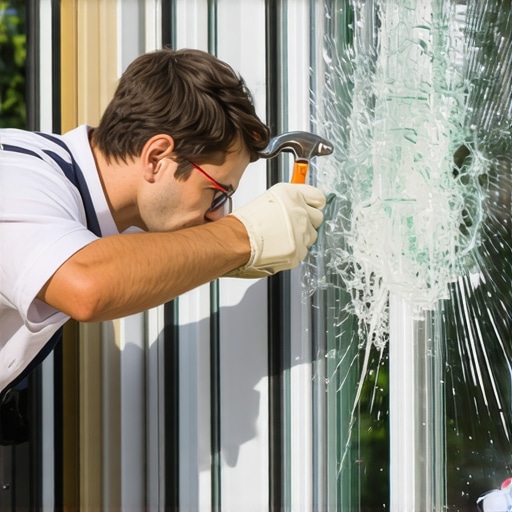
The Anatomy of a Shattered Boundary
In the world of fenestration, a broken window pane is more than an aesthetic eyesore; it is a critical failure of the building envelope. As a glazier who has spent nearly three decades analyzing the structural integrity of residential and commercial glass, I can tell you that the way you approach a broken pane dictates the longevity of the entire sash assembly. Many homeowners and novice window cleaner technicians view a crack as a simple glass swap. However, ignoring the physics of the sash or the delicate nature of the glazing bead often leads to permanent frame damage. When we talk about window repair, we are talking about maintaining a thermal barrier. A single breach in a dual-pane IGU (Insulated Glass Unit) destroys the U-factor of the entire opening, inviting the dew point to migrate into your living space.
The Condensation Crisis: A Master Glazier Perspective
I recall a call from a homeowner in a bitter January freeze. They had a small impact crack in a double-pane wood window and thought they could wait until spring. When I arrived, I didnt just see a crack; I brought out my hygrometer and thermal camera. The humidity near that window was 65 percent while the rest of the house was at 30 percent. The internal seal had failed, and moisture was saturating the wood sash from the inside out. It wasn’t just about the glass anymore; the entire rough opening was at risk of rot because the homeowner didn’t understand how a broken pane acts as a straw for atmospheric moisture. This is why immediate, safe removal of the compromised glass is the first step in any professional window repair protocol.
“Installation is just as critical as the window performance itself. A high-performance window installed poorly will fail.” – AAMA Installation Masters Guide
The Science of the Hammer and Towel Method
When you need to replace windows or individual panes, safety and precision are the twin pillars of success. The Hammer and Towel method is a time-tested trade secret used to contain kinetic energy and glass shards simultaneously. The physics is simple: glass is incredibly strong under compression but fails instantly under tension. When you strike glass with a hammer, the energy waves travel through the pane, causing unpredictable splintering. By placing a heavy, damp towel over the impact zone, you create a dampening effect. The towel absorbs the initial shockwave and provides a frictional barrier that prevents shards from becoming projectiles. This is essential when working with older annealed glass, which breaks into lethal, razor-sharp daggers rather than the relatively safe pebbles of modern tempered glass.
The Critical Importance of the Sash and Glazing Bead
Before you even pick up the hammer, you must understand the architecture of the sash. The glass isn’t just sitting there; it is held in place by a glazing bead or a stop, often secured with high-bond acrylic tape or silicone. In a professional window repair scenario, the goal is to remove the glass without marring the wood or vinyl profile. If you gouge the sash during the removal process, you create a path for water to bypass the new seal. This leads to the shingle principle failure: water must always flow down and away. Any deviation, such as a nicked sill pan or a bent glazing bead, allows capillary action to pull moisture behind the glass, where it will sit and ferment into mold. Proper use of a shim and a stiff putty knife to back out the beads before the hammer work is what separates a master from an amateur.
Climate Context: Why U-Factor Matters in the Cold
For those of us working in northern climates where the temperature differential between the interior and exterior can reach 70 degrees, the glass choice is paramount. When you replace windows, you aren’t just buying glass; you are buying an R-value. A broken pane in a northern home means the loss of the Argon gas fill and the Low-E coating effectiveness. In these regions, we prioritize a low U-factor. A lower U-factor means the window is better at retaining heat. When we perform a window repair in these zones, we ensure the new IGU has the Low-E coating on Surface #3 to reflect long-wave infrared radiation back into the room. If the installer flips the glass, the thermal performance is compromised, and you will see condensation forming on the interior glass surface every morning.
“The standard practice for installation of exterior windows requires a continuous seal between the window frame and the weather-resistive barrier.” – ASTM E2112
Step-by-Step Execution: Safely Removing the Broken Pane
To execute the Hammer and Towel method, first, use heavy-duty masking tape to create a grid over the broken glass. This adds a secondary layer of containment. Next, drape the towel over the pane. Using a 16-ounce claw hammer, deliver a firm, controlled strike to the center of the break. The goal is not to pulverize the glass but to collapse the structural integrity of the pane. Once the center is cleared, you can carefully use pliers to pull the remaining shards out of the glazing pocket. Pay close attention to the weep hole at the bottom of the frame. If glass shards or old sealant block these holes, the window will never drain properly, leading to water ingress into the wall cavity. After removal, inspect the rough opening. Ensure that the original flashing tape is intact and that no moisture has reached the structural headers.
The Professional Standard vs. The Quick Fix
Too often, I see window repair jobs where the technician used excessive amounts of caulk to hide a poorly fitted pane. In our trade, we call this a caulk-and-walk job. It might look sealed for a month, but as the seasons change and the frame undergoes thermal expansion and contraction, that caulk will pull away. A real professional ensures the new pane is set on proper setting blocks to allow for drainage and expansion. We verify that the muntin bars are aligned and that the operable parts of the sash move freely without binding. Replacing a window is a surgical procedure for your home. By using the Hammer and Towel method and respecting the technical requirements of the NFRC ratings, you ensure that your window cleaner will have a solid, clear surface to work on for years to come without worrying about fogging or rot.