The Frustration of the Hazy Sash
As a Master Glazier with over 25 years in the field, I have seen it all: from high-rise curtain walls to 19th-century historic wood sash restorations. One thing that never changes is the homeowner’s obsession with clear glass. You can buy a high-performance window with a U-Factor of 0.22, but if the glass is covered in a film of silicone overspray or environmental pollutants, the aesthetics of your investment are shot. Most people approach a window cleaner job with a bottle of blue ammonia and a paper towel, only to be left with a circular pattern of streaks that are visible every time the afternoon sun hits the glass at a low angle. That is because they do not understand the physics of the surface they are dealing with.
The Condensation Crisis and the Mineral Film
A homeowner called me in a panic because their new windows were ‘sweating.’ I walked in with my hygrometer and showed them the humidity was 60 percent. It wasn’t the windows; it was their lifestyle. But that condensation left a lasting problem. When moisture sits on the glass for months, it doesn’t just evaporate, it leaves behind mineral deposits that etch into the silica. This is where the standard window cleaner fails. I have had to explain to hundreds of clients that what they think is a ‘broken seal’ is often just a neglected surface that has accumulated layers of microscopic debris. This leads us to the professional secret: the chemistry of dish soap and the physical properties of cornstarch.
“Installation is just as critical as the window performance itself. A high-performance window installed poorly will fail.” AAMA Installation Masters Guide
The Molecular Landscape: Why Pro Cleaners Use Dish Soap
Glass looks flat to the naked eye, but under a microscope, it is a jagged landscape of peaks and valleys. When you use a generic window cleaner, the liquid often evaporates too quickly, leaving the dirt trapped in those valleys. Professional window cleaner specialists use a drop of dish soap, specifically a surfactant, because it breaks the surface tension of the water. This allows the solution to penetrate deeper into the glass surface. The surfactant molecules have a hydrophilic head that loves water and a hydrophobic tail that attaches to grease and oils. By suspending the dirt in the solution, you can squeegee it off the sash before it re-attaches to the glass.
The Cornstarch Secret: Polishing the Glazing Bead
Adding cornstarch to the mix sounds like a kitchen myth, but it is grounded in materials science. Cornstarch acts as a mild, non-crystalline abrasive. It is soft enough not to scratch the glass but hard enough to shear off the organic films that dish soap alone might leave behind. It also serves as a drying agent that prevents the formation of water spots. When you are dealing with a rough opening that has been recently shimmied and flashed, the construction dust is often highly abrasive. The cornstarch helps encapsulate these particles, protecting the glass during the scrub. This is especially vital for windows with a Low-E coating on surface number 4 (the interior surface), where you must avoid any harsh chemicals that could degrade the thin metallic layer.
The Thermal Logic: Cleaning for Climate Performance
In cold climates like Chicago or Minneapolis, we are fighting heat loss. We want every bit of Visible Transmittance (VT) we can get during the winter months to maximize passive solar gain. A dirty window can reduce your VT by as much as 10 percent. When you replace windows with modern triple-pane units, you are paying for that clarity.
“Visible Transmittance (VT) measures how much light comes through a product. A dirty window effectively lowers your VT and interferes with the thermal efficiency of the glazing unit.” NFRC Labeling Standard
If you live in the North, your focus is the U-Factor. You want the heat to stay inside. However, if that glass is coated in a film, it can actually absorb more radiant heat than intended, leading to thermal stress. I have seen glass cracks occur in large, fixed-lite windows simply because a dark layer of dirt caused uneven heating across the surface of the pane. Proper maintenance is not just about looks; it is about protecting the structural integrity of the glass.
When Cleaning Reveals the Need for Window Repair
Sometimes, no amount of cornstarch will fix the problem. While you are cleaning, pay close attention to the muntin and the glazing bead. If you see fogging between the panes that you cannot wipe away, you have a seal failure. This means the Argon or Krypton gas has escaped, and the desiccant inside the spacer bar is saturated. At this point, you are looking at a window repair or a full sash replacement. If you see water pooling on the sill pan, the problem is deeper. It usually means the weep hole is clogged or the flashing tape was improperly applied during the initial install. A pro window cleaner knows that their job is the first line of defense in home maintenance. They catch the rot before it hits the framing.
The Professional Mixing Guide
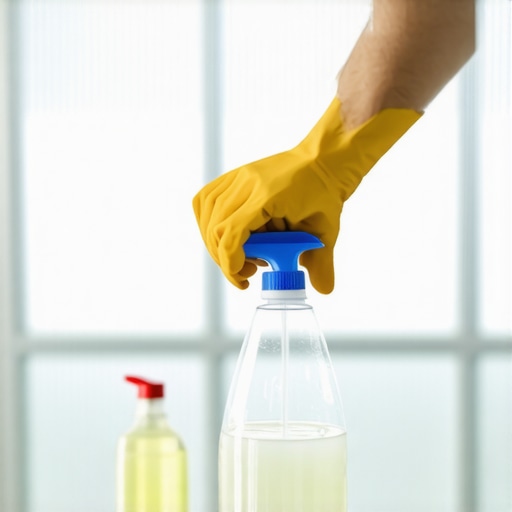
To achieve that streak-free finish, mix two gallons of distilled water with one tablespoon of dish soap and one tablespoon of cornstarch. Avoid doing this in direct sunlight. High Solar Heat Gain (SHGC) will cause the water to flash-evaporate, leaving the cornstarch behind as a white powder. Work in the shade, use a professional-grade squeegee, and always wipe your edges with a microfiber cloth to prevent water from seeping into the glazing pocket. Whether you are dealing with an operable double-hung or a fixed picture window, the technique remains the same: manage the water, manage the surface tension, and respect the glass.
Comments are closed.