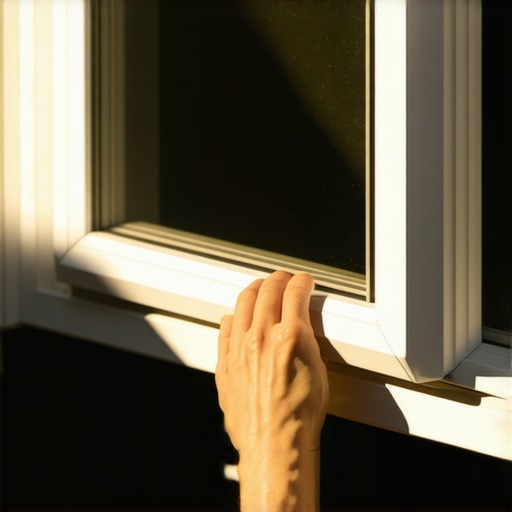
The Reality of Thermal Expansion in Modern Glazing
I pulled a dark bronze vinyl window out of a west-facing wall in Phoenix last July and the sill was shaped like a recurve bow. Why? The installer had jammed the window into a rough opening that was too tight, leaving no room for the material to breathe under the desert sun. This is the reality of modern fenestration: if you do not respect the physics of thermal expansion, the building will eventually reject the window. When we talk about window repair or the need to replace windows, we are often talking about a failure to account for the Coefficient of Linear Thermal Expansion. Every material, from the Sash to the Glazing Bead, moves at a different rate when the temperature climbs. In a hot climate, a dark-colored vinyl frame can reach internal temperatures exceeding 160 degrees Fahrenheit. If that frame is not engineered with internal aluminum or steel stiffeners, it will reach its glass transition temperature and begin to sag under the weight of the Insulated Glass Unit.
“Installation is just as critical as the window performance itself. A high-performance window installed poorly will fail.” – AAMA Installation Masters Guide
The Anatomy of a Warp: Why Frames Distort
Warping is rarely a spontaneous event. It is a slow-motion structural failure. Most homeowners notice it first when an Operable window becomes difficult to crank or slide. You might think you need a window cleaner to lubricate the tracks, but the issue is usually deeper. When a frame warps, it is often due to the lack of a proper shim at critical load points. Shims should be placed to support the weight of the glass without bowing the jamb. If an installer over-tightens the fasteners or uses expanding foam that is not low-pressure, the pressure against the frame becomes a constant force. Over several seasons of expansion and contraction, the vinyl or wood composite loses its memory and takes on a permanent bow. This is why the rough opening must be sized correctly. A window should never be a tight fit: it needs a perimeter gap to allow for the natural movement of the building header and the frame itself.
The South and West Elevation: A Solar Assault
In hot southern climates, the enemy is the Solar Heat Gain Coefficient. While a low U-Factor is great for keeping the cold out, the SHGC is the primary metric for preventing frame warp in sun-drenched states. We look for a Low-E coating on Surface #2: the inner face of the outer pane. This reflects the long-wave infrared radiation back into the atmosphere before it can penetrate the air space and heat up the interior Sash. If you have a single-pane window or an old double-pane without proper coatings, the radiant heat trapped between the panes can create a greenhouse effect that reaches 200 degrees. This heat doesn’t just stress the seals; it softens the frame material until the Sill Pan is no longer level. When the sill sags, the Weep Hole system fails, and water begins to back up into the wall cavity, leading to the rot I often find during a full-frame tear-out.
“The primary purpose of a flashing system is to direct water onto the exterior surface of the building envelope.” – ASTM E2112 Standard Practice
Prevention Through Proper Installation Science
To prevent warping early, you must focus on the Flashing Tape and the mechanical attachment. A window should be hung by its nailing fin, but the weight must be supported by the sill. We use a high-density plastic shim that will not rot or compress over time. I always insist on a backer rod and high-quality sealant rather than relying solely on the trim to block air. When you hire someone for window repair, they should be checking the squareness of the frame with a laser level. If the frame is out of square by even an eighth of an inch, the locking mechanism will not engage properly, putting uneven pressure on the Muntin and the frame corners. This uneven pressure is a precursor to a permanent warp. Furthermore, regular maintenance by a professional window cleaner can identify early signs of seal failure or frame stress before the damage requires a total replacement.
Material Choices: Vinyl vs. Fiberglass
Not all frames are created equal. High-quality uPVC (unplasticized polyvinyl chloride) is formulated with titanium dioxide to resist UV degradation, but it still has a high expansion rate. If you are worried about warping in a high-heat environment, fiberglass is the superior choice. Fiberglass has a thermal expansion rate almost identical to the glass itself, meaning the entire unit moves as a single piece. This reduces the stress on the Glazing Bead and the primary seals. However, regardless of the material, if the Flashing Tape isn’t integrated into the house wrap in a shingle-fashion, water will find its way behind the frame. Once water is trapped, the wood framing of the house will swell, pushing against the window frame and causing it to bow inward. It is a chain reaction of failures that starts with a single missed detail in the rough opening.