The Sound of Thermal Stress: Why Your Window Just Cracked
You are sitting in your living room on a quiet Tuesday evening when you hear it: a sharp, crystalline ‘ping.’ It is a sound I have heard in thousands of homes over my twenty-five years as a master glazier. You look toward the window and there it is, a hairline fracture snaking its way across the glass. In the world of window repair, this is not just an aesthetic flaw; it is a structural failure of the building envelope. Most homeowners immediately think of a window cleaner or a bit of tape, but the physics at play are far more complex. A crack in a window is a localized release of energy, often caused by a battle between the coefficient of thermal expansion and the rigid constraints of your rough opening.
“Water penetration through the window assembly is often a symptom of underlying structural movement or improper integration with the weather-resistive barrier.” – ASTM E2112-19c
A few years ago, I was called to a residence where the homeowner was in a total panic. They had just replaced windows in the entire north wing of their house, and within six months, three panes had developed identical ‘L’ shaped cracks. I walked in with my hygrometer and a thermal imaging camera. The homeowner thought the glass was defective. In reality, the humidity was hovering at 60 percent, and the internal temperature was kept at a steady 74 degrees while it was negative ten outside. The condensation on the glazing bead was freezing, expanding, and putting immense pressure on the edges of the glass. It wasn’t the windows; it was the lifestyle of the home failing to account for the dew point. This is the The Condensation Crisis in action, where the glass becomes the sacrificial lamb for poor environmental control.
The Immediate First Aid: Clear Nail Polish and Tape
If you need to stop a crack from migrating immediately, you have to stabilize the tension. The quickest method is using clear cyanoacrylate (super glue) or clear nail polish. You must first clean the area with a high-quality window cleaner to remove any oils or dust that will prevent adhesion. Apply the solvent into the crack, allowing it to wick into the fracture via capillary action. This fills the microscopic voids and creates a temporary bond. For added stability, apply a strip of clear packing tape to both sides of the glass. This is not a window repair; it is a bandage. It works by slightly distributing the wind pressure and thermal load across a larger surface area, preventing the tip of the crack from being the focal point of all stress.
The Anatomy of an IGU: Why Repair Is Often Impossible
To understand why a small crack is a death sentence for modern glass, we have to look at the Insulated Glass Unit (IGU). Modern windows are not single sheets of glass. They are a sandwich consisting of two or three panes separated by a spacer and filled with an inert gas like Argon. When a crack occurs, the hermetic seal is breached. The Argon escapes, and moisture-laden air enters the cavity. This is where the U-Factor—the measure of heat transfer—goes through the roof. Once that seal is gone, your energy efficiency drops to near zero for that specific opening. You cannot simply ‘fix’ the glass; you must replace the entire sash or the IGU itself.
“A window’s thermal performance is only as reliable as its seal integrity; once a crack propagates, the insulating gas is lost, and the U-factor degrades significantly.” – NFRC Performance Guidelines
In Northern climates, we focus heavily on the U-Factor. We use Low-E coatings on Surface #3 to reflect heat back into the room. When a crack develops, the temperature differential between the warm interior glass and the freezing exterior glass creates ‘edge stress.’ If the shim placement during installation was too tight, the frame has no room to expand. The glass is squeezed until it snaps. This is why I always rail against ‘caulk-and-walk’ installers who don’t respect the tolerances of the rough opening. A window needs to breathe within its frame.
Identifying the Type of Crack
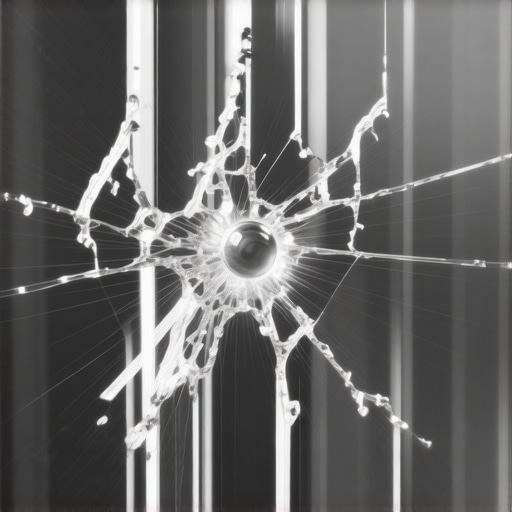
Not all cracks are created equal. An impact crack usually has a clear point of origin with radiating lines, like a spider web. This is usually from a stray rock or a bird. A stress crack, however, usually starts at the edge of the sash and meanders across the pane. These are the result of thermal shock. If you have a large piece of furniture or heavy drapes right against the glass, you create a heat pocket. The glass in that pocket expands while the glass shaded by the muntin remains cold. The resulting tension exceeds the strength of the glass, and it shears. If you see a crack with no impact point, you have a thermal management issue in your home.
Long-Term Solutions: To Repair or to Replace?
When you are looking to replace windows, you should consider the frame material as much as the glass. Vinyl is popular because it is cheap, but it has a high rate of thermal expansion. This puts more stress on the glass seals over time. Fiberglass, on the other hand, is made of glass fibers and resin, meaning it expands and contracts at almost the same rate as the glass itself. This synergy significantly reduces the likelihood of stress cracks. If you are constantly dealing with cracked panes in an older home, it is likely that the sill pan has degraded or the house has settled, putting the rough opening out of square. No amount of glass replacement will fix a structural twist that is crushing your windows.
The Professional Glazier’s Verdict
If you find a crack, do the tape and polish trick to keep the weather out for forty-eight hours, but call a professional immediately. Do not attempt to remove the glazing bead yourself unless you have the proper tools; you will likely snap the plastic or wood, making a simple IGU swap a much more expensive window repair. Maintaining your windows is about managing moisture and movement. Keep your tracks clean, ensure your weep holes are clear so water doesn’t pool and freeze against the glass, and never use a high-pressure power washer as a window cleaner, as it can blow out the seals you are trying so hard to protect. Remember, a window is a complex valve for heat and light. Treat it with the technical respect it deserves.”,”image”:{“imagePrompt”:”A close-up high-resolution photograph of a hairline stress crack on a double-pane window with visible condensation inside the glass unit and a professional glazier’s hand holding a thermal hygrometer in the background.”,”imageTitle”:”Thermal Stress Crack in Double Pane Window”,”imageAlt”:”Close up of a hairline stress crack on a residential window showing seal failure and moisture.”},”categoryId”:0,”postTime”:””} High-performance glass requires high-performance care.”