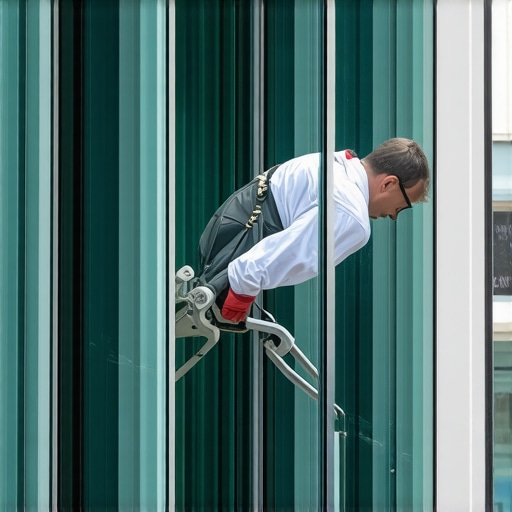
In twenty-five years of hanging glass from cranes and setting curtain walls in the biting wind, I have seen it all. But nothing gets my blood pressure up like watching a janitorial crew approach a high-performance commercial facade with the same bucket and squeegee they used on a residential storm door. A window in a skyscraper or a modern storefront is not just a piece of silica; it is a complex thermal barrier. When we talk about a window cleaner for commercial properties, we are discussing the maintenance of an engineered system, not just the removal of bird droppings. If you treat architectural glass like a kitchen window, you are fast-tracking a call for a window repair or, worse, a complete project to replace windows long before their service life should be over.
“Installation is just as critical as the window performance itself. A high-performance window installed poorly will fail.” – AAMA Installation Masters Guide
A few years ago, a property manager in a downtown high-rise called me in a panic because their brand-new, multi-million dollar glass installation was ‘sweating’ and looked ‘filthy’ from the inside. I walked into that lobby with my hygrometer and a thermal camera. I showed them that the interior humidity was spiked at 62 percent because the HVAC system wasn’t calibrated for the new glazing’s thermal break. It wasn’t the glass that was failing; it was a fundamental misunderstanding of the building’s dew point. The ‘dirt’ they saw was actually mineral deposits from an improper cleaning method that had etched into the Low-E coating. This is why commercial glass requires a surgical strategy.
The Physics of Commercial Fenestration
Commercial glass is often significantly thicker than residential glass, frequently starting at 1/4 inch for monolithic lites and going up to 1 inch or more for Insulated Glass Units (IGUs). In hotter climates, we focus heavily on the Solar Heat Gain Coefficient (SHGC). In these environments, the glass is often treated with a Low-E coating on Surface #2—the inner face of the outer lite. This is designed to reflect long-wave infrared radiation back into the atmosphere before it can penetrate the building’s thermal envelope. If a window cleaner uses abrasive chemicals or metal scrapers on these coatings, especially on older pyrolytic surfaces, they can strip the silver layers, leading to ‘ghosting’ or permanent haze that no amount of scrubbing can fix.
Furthermore, commercial systems rely on weep hole technology. Unlike a residential sash that might just have a simple drain, commercial curtain walls are pressure-equalized. If cleaning runoff carries heavy detergents or particulates into these weep holes, the internal drainage system of the rough opening clogs. Water then sits against the primary seals. This leads to the dreaded ‘fogged’ window—a sign of seal failure that usually means you have to replace windows because a simple window repair cannot restore the argon gas fill or the desiccant’s integrity once it is saturated.
The Chemical Reality of the Urban Environment
Commercial buildings are often located in high-traffic urban corridors where they are bombarded by atmospheric pollutants, exhaust fumes, and acid rain. These contaminants do not just sit on the glass; they bond with it. When a window cleaner tackles a commercial building, they must understand the ‘Shingle Principle’ of water management. Water must flow down and out. If the cleaning solution is too alkaline, it can react with the glazing bead or the structural silicone, causing the gaskets to lose their elasticity. Once those gaskets shrink, the glass starts to rattle, and the thermal performance vanishes.
“Standardized cleaning protocols for architectural glass must account for the specific orientation of Low-E coatings to prevent irreversible scratching of the pyrolytic or soft-coat layers.” – NFRC 700
I always tell building owners that the shim and sill pan are the unsung heroes of their facade, but they are only as good as the maintenance they receive. If you are noticing water pooling at the base of your interior frames, you don’t necessarily need a window cleaner; you need a glazier to inspect the flashing tape and drainage paths. Often, what looks like a leak is actually a failure of the internal weep hole system due to years of debris buildup from cheap, soapy water used by unskilled crews. We call this ‘caulk-and-walk’ maintenance, and it is the primary reason why buildings have to replace windows decades early.
When to Pivot from Cleaning to Repair
Every commercial property manager should know the signs that a window repair is no longer an option. If you see ‘rainbowing’ or iridescent oil-slick patterns on the glass, your IGU has likely collapsed, and the glass lites are touching. If you see white powder inside the glass, the desiccant has failed. At this point, no amount of cleaning will restore the building’s aesthetic or its energy efficiency. You are looking at a full-scale operation to replace windows. To avoid this, a professional maintenance strategy involves checking the glazing bead for cracks and ensuring the operable units are properly balanced and the hardware is lubricated. A window that doesn’t close tightly isn’t just a draft; it is a point of entry for moisture that will rot the surrounding structure from the inside out.