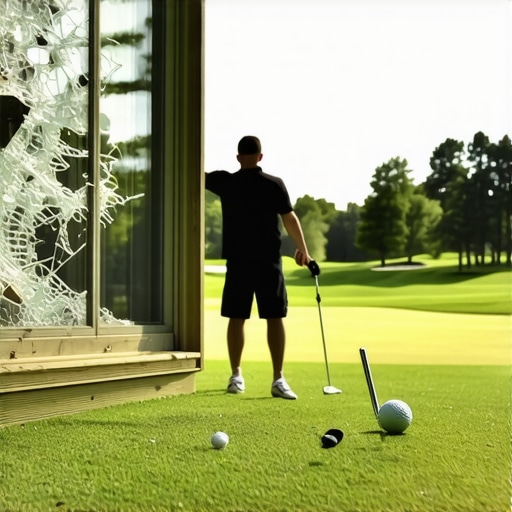
The sharp, high-frequency crack of a golf ball meeting a double-pane glass lite is a sound that haunts homeowners. As a master glazier with a quarter-century in the field, I can tell you that the physics of that moment are more complex than just a hole in the wall. You are no longer looking at a clear view; you are looking at a failed thermal envelope. The immediate response is not just about grabbing a broom, it is about mitigating a cascading series of structural and thermal failures. When that projectile, which weighs approximately 1.62 ounces and travels at high velocity, hits the glass, it creates a point of impact that radiates stress through the entire sash. Whether you have a wood, vinyl, or fiberglass frame, the energy of that impact has likely compromised more than just the visible glass. This guide will walk you through the precise technical steps to manage this breach, from the initial safety sweep to the long-term decision between window repair or a full replacement of the unit.
The Narrative: A Lesson in Temporary Fixes
I recall a call I received three years ago from a homeowner in a windy suburb. They had a golf ball break a small upper lite in a fixed transom. Instead of calling for a proper repair, the homeowner used a clear packing tape to seal the break. They figured since it was the outer lite of a double-pane unit, the inner lite would keep the house warm. I walked into that house three years later and the smell of mold was overwhelming. I pulled that vinyl window out and the header was completely black with rot. Why? The previous installer had relied on the nailing fin instead of proper flashing tape, and the cracked glass had allowed moisture to bypass the glazing bead and pool behind the sill pan. This is why I am intolerant of the caulk and walk approach. A broken window is an entry point for the elements, and if you do not handle the flashing and the seal correctly from the moment of impact, you are inviting structural decay into your home.
Step 1: Immediate Safety and Glass Stabilization
The first priority is safety. If the glass is tempered, it will have shattered into thousands of small, relatively blunt cubes. If it is annealed glass, you are dealing with literal daggers. Put on thick, leather-palmed work gloves. Do not reach for the vacuum yet. Use a heavy-duty broom to gather the large shards. As an expert, I suggest using a professional window cleaner or a damp microfiber cloth for the final dust. Small glass splinters can migrate into carpets and stay there for years. Once the area is clear of debris, look at the sash. If the broken glass is still hanging in the frame, you must stabilize it. Use high-quality painter’s tape or duct tape to create a grid over the remaining glass. This prevents shards from falling out due to wind pressure or vibrations from the street. Check the rough opening for any signs of shifted shims or cracked muntins. If the impact was hard enough, it could have knocked the window out of square, which will make the future replacement much more difficult.
Step 2: Assessing the Thermal and Climate Logic
In our northern climate, a broken window is a thermal emergency. If you are in a cold region like Chicago or Minneapolis, the U-Factor is your primary concern. The U-Factor measures the rate of non-solar heat loss. A standard double-pane window with an Argon gas fill typically has a U-Factor around 0.28. The moment that glass breaks, the Argon gas, which is denser than air and provides superior insulation, escapes. It is replaced by humid ambient air. This raises your U-Factor to nearly 1.0, which is essentially the same as having a hole in the wall. This leads to immediate heat loss and, more dangerously, condensation on the inner pane.
“Installation is just as critical as the window performance itself. A high-performance window installed poorly will fail.” – AAMA Installation Masters Guide
This condensation is not just a nuisance; it is a sign that the dew point has shifted into your wall cavity. If you do not seal the break with a rigid piece of plywood or a heavy-weight plastic shear, you are allowing the cold air to pull moisture from your home and deposit it inside the sash. This leads to the exact rot I described in my earlier anecdote. If you are in the south, the enemy is the Solar Heat Gain Coefficient (SHGC). A broken outer lite removes the Low-E coating, which is usually located on Surface #2. This allows long-wave infrared radiation to pour into your home, skyrocketing your cooling costs and fading your furniture within weeks.
The Physics of the IGU: Why You Cannot Just Replace a Pane
Many homeowners ask if they can just have a window cleaner or a handyman swap out one piece of glass. The answer is almost always no. Modern windows use an Insulated Glass Unit (IGU). This is a sealed sandwich of two or more panes separated by a spacer bar. Inside that spacer is a desiccant, often a molecular sieve, which absorbs any trace amounts of moisture. The unit is sealed with a primary seal of polyisobutylene and a secondary seal of silicone or polysulfide. When the glass breaks, the seal is blown. The desiccant becomes saturated within hours. If you try to just replace one pane, you will have permanent fogging inside the window within a month. This is why you must replace windows by ordering a full IGU from a manufacturer. You need to measure the width, height, and overall thickness of the unit (the stack) to the nearest sixteenth of an inch. Use a caliper to ensure the glass thickness, usually 1/8 inch or 3/16 inch, matches the original specifications.
The Professional Path: Window Repair vs. Full Replacement
When you call a professional, they will evaluate the frame material. If you have vinyl windows, they will check if the glazing bead, the strip of plastic that holds the glass in place, is still pliable. If the window is old, the vinyl may be brittle, and removing the bead will shatter it. In wood windows, they will look at the putty or the wood stops. If the impact has damaged the sash itself, a simple glass replacement will not suffice.
“A window’s thermal performance is a system-wide metric. A single point of failure in the glass or seal can negate the insulating value of the entire assembly.” – NFRC Performance Guidelines
If your windows are more than 20 years old, the golf ball might be the catalyst you need to replace windows throughout the house. Older units lack the warm-edge spacers and multi-layered Low-E coatings that modern units offer. However, if the frames are in good shape, a simple IGU replacement is a cost-effective way to restore your thermal envelope. During the repair, ensure the technician checks the weep holes. These are small channels at the bottom of the frame that allow water to exit. If these are clogged with glass shards or old sealant, water will back up into your home.
Final Technical Considerations
Before the glass is replaced, look at the flashing tape and the sill pan. If you see any signs of water staining on the drywall below the window, the impact might have revealed a pre-existing leak. Use this opportunity to fix the flashing. Ensure that the new glass unit is set on proper rubber setting blocks. These blocks prevent the glass from touching the frame directly, which allows for the different rates of thermal expansion between the glass and the vinyl or wood. Without shims and setting blocks, the new glass will likely crack under the pressure of the next temperature swing. Water management is a science, not an afterthought. When the new unit is installed, make sure the perimeter is sealed with a high-grade neutral-cure silicone that remains flexible. Avoid cheap acrylic caulk, as it will shrink and pull away from the frame within a year, leaving you right back where you started with a drafty, inefficient window.