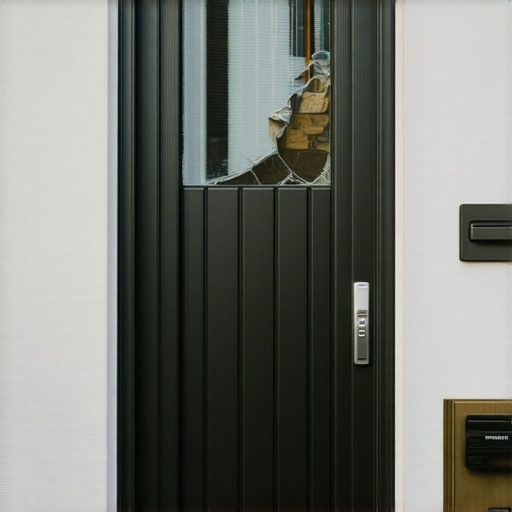
The Immediate Crisis of a Breached Envelope
A smashed window pane is not merely an aesthetic eyesore or a minor inconvenience; it is a critical failure in your home’s thermal and structural envelope. As a glazier with over two decades in the field, I have seen every type of failure imaginable, from stray baseballs to sophisticated forced entries. When that glass shatters, you are no longer dealing with a controlled environment. You are dealing with an uncontrolled hole in your wall that invites moisture, pests, and thermal chaos. The first mistake most homeowners make is underestimating the complexity of the Sash and the Glazing Bead system. They reach for a roll of duct tape and a trash bag, which is the equivalent of putting a band-aid on a compound fracture. You must understand that once the IGU (Insulated Glass Unit) is breached, the desiccant within the spacer bar is immediately saturated, and the insulating gas (usually Argon) is gone. There is no such thing as a simple window repair for a double-pane unit; you are looking at a full component replacement to restore the original U-Factor and thermal performance of the opening.
The Installation Autopsy: A Case Study in Failure
I recall a specific call out to a suburban home where a rogue tree limb had punched through a second-story bedroom window. The homeowner had attempted a temporary fix by screwing a piece of OSB directly into the vinyl frame. When I arrived to perform the actual window repair, I discovered that their screws had bypassed the internal chambers of the frame and punctured the Sill Pan. Water from a light overnight drizzle had traveled down the screws, bypassed the Flashing Tape, and was already beginning to rot the Rough Opening header. This is why professional protocols exist. The previous installer had relied solely on the nailing fin without proper secondary barriers, and the homeowner’s ‘quick fix’ nearly cost them a full structural rebuild. We had to strip the siding back just to ensure the Shim spaces weren’t becoming a breeding ground for mold. This is the reality of windows: they are the most vulnerable point of any structure because they must be both transparent and airtight, two goals that are naturally at odds with one another.
“Installation is just as critical as the window performance itself. A high-performance window installed poorly will fail.” – AAMA Installation Masters Guide
Step-By-Step: Professional Stabilization Protocols
The first step in any glass breach is safe extraction. You must wear Level 3 cut-resistant gloves. Standard leather will not protect you against the surgical sharpness of Annealed glass shards. If the window is Tempered glass, it will have shattered into thousands of small dice-like pieces, which are safer but often travel into the Weep Hole channels, blocking the drainage system of the frame. You must vacuum these channels out completely. Use a stiff putty knife to carefully remove the Glazing Bead. This is the plastic or wood strip that holds the glass unit against the Sash. Do not force it; if you snap the bead on an older vinyl window, finding a matching profile is like searching for a needle in a haystack. Once the beads are removed, you can tip the glass unit out. If the glass is still partially intact, use heavy-duty suction cups or crisscross the entire surface with reinforced filament tape to prevent further shedding during removal.
Securing the Opening without Frame Damage
To secure the home, do not screw anything into the window frame itself. Instead, use a ‘sandwich’ method. Cut a piece of half-inch plywood to be slightly smaller than the Rough Opening. Place the plywood on the exterior and use 2×4 bracing on the interior, drawing them together with bolts. This creates a secure, weather-tight seal that does not compromise the structural integrity of the Operable parts of the window. If you are in a cold climate, you should also stuff the cavity with mineral wool insulation to maintain some semblance of a thermal barrier. A smashed pane in January can drop an interior room’s temperature to freezing in hours, leading to pipe bursts if the room is not isolated from the rest of the HVAC system.
The Science of Replacement: Why You Cannot Just ‘Clean’ It
I often hear homeowners ask if a window cleaner can simply buff out a crack or if they can seal a hole with clear resin. The answer is a hard no. Modern windows are complex thermal sandwiches. A standard IGU consists of two or more lites of glass separated by a spacer bar. The air space between the lites is filled with an inert gas like Argon, which has a lower thermal conductivity than dry air. The glass surfaces are coated with Low-E (Low Emissivity) layers of silver or other metal oxides. If you have a smashed pane in a northern climate, you want that Low-E coating on Surface #3 to reflect heat back into the house. If you are in the south, it should be on Surface #2 to reflect solar radiation outward. When the glass breaks, the vacuum seal is lost, and the U-Factor (the rate of heat loss) skyrockets. You are essentially paying to heat the outdoors. When you replace windows, you are not just buying glass; you are buying a calibrated thermal valve.
“The performance of an Insulated Glass Unit is permanently compromised once the seal or the lite itself is breached, necessitating a full replacement of the glass pack.” – NFRC Performance Standards
Long-Term Decisions: Repair vs. Full Replacement
When faced with a smashed pane, you must decide if you want a sash replacement or a full-frame replacement. A sash replacement is faster and keeps the existing trim intact, but it assumes that the original Rough Opening is square, level, and plumb. If your home has settled, a new sash might not seal correctly against the weatherstripping, leading to air infiltration that no amount of caulk can fix. A full-frame replacement, while more expensive and invasive, allows a master glazier to inspect the Sill Pan and ensure that the Flashing Tape is integrated correctly with the house wrap. In my experience, if the window is more than 15 years old, a single smashed pane is often the catalyst for a full upgrade. Modern Fiberglass frames offer far superior dimensional stability compared to old vinyl, which expands and contracts at a rate that eventually fatigues the primary seals of the IGU. If your Muntin bars are internal, they are also gone once the glass is smashed, and trying to match an old grid pattern can be nearly impossible with newer glass technology.
Technical Specifications of Modern Glazing
When you call for a quote to replace windows after an emergency, be prepared with the technical specs. You need the height, width, and thickness of the IGU. Standard units are typically 7/8 inch or 1 inch thick. If you have a high-end window, it might be triple-pane. You must also specify if you need Laminated glass for sound dampening or security. Laminated glass consists of an interlayer of Polyvinyl Butyral (PVB) sandwiched between two lites of glass. Even when smashed, the PVB layer holds the glass together, preventing an intruder from entering and keeping the weather out. This is the gold standard for security and is often required in coastal high-wind zones. Furthermore, ensure your installer uses high-quality Shim materials. Plastic shims are preferable to wood because they do not rot or compress over time. The Rough Opening should have a 1/4 inch to 1/2 inch gap on all sides to allow for expansion, which is then filled with closed-cell low-expansion foam. Never use high-expansion ‘gap and crack’ foam from a big-box store; it can exert enough pressure to bow the frame and prevent the window from being Operable.
Conclusion: The Glazier’s Final Word
Do not treat a smashed window as a DIY weekend project. The risks of improper water management and thermal failure are too high. A professional window repair involves more than just swapping glass; it involves an audit of the entire opening’s performance. From the Weep Hole functionality to the integrity of the Sill Pan, every component must work in harmony to protect your home. Secure the opening properly using the sandwich method, avoid damaging the frame, and consult a specialist who understands the physics of the Dew Point and Solar Heat Gain. Your home’s envelope is only as strong as its weakest lite of glass.