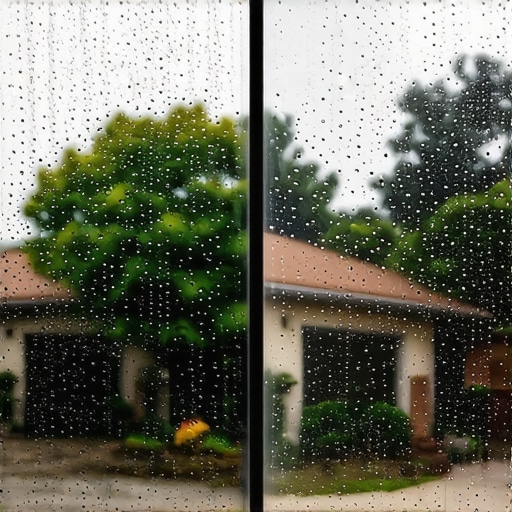
In the world of fenestration, the term self-cleaning is often tossed around by salespeople as if it were a magic spell that eliminates the need for a window cleaner forever. As a glazier who has spent nearly three decades leveling rough opening tolerances and ensuring the sash sits perfectly in the frame, I can tell you that the reality is far more grounded in photocatalytic chemistry than in magic. For many homeowners, the decision to replace windows is driven by a desire to reduce labor and increase efficiency. However, if you do not understand the physics of the glazing bead and the coating surface, you might find yourself needing a window repair specialist sooner than you think.
A homeowner called me in a panic because their expensive new self-cleaning windows looked milky after a summer storm. I walked in with my digital hygrometer and a UV meter. I showed them that the relative humidity near the glass was spiking because of their heavy interior drapes, but more importantly, the windows were under a massive porch overhang. I had to explain that their lifestyle and the architectural design were starving the glass of the UV light it needs to function. It wasn’t the windows that were failing, it was the application of the technology to a shaded environment.
“Installation is just as critical as the window performance itself. A high-performance window installed poorly will fail.” – AAMA Installation Masters Guide
To understand self-cleaning glass, we must look at the titanium dioxide (TiO2) coating. This is typically a microscopic layer applied to the exterior surface (Surface #1) of the glass while it is still in the float line, a process known as pyrolytic deposition. This makes the coating part of the glass itself rather than a film that can peel. The technology works in two distinct stages. The first is the photocatalytic stage. When UV light hits the coating, it triggers a reaction that breaks down organic dirt, such as bird droppings or tree sap. This is not instantaneous. It requires a consistent solar load. In a cold climate like Chicago or Minneapolis, the winter sun angle is lower, which means the activation period for the TiO2 might be shorter than in the summer months.
The second stage is the hydrophilic effect. While standard glass is somewhat hydrophobic, meaning water beads up and leaves mineral spots as it dries, self-cleaning glass loves water. The coating reduces the contact angle of water droplets to nearly zero. This causes the water to sheet off the glass in a uniform curtain, washing away the organic debris that was loosened during the photocatalytic stage. If your window is tucked under a deep soffit where rain cannot reach it, the hydrophilic benefit is lost, and you will eventually need to manually rinse the glass to complete the cycle. This is where many people get frustrated and think they need to replace windows again when they really just need a garden hose.
When we talk about thermal performance in northern climates, the U-Factor remains the king of metrics. A window with a self-cleaning coating can still be part of a high-performance insulated glass unit (IGU). In these regions, we are fighting heat loss. We want a low U-Factor and a warm-edge spacer to prevent the dew point from being reached on the interior glass surface. If you see condensation on the inside of your glass, that is a humidity and ventilation issue, not a glass failure. However, if the condensation is between the panes, the seal has failed and you are looking at a mandatory window repair or a full IGU replacement. The self-cleaning coating on the outside does nothing to prevent interior fogging, which is a common misconception.
“The NFRC provides energy performance ratings in several categories to help consumers compare products. U-factor measures how well a product prevents heat from escaping.” – NFRC Fact Sheet
The trade cant of a master glazier includes terms like the sill pan and flashing tape. These are the unsung heroes of any installation. You can buy the most advanced titanium-coated triple-pane glass on the market, but if the installer does not use a proper shim to level the unit or fails to integrate the window into the building’s drainage plane, you will have water infiltration. Water management is a science that dictates every window must be treated as a hole in the wall that wants to leak. We use a weep hole in the bottom of the frame to ensure that any moisture that bypasses the glazing bead can find its way back to the exterior. If these holes are clogged by paint or debris, the water will back up into the rough opening and rot your headers.
For those considering the investment, the math behind the ROI of self-cleaning glass is not just about energy, it is about maintenance costs. While it may not eliminate the need for a professional window cleaner entirely, it can reduce the frequency of cleanings by seventy-five percent. This is especially valuable for hard-to-reach second-story windows or large fixed picture windows. But remember, the coating is only on the outside. The interior glass still attracts dust, pet hair, and oils from fingerprints. You still have to maintain the interior sash and ensure the weatherstripping is not brittle. If you find the window is difficult to operate, it might not be the glass at all, but a failed balance system or a warped frame that requires a technical window repair.
In conclusion, self-cleaning glass is a remarkable piece of engineering that utilizes the power of the sun and rain to keep your view clear. It is not a magic solution that works in the shade, nor is it a substitute for a quality installation. Before you decide to replace windows, consult with a specialist who understands the orientation of your home and the specific UV exposure of each opening. Proper flashing, a level rough opening, and an understanding of photocatalytic cycles will ensure your windows perform for decades, not just until the first storm of the season.