In twenty-five years of handling glass, from heavy commercial curtain walls to the delicate muntin of a historic wood sash, I have seen every form of glass degradation imaginable. Most homeowners treat a window as a simple transparent barrier, but to a master glazier, it is a sophisticated porous material that interacts constantly with its environment. When a client calls me because they have white, hazy circles on their glass that won’t come off with a standard window cleaner, they often fear the worst. They think they need to replace windows entirely. Usually, what they are looking at is not a failure of the IGU (Insulated Glass Unit) seal, but a chemical bond of alkaline minerals known as hard water spots. These spots are not just sitting on the surface; they are often etched into the microscopic valleys of the glass. Understanding how to neutralize these deposits without using toxic hydrofluoric acid or abrasive scouring pads that ruin the glazing bead is a critical skill for any specialist in window repair.
“Installation is just as critical as the window performance itself. A high-performance window installed poorly will fail.” – AAMA Installation Masters Guide
I recall a specific case involving a homeowner in the suburbs who called me in a panic because their new windows were ‘sweating’ and turning white. I walked in with my hygrometer and a high-powered flashlight. I showed them that the humidity was nearly sixty percent inside, but more importantly, I looked at the exterior. Their irrigation system was hitting the operable sash every morning at 5:00 AM. It wasn’t a window defect; it was their lifestyle and their landscaping. The hot afternoon sun was baking those minerals into the glass, creating a Stage 2 corrosion situation. This is where the chemistry of the glass meets the physics of the climate. In high-heat regions where the Solar Heat Gain Coefficient (SHGC) is a primary concern, the glass surface can reach temperatures that essentially fire-cure these minerals onto the silica. If you are in the South, you want your Low-E coating on Surface #2 to reflect that radiant heat back outside, but even the best coating cannot stop the physical buildup of calcium and magnesium from a sprinkler head.
The science of hard water spots involves an ion exchange. When mineral-rich water evaporates, it leaves behind alkaline deposits. If left long enough, these minerals begin to react with the silica in the glass, creating a permanent etch. To fix this without toxic chemicals, we must look at the pH scale. A mild acid like white distilled vinegar (acetic acid) or lemon juice (citric acid) is the first line of defense. However, for deep etching, you need a mechanical polish that is softer than glass but harder than the mineral. This is where cerium oxide comes into play. It is a non-toxic compound used by professionals to polish glass to its original optical clarity. Before you decide to replace windows, you must attempt a professional-grade restoration. Many people reach for a steel wool pad, but unless it is #0000 grade and used with extreme caution, you risk scratching the surface, which only gives minerals more places to hide in the future.
When we talk about window repair in the context of glass clarity, we must also look at the perimeter. Often, the minerals are not just on the glass; they are clogging the weep hole system in the frame. If the weep holes are blocked, water sits in the sill pan, creating a humid microclimate that accelerates the etching of the glass at the bottom edge. A proper glazier knows that a clean window is only half the battle; you must ensure the entire drainage system of the rough opening is functional. If the water cannot escape the track, it will eventually find a way into the subfloor, leading to the kind of rot that makes a simple cleaning job turn into a full frame replacement. I always check the shim placement during a repair to ensure the frame hasn’t sagged, which can also trap water and minerals in the corners of the sash.
“Standard Practice for Installation of Exterior Windows requires a water-resistive barrier to be integrated with the window flashing to prevent moisture infiltration.” – ASTM E2112
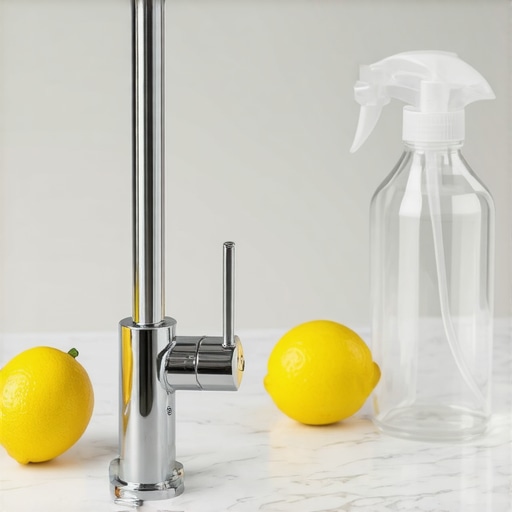
For a truly non-toxic window cleaner that handles mineral buildup, I recommend a mixture of fifty percent distilled water and fifty percent high-grade white vinegar, with a drop of biodegradable dish soap to break the surface tension. The distilled water is key; using tap water to clean hard water spots is like trying to put out a fire with gasoline. You are simply adding more minerals to the problem. Apply the solution and let it dwell for several minutes. This dwell time allows the acid to break the ionic bond of the calcium. After the dwell, use a microfiber cloth to gently agitate the surface. If the spots remain, you are likely dealing with Stage 2 etching, and a professional glass polishing paste is required. Remember, the goal is to preserve the integrity of the glass and the surrounding glazing bead without introducing harsh fumes into the home. Keeping your windows clear is not just about aesthetics; it is about maintaining the VT (Visible Transmittance) levels that your windows were designed to provide, ensuring your home remains bright and energy-efficient for decades.