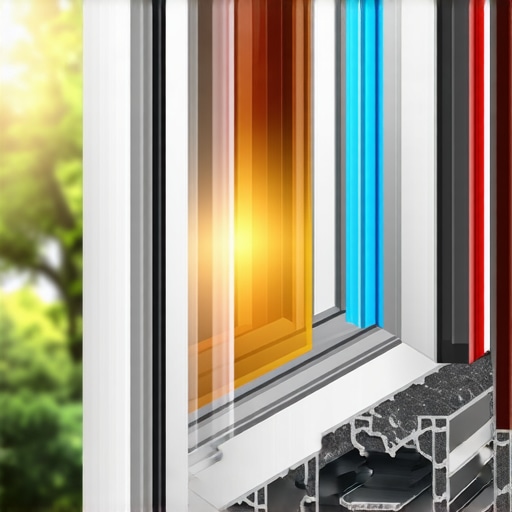
Beyond the Sales Pitch: The Physics of Insulated Glass Units
In my twenty-five years as a glazier, I have seen every gimmick in the fenestration industry. I have seen installers use enough caulk to hide a structural failure and salesmen promise that a single window repair would slash a heating bill by half. But nothing causes more confusion for a homeowner than the invisible gas trapped between two panes of glass. A homeowner once called me in a panic because their new windows were sweating profusely on a Tuesday morning in November. They were convinced the seal had failed and the argon gas had leaked out. I walked into their living room with my hygrometer and showed them that the interior humidity was sitting at sixty percent while the outside temperature was twenty degrees. It was not a window failure; it was their lifestyle choices and a lack of air exchange. The windows were actually doing their job too well, holding the cold exterior glass temperature at bay while the interior pane remained warm enough to reach the dew point. This is where the science of argon gas fills truly matters.
The Thermal Conductivity of Noble Gases
To understand why we replace windows with gas-filled units, we have to look at the molecular level. An Insulated Glass Unit (IGU) is a sandwich of glass separated by a spacer bar. In a standard cheap window, that space is filled with dry air. Air has a thermal conductivity of approximately 0.024 W/mK. Argon, which makes up about one percent of the atmosphere we breathe, is much denser and has a lower thermal conductivity of roughly 0.016 W/mK. When we replace the air with argon, we are significantly slowing down the transfer of heat through the window via conduction. In a cold climate like Chicago or Minneapolis, this is the difference between a sash that feels like an ice cube and one that maintains a comfortable surface temperature. This reduction in heat transfer is why argon is a staple in meeting modern energy codes.
“Installation is just as critical as the window performance itself. A high-performance window installed poorly will fail.” – AAMA Installation Masters Guide
The Critical Role of the Low-E Coating
Argon gas does not work in a vacuum; it is a teammate to the Low-Emissivity (Low-E) coating. In northern climates, we typically apply this microscopically thin metallic layer to Surface #3 (the exterior-facing side of the interior pane). This reflects long-wave infrared radiation (heat) back into the room. The argon gas fills the space between the panes to minimize the convective loops that occur inside the IGU. Without the gas, the air inside the window would circulate in a tiny weather system: warming up against the inner pane and cooling down against the outer pane, effectively carrying your expensive furnace heat to the outdoors. By using a denser gas, we thicken the ‘fluid’ in that gap, making it harder for those convective currents to form. This is the ‘Glazing Zoom’ that many window cleaner professionals see when they notice a window is stayng clear of frost while others in the same house are covered in ice.
Decoding the NFRC Label
When you are looking to replace windows, do not listen to the marketing fluff. Look at the NFRC (National Fenestration Rating Council) label. The U-Factor is the most important number for those of us in the North. It measures the rate of heat loss. A standard double-pane clear glass window might have a U-Factor of 0.48, but once you add a Low-E coating and an argon gas fill, that number can drop to 0.30 or even 0.27.
“The thermal performance of a fenestration system is a combination of glass, frame, and the gas fill within the IGU.” – NFRC Technical Manual
The Solar Heat Gain Coefficient (SHGC) tells us how much solar radiation comes through. In the North, we actually want a slightly higher SHGC to help heat the home in the winter, whereas in the South, you want that number as low as possible to block the sun. If you are in a southern climate, we put the Low-E on Surface #2 to bounce the heat away before it even enters the gas-filled chamber.
The Longevity of Argon Fills and Seal Integrity
A common question I get during a window repair consultation is whether the gas leaks out. The industry standard, as outlined in ASTM E2112, recognizes that a high-quality dual-seal IGU will lose about one percent of its gas per year. This means even after twenty years, you still have eighty percent of your argon left, which still provides significant thermal benefits. The failure happens when the primary seal (usually polyisobutylene) or the secondary seal (silicone or polysulfide) breaks down. This is often caused by poor drainage. If the weep hole in the frame is blocked by debris or poor installation, the IGU sits in standing water. This water eventually breaks down the seal, leading to the dreaded fogging. At that point, a window cleaner cannot help you; the unit must be replaced.
Installation: The Rough Opening and Beyond
You can buy the most expensive triple-pane krypton-filled window on the market, but if the installer does not understand the rough opening, you have wasted your money. I have seen countless ‘caulk-and-walk’ jobs where the window was not properly centered. We must use a shim to ensure the window is level, plumb, and square so the sash operates correctly and the weatherstripping compresses as designed. We also need a proper sill pan and flashing tape to ensure that any water that gets past the exterior cladding is directed back outside. Without a functional drainage plane, the wood around your window will rot, and the thermal performance of your argon-filled glass will be the least of your worries. Whether you are performing a full-frame replacement or a pocket installation, the water management system is the priority. Always ensure your installer uses a high-quality closed-cell backer rod before applying the interior perimeter sealant to prevent air infiltration around the frame.
Final Verdict on Gas Fills
Is argon gas worth the cost? Absolutely. In most cases, the price difference is negligible compared to the total cost of the window unit, yet the performance gain is measurable. It moves a window from being a liability to being a thermal asset. When you look at your windows, do not just see glass; see a complex system of chemistry and physics designed to keep your environment controlled. If you see fogging, it is time for a window repair or a full replacement. If you see condensation on the glass but the seals are intact, check your thermostat and your humidity levels. The science of glazing is unforgiving, but when understood, it creates the most comfortable homes on the block.