The Invisible Thief: Why Your Home Comfort is Leaking Away
You feel it before you see it. It is that phantom chill that creeps across the floorboards in late November, the one that makes you turn up the thermostat even though the furnace is already screaming. As a glazier with over two decades in the trenches, I have seen every type of failure imaginable, from high-rise curtain walls that whistle in the wind to residential sash units that rattle like a tin can. Most homeowners assume that if the glass is not cracked, the window is fine. They are wrong. A window is a complex thermal management system, and air infiltration is the silent killer of both your comfort and your wallet. If you are debating whether to perform a window repair or replace windows entirely, you need more than a guess. You need a diagnostic that cuts through the marketing fluff of a high-pressure salesman.
The Condensation Crisis: A Master Glazier Narrative
I recall a specific call in a bitter Chicago suburb. A homeowner called me in a panic because their brand-new, high-end windows were ‘sweating’ and the rooms felt ice-cold. They were convinced the manufacturer had sent them duds. I walked in with my hygrometer and a simple stick of incense. I showed them that the humidity in the house was 60 percent, and more importantly, the incense smoke was horizontal near the stool. It was not a window failure in the traditional sense; the previous installer had botched the rough opening. They had used a ‘caulk-and-walk’ method, relying on the nailing fin for stability without backer rod or low-expansion spray foam. The air was not coming through the glass; it was bypassing the entire frame. This is why understanding the physics of your home’s envelope is more important than the brand of window you buy.
“Installation is just as critical as the window performance itself. A high-performance window installed poorly will fail.” – AAMA Installation Masters Guide
The Science of Air Infiltration and the Smoke Test
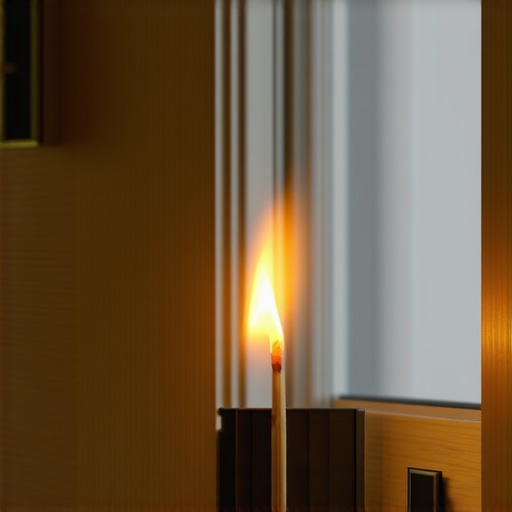
To understand why the smoke test works, we must look at the physics of pressure differentials. Your home acts like a giant chimney. This is known as the stack effect. Warm air rises and escapes through the upper levels, creating a vacuum that sucks cold air in through any gap in the lower levels. This is where a simple match or incense stick becomes a high-precision diagnostic tool. By moving a small smoke source around the perimeter of the sash, the glazing bead, and the meeting rail, you can visualize exactly where the air is entering. If the smoke flickers or dissipates rapidly, you have a breach in the air barrier. This is a critical step before you call a window cleaner or a contractor, as it identifies the specific point of failure.
How to Perform a Professional-Grade Smoke Test
Start by turning off your HVAC system. You want the air in the house to be as still as possible. On a cold, windy day, light a match or an incense stick and hold it near the corners of the operable sash. Pay close attention to the points where the sash meets the frame. You are looking for a ‘smoke trail’ that shows movement. A steady trail indicates a sealed unit; a chaotic or horizontal trail indicates a leak. Check the muntin bars and the area where the glass meets the frame. If you see movement there, the glazing bead may have shrunk or become brittle over time, a common issue in older vinyl or wood units. This level of detail is what separates a professional diagnostic from a simple visual inspection.
The Anatomy of a Leak: From Rough Opening to Sill Pan
When the smoke test reveals a leak, the next step is determining the root cause. Often, the issue lies in the relationship between the window and the rough opening. A proper installation requires the use of shims to ensure the window is level, square, and plumb. If the frame is bowed because it was forced into an opening that was too small, the weatherstripping will not make full contact with the sash. This is a common failure point in ‘pocket replacements’ where a new window is slid into an old frame. You might also find that the sill pan is not properly flashed, allowing air to bypass the bottom rail. This is where flashing tape and high-quality sealants become the heroes of the story. A window repair might involve replacing the bulb seal or the pile weatherstripping, but if the frame itself is warped, it is time to replace windows.
“Proper flashing and sealing are essential to preventing air and water infiltration. ASTM E2112 provides the standard for ensuring the longevity of the fenestration assembly.” – ASTM International Standards
Thermal Logic: The Cold Climate Context
In northern regions, the primary enemy is heat loss. We look at the U-Factor, which measures the rate of heat transfer. A lower U-Factor means better insulation. When you conduct a smoke test in a cold climate, you are essentially looking for ‘thermal bridges.’ If the air infiltration (AL) rating of your window is high, the U-Factor becomes irrelevant. Even the best triple-pane glass with an Argon or Krypton gas fill cannot compensate for a drafty sash. This is why we focus on ‘warm-edge’ spacers between the glass panes to prevent condensation at the edges. If your smoke test shows air movement at the meeting rail of a double-hung window, it often means the cam locks are not pulling the sashes together tightly enough. A simple adjustment here can save hundreds in heating costs.
Material Science: Vinyl vs. Fiberglass vs. Wood
The material of your window frame dictates how it reacts to temperature changes. Vinyl is popular because it is cost-effective, but it has a high coefficient of thermal expansion. This means it grows and shrinks significantly between summer and winter, which can eventually pull the sealant away from the rough opening. Fiberglass is much more stable, as it expands at roughly the same rate as the glass itself, maintaining a better seal over time. Wood offers the best natural insulation but requires meticulous maintenance to prevent rot. A professional window cleaner can often spot the early signs of wood rot or vinyl cracking during their routine work, serving as an early warning system before the smoke test even becomes necessary.
The ROI of Repair vs. Replacement
Many ‘Tin Man’ salesmen will tell you that new windows will pay for themselves in energy savings in five years. That is a lie. The real ROI of replacing windows is found in increased comfort, reduced load on your HVAC system, and improved curb appeal. If your smoke test reveals leaks that can be fixed with new weatherstripping or a bead of high-quality silicone, a window repair is the logical choice. However, if the seal between the glass panes has failed (indicated by permanent fogging) or if the frame is structurally compromised, replacement is the only path forward. Do not be swayed by gimmicks; look at the NFRC label and focus on the Air Leakage and U-Factor ratings that match your specific climate needs.
Final Verdict: Trust the Smoke, Not the Salesman
A window is the most taxed part of your home’s exterior. It must withstand UV radiation, wind pressure, and temperature extremes while remaining operable. The smoke test is a simple, effective way to reclaim control over your home’s environment. Whether you are hiring a window cleaner to maintain your view or a specialist for a window repair, understanding where the air is moving is your best defense against incompetence. Precision in the rough opening and integrity in the glazing bead are what define a quality installation. Do not settle for a quick fix that relies on a tube of caulk. Demand a system that manages heat, light, and air as a science, not a suggestion.