The Friction Trap: Why Your Windows Are Fighting You
Every homeowner knows the frustration. You want a breath of fresh air, but your double-hung window feels like it has been welded shut. You pull, you strain, and eventually, you give up. Most people think this is the end of the road. They assume the frame is warped beyond salvation or the house has settled so severely that the rough opening is now a parallelogram. This is usually when they call a window salesman. I have seen it a thousand times: a perfectly good set of windows destined for the landfill because of a simple friction problem that costs less than a cup of coffee to fix.
I sat across from a homeowner last October who was ready to sign a contract for $30,000 to replace windows throughout her entire Victorian home. The high-pressure guy before me had convinced her that her original wood sashes were ‘structurally compromised’ because they wouldn’t slide. I walked over to the windows, inspected the Jamb Liner, and saw the problem immediately. The wood was bone dry and the tracks were filled with grit. I told her to cancel the contract and go to the hardware store for a $2 bar of paraffin wax. I had to explain to her why her ROI on a full replacement would be 150 years when a simple maintenance routine would restore her window repair needs in ten minutes.
The Physics of the Sliding Sash
To understand why windows stick, we have to look at the interface between the Sash and the Jamb. In a sliding window, whether it is a vertical double-hung or a horizontal slider, you have two surfaces under tension. In older wood windows, you are dealing with wood-on-wood or wood-on-metal friction. In modern vinyl windows, you are dealing with PVC sliding against a plastic jamb liner. Over time, the factory-applied lubricants dissipate. Atmospheric pollutants, dust, and even the residue from a poor-quality window cleaner create a sticky film. This increases the coefficient of friction to the point where the Balance Spring can no longer assist the lift.
In cold climates like Chicago or Minneapolis, this problem is exacerbated. As the temperature drops, materials contract at different rates. If your window has a high U-Factor, the interior surface of the glass stays cold, which can lead to localized humidity spikes near the frame. This moisture can cause wood components to swell or can cause Condensation to freeze inside the tracks. When you try to force that window open, you aren’t just fighting gravity; you are fighting molecular adhesion. This is where the wax trick comes in. Unlike oil-based lubricants that attract dust and eventually turn into a grinding paste, paraffin wax or beeswax provides a dry, hydrophobic layer that prevents sticking without the mess.
“Field testing indicates that a significant percentage of air infiltration issues are attributed to improper sash alignment rather than glass failure.” – ASTM E2112 Standard Practice
The $2 Solution: Step-by-Step Paraffin Application
Before you even think about a window repair or replacement, you must clean the tracks. If you apply wax over dirt, you are just making ‘dirty wax.’ Use a vacuum with a crevice tool to pull out the dead flies and grit. Follow this with a microfiber cloth and a dedicated window cleaner that does not contain ammonia, as ammonia can degrade some vinyl finishes over time. Focus on the Weep Hole areas to ensure water can still exit the frame.
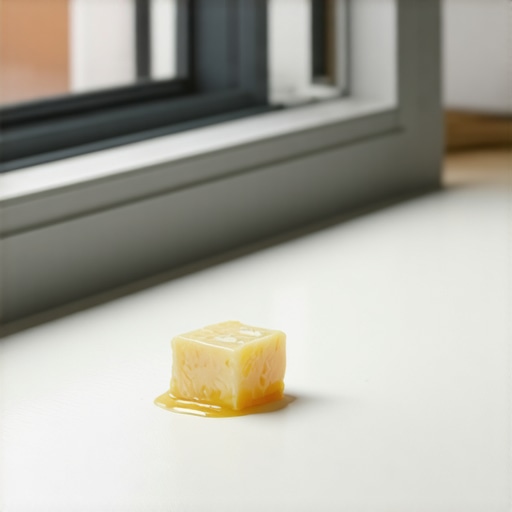
Once the tracks are dry, take your bar of paraffin wax (a plain white emergency candle works too). Rub the wax vigorously along the inside of the tracks where the sash makes contact. You want to see a thin, translucent layer of wax on the surface. If you have wood windows, pay special attention to the ‘blind stop’ and the ‘parting bead.’ These are the narrow strips of wood that create the channel for the sash. After applying the wax, cycle the window up and down several times. The friction itself will generate just enough heat to buff the wax into the pores of the material, creating a slick, durable surface.
When Wax Isn’t Enough: Diagnostic Troubleshooting
Sometimes the wax trick fails. As a glazier, I use this failure as a diagnostic tool. If the window still won’t slide, the problem is likely mechanical or structural. We need to look at the Rough Opening. If the house has settled, the side jambs might be bowed inward, ‘pinching’ the sash. You can check this by measuring the width of the window at the top, middle, and bottom. If the middle measurement is smaller, your Shim is either missing or has shifted, allowing the frame to collapse toward the glass.
Another common culprit is a failed balance system. In modern windows, a Constant Force balance (a coiled piece of stainless steel) or a Block and Tackle balance provides the mechanical advantage to lift the heavy glass. If the spring has snapped or the cord has jumped the pulley, no amount of wax will help. You will need to remove the Glazing Bead or the sash itself to access these internal components. This is still a minor window repair compared to the cost of a full frame replacement.
“Installation is just as critical as the window performance itself. A high-performance window installed poorly will fail.” – AAMA Installation Masters Guide
The Thermal Reality of Old vs. New
In Northern climates, the drive to replace windows is often fueled by the fear of heat loss. We talk about the U-Factor constantly. A single-pane window has a U-factor of about 1.1, while a modern triple-pane unit with Argon gas and Low-E coatings can get down to 0.15. That is a massive jump in performance. However, if your old windows are structurally sound but just ‘leaky,’ you can often achieve 80 percent of the performance of a new window by simply addressing the Flashing Tape, adding a Sill Pan, and ensuring the sashes are properly lubricated and weatherstripped. The wax trick isn’t just about movement; it’s about ensuring the sash can close tightly enough for the locks to engage. If the locks don’t pull the sash into the header, you have a massive air leak that no amount of fancy glass will fix.
Conclusion for the Savvy Homeowner
Before you fall victim to a sales pitch, remember that a window is a mechanical system. Like any machine, it requires lubrication. Before you spend thousands, spend two dollars and twenty minutes. Clean the tracks, check your Muntin and Sash alignment, and apply a bit of wax. You might find that your ‘broken’ windows were just thirsty for a little maintenance. If the window still refuses to budge after cleaning and waxing, then it is time to look at the mechanical balances or the structural plumb of the frame. But in my 25 years of experience, the simplest solution is usually the one that saves the most money.