There is a specific kind of frustration that occurs when you try to open a window to catch a spring breeze only to find the sash is fused to the frame. For a master glazier, a painted-shut window is not just a nuisance; it is a symptom of poor maintenance and a lack of understanding of how an operable window is designed to function. Many homeowners and amateur painters treat the window as a static part of the wall, splashing paint across the tracks and the meeting rail without considering the mechanical tolerances required for movement. To fix this, you do not need a sledgehammer; you need surgical precision and an understanding of the physics of paint bonding.
I pulled a vinyl window out of a house in Chicago once and the header was completely black with rot. Why? The previous installer relied on the nailing fin instead of proper flashing tape, but the homeowner had also painted the windows shut years prior to stop drafts. By sealing the sash with paint, they had inadvertently trapped moisture inside the wood core, leading to a structural failure that cost thousands to remediate. This is the danger of the ‘caulk-and-walk’ mentality. When we talk about window repair, we are talking about restoring the integrity of the building envelope while maintaining the functionality of the glazing system.
“Installation is just as critical as the window performance itself. A high-performance window installed poorly will fail.” AAMA Installation Masters Guide
The Physics of the Paint Bond
When you apply paint to a window, you are creating a polymer film. If that film bridges the gap between the sash and the stop or the jamb, it creates a mechanical bond. Over time, as the wood expands and contracts due to changes in humidity, that bond can become incredibly strong. In a northern climate like Minneapolis or Chicago, where the U-Factor is the primary metric of concern, a stuck window often masks significant heat loss. Homeowners think a sealed window is an airtight window, but in reality, the lack of movement often means the weatherstripping has been crushed or bypassed entirely. The U-Factor, which measures the rate of heat transfer, is severely impacted when the sash cannot be properly seated against the sill.
The Simple Hack: The Surgical Cut
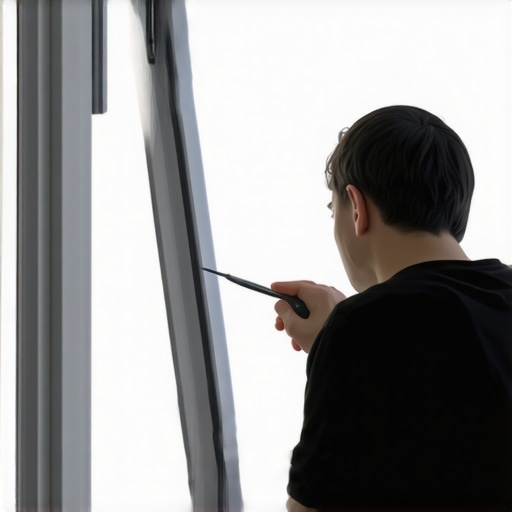
The secret to unsticking a window is not force; it is the rupture of the paint film. I always reach for a tool called a window zipper or a very thin, stiff putty knife. You want to insert the blade into the seam between the sash and the wood stop. Start at one corner and slowly work the blade along the entire perimeter. You are not trying to pry the window open yet; you are simply breaking the bridge of the paint. If the window has muntins (those decorative grids), check to see if paint has pooled in the corners where the glazing bead meets the glass. If you do not break these seals first, you risk cracking the glass when you finally apply pressure to the sash.
Water Management and the Shingle Principle
Once you have broken the paint seal, the window should move, but your job is not done. A window that has been stuck for years often has hidden water damage. We must look at the sill pan and the weep hole system. In a properly installed window, the shingle principle applies: every layer of flashing and building wrap should overlap the layer below it so that water is directed outward. When windows are painted shut, people often paint over the weep holes in the bottom of the frame. These holes are critical for allowing moisture to escape the track. If you find your window is stuck, check those weep holes. If they are clogged with paint, your window repair must include clearing them to prevent the rot I mentioned earlier.
“Proper installation is the primary defense against air and water infiltration. Without a continuous seal, even the highest-rated assembly will underperform its laboratory benchmarks.” ASTM E2112
The Science of Thermal Performance
In cold climates, we are fighting heat loss. If you are struggling with old wood windows, you are likely dealing with a high U-Factor and significant drafts. While unsticking the window allows for ventilation, it also highlights the need for better thermal barriers. This is where we discuss the difference between window repair and the decision to replace windows. A modern replacement window uses a warm-edge spacer to separate the glass panes, which reduces the dew point on the interior surface and prevents condensation. If you are unsticking a single-pane window, you are still dealing with a thermal bridge that will cause your furnace to work overtime. Using a quality window cleaner can help you inspect the glass for seal failure, which often looks like fogging or ‘creeping’ between the panes that cannot be wiped away.
Step-By-Step Restoration
To properly restore the sash, after you have broken the paint seal, you should remove the sash entirely if possible. This allows you to sand down the edges where the paint has built up. Use a block plane or heavy-grit sandpaper to return the sash to its original dimensions. Check the rough opening for any signs of shifting or shims that have compressed. Before reinstalling, apply a coat of paraffin wax or a specialized dry lubricant to the tracks. Do not use oil-based lubricants, as they will attract dust and eventually gum up the mechanism again. This ensures the window remains operable for years to come without requiring another ‘hack’ to open.
Conclusion: Precision Over Force
Unsticking a window is the first step in understanding your home’s efficiency. Whether you choose to perform a meticulous window repair or decide it is finally time to replace windows with modern, Low-E coated units, the focus must always be on the science of the installation. A window is a complex piece of engineering designed to manage the transition between the controlled interior environment and the chaotic exterior weather. Treat it with the respect its engineering deserves, and it will keep your home dry, warm, and comfortable.