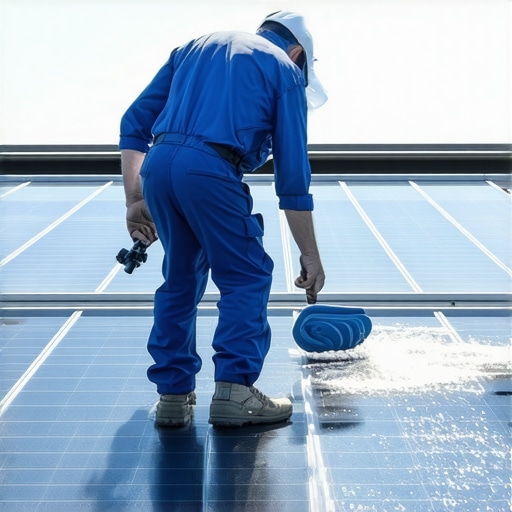
The 25-Year Glazier’s Perspective on Glass Integrity
In over two and a half decades of handling everything from structural curtain walls in skyscrapers to the most delicate historic sash restorations, I have seen one constant: people treat glass like it is an indestructible slab of transparent rock. It is not. Especially when we are talking about modern high-performance windows or solar photovoltaic panels, the glass is merely a substrate for a complex series of metallic and ceramic coatings. When a homeowner asks if they should replace windows or if a simple window repair will suffice, the answer often hinges on whether the previous window cleaner destroyed the surface chemistry of the pane. These coatings, whether they are Low-E (low-emissivity) layers on surface number two or anti-reflective coatings (ARC) on a solar panel, are only a few hundred nanometers thick. If you approach them with the ‘caulk-and-walk’ mentality of a cut-rate handyman, you are not just cleaning; you are performing a slow-motion demolition of the building’s energy envelope.
The Condensation Crisis: A Lesson in Surface Science
A homeowner called me in a panic because their new windows were ‘sweating.’ I walked in with my hygrometer and showed them the humidity was 60 percent. It was not the windows; it was their lifestyle. They were boiling pasta with no ventilation and had thirty-two indoor plants in a sealed room. But there was a darker twist. Upon closer inspection of the glass exterior, I saw permanent ghosting. The window cleaner they hired had used a high-alkaline detergent that had reacted with the humidity to etch the glass. They thought the windows were failing because of a broken seal in the insulated glass unit, but the reality was simpler: the glass surface had been chemically altered. This is exactly what happens to solar panels when they are cleaned with tap water in high-mineral areas without proper filtration. You are not just leaving spots; you are creating a microscopic topography that traps dust and reflects the very photons you are trying to capture.
“Installation is just as critical as the window performance itself. A high-performance window installed poorly will fail.” – AAMA Installation Masters Guide
Understanding the Physics of the Solar Heat Gain Coefficient (SHGC)
In warmer climates where solar panels are most prevalent, the primary enemy is the sun’s radiant energy. In a window, we manage this through the Solar Heat Gain Coefficient (SHGC). This is a ratio that tells us how much solar radiation passes through the glass. When you are cleaning these surfaces, you are interacting with the coatings designed to manipulate this ratio. If you use an abrasive pad or a harsh chemical, you are scratching the microscopic peaks and valleys of the anti-reflective coating. For a solar panel, this increases the ‘angle of incidence’ reflection, meaning the sun’s rays bounce off into the atmosphere instead of being converted into electrons. In the world of window repair, a scratched Low-E coating means the room will suddenly feel ten degrees hotter in July because the glass can no longer reflect long-wave infrared radiation. We focus on the U-Factor in the north, but in the south, the SHGC is the king of metrics. Maintaining that coating is the difference between a thirty-year ROI and a failed investment.
The Technical Anatomy of the Rough Opening and the Glazing Bead
When we talk about the longevity of a window or a solar array, we have to look at the ‘Rough Opening’ tolerances and how the glass is held in place. The glazing bead is the trim piece that secures the glass in the sash. If a window cleaner uses too much pressure or floods the weep hole system with soapy water, they are inviting disaster. Those weep holes are designed to allow incidental moisture to exit the frame. If they are clogged with dried cleaning residue or debris, the water backs up, reaches the spacer bar of the insulated glass unit, and causes the primary seal to fail. This is why I always tell clients: do not just hire a guy with a squeegee; hire someone who understands the ‘Shingle Principle’ of water management. The same applies to solar panels; the aluminum frames have drainage channels that must remain clear to prevent water from dwelling against the edge seals for extended periods.
“The water-resistive barrier must be integrated with the window flashing to ensure a continuous drainage plane.” – ASTM E2112 Standard Practice
The Glass Class: Why Modern Coatings Demand De-Ionized Water
Modern glass is often ‘hydrophilic,’ meaning it wants to shed water in a sheet rather than in beads. This is achieved through a titanium dioxide coating that reacts with UV light to break down organic dirt. If you use a standard window cleaner solution containing ammonia or heavy surfactants, you are essentially ‘poisoning’ that photocatalytic reaction. The secret to cleaning these surfaces without damage is the use of a water-fed pole system equipped with a de-ionization (DI) resin filter. This removes the dissolved solids (TDS) from the water, resulting in a ‘hungry’ water molecule that aggressively attracts dirt without the need for mechanical scrubbing. We use shims to level a window during installation to ensure perfect operation of the operable parts, but we use chemistry to ensure the glass remains transparent to the right spectrums of light. If you are considering whether to replace windows because they look ‘dull,’ try a pure water cleaning first; you might find the glass is fine, but the maintenance was flawed.
The Math of Maintenance vs. Replacement
There is a persistent myth that new windows will pay for themselves in energy savings within five years. As a master glazier, I can tell you that is nonsense. The real ROI on a high-end window replacement is measured in decades, and it is driven by comfort and the preservation of the interior. However, that ROI disappears if the coatings are compromised. When a homeowner needs window repair for a foggy pane, it is almost always a failure of the desiccant in the spacer or the seal itself, often accelerated by improper cleaning chemicals that have degraded the polyisobutylene. For solar panels, the math is even more sensitive. A five-percent drop in efficiency due to a damaged anti-reflective coating can extend the payback period of the array by several years. You must treat the glass as a precision optical instrument, not a structural wall.
How To Safely Clean High-Efficiency Glass and Solar Panels
Professional Cleaning Protocol
- Inspect the sash and glazing bead for any signs of seal failure or loose components before applying water.
- Flush the surface with low-pressure water to remove loose grit that could cause scratches during the cleaning process.
- Use a soft-bristled brush specifically rated for coated glass to gently agitate the dirt.
- Rinse with de-ionized water to ensure a spot-free finish without the use of a squeegee, which can sometimes leave microscopic rubber deposits.
- Check the weep hole at the bottom of the frame to ensure water is draining freely and not pooling in the rough opening.