The Engineering Behind the Falling Sash
When a homeowner hears a sudden thwack and finds their upper window sash slumped against the sill, the immediate reaction is to call for a full window replacement. However, as a master glazier with a quarter-century in the field, I can tell you that the culprit is rarely the window itself but rather the mechanical failure of the tension spring balance. A homeowner once called me in a panic because their windows were sweating and the sashes were dropping like guillotines. I walked in with my hygrometer and showed them the humidity was 60 percent. It wasn’t the windows; it was their lifestyle. The excessive indoor moisture had caused the wood sashes to swell within the tracks, creating a friction coefficient that the aging spiral balances couldn’t overcome, eventually leading to a catastrophic failure of the internal tensioning mechanism.
Decoding the Spiral Balance and Constant Force Systems
In the world of window repair, we deal with several types of balance systems, but the spiral tension spring is the most common in late-20th-century wood and vinyl units. This system uses a coiled spring inside a metal or plastic tube. As the sash moves down, the spring is twisted tighter, storing potential energy that assists in the lift. If your sash feels heavy or refuses to stay open, the tension has likely dissipated or the rod has disconnected from the sash shoe. Unlike a simple window cleaner who focuses on the glazing surface, a glazier looks at the terminal velocity of the sash. We use a specialized tensioning tool to wind these springs. Turning the rod clockwise increases the lift capacity. Each full 360-degree rotation adds approximately half a pound of lift. If you over-tension, you risk the sash ‘creeping’ upward on its own, which can stress the top rail and lead to air infiltration issues.
“Installation is just as critical as the window performance itself. A high-performance window installed poorly will fail.” – AAMA Installation Masters Guide
The Physics of the North: Why Your Springs Fail in January
In cold climates like Minneapolis or Chicago, the U-Factor is the primary metric we monitor. But the physics of cold weather also impacts your window repair needs. When the temperature drops, materials contract. A vinyl frame might contract at a different rate than the glass or the metal spring, leading to increased gaps. This is where the Rough Opening becomes critical. If the window was poorly shimmed during the initial install, the frame might bow under cold stress, pinching the sash and causing the tension spring to work twice as hard. This mechanical strain eventually leads to metal fatigue in the spring. If you are in a cold zone, you want to ensure your weatherstripping is pliable. Stiff, frozen weatherstripping creates immense drag. I often see homeowners try to replace windows when all they needed was a new set of Class 5 balances and a silicone-based lubricant for the tracks.
The Installation Autopsy: Why Most Repairs Fail
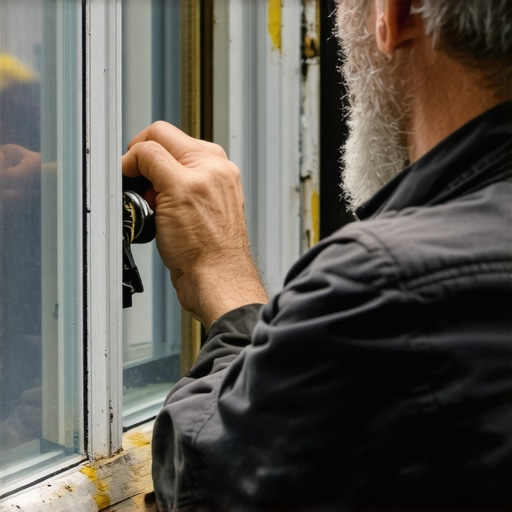
Most DIY attempts at adjusting tension springs fail because they ignore the Sash Shoe. This is the nylon block that connects the balance to the sash. If this shoe is cracked or if the pivot bar is not seated correctly, no amount of spring tension will fix the problem. During a proper window repair, we perform what I call an installation autopsy. We remove the stop moldings and the sash to inspect the Glazing Bead and the integrity of the frame. We check if the Sill Pan is level. If the sill has settled, the entire frame becomes a trapezoid rather than a rectangle. In such cases, you can’t just adjust the spring; you have to re-square the unit using a Shim at the midpoint of the jamb. This is the difference between a ‘caulk and walk’ installer and a craftsman. You must understand how water flows down the exterior via the Drip Cap and how the Weep Hole in the sill allows for pressure equalization. If these are blocked, moisture enters the balance channel and rusts the spring from the inside out.
[IMAGE_PLACEHOLDER]
When to Call it Quits and Replace Windows
There is a point where the ROI of a repair simply evaporates. If you are looking at a single-pane wood window with significant rot in the Muntins and a completely seized balance system, the labor to restore it often exceeds the cost of a modern high-performance insert. When you decide to replace windows, don’t get distracted by the salesman’s pitch about krypton gas. Focus on the NFRC label. Look for a low U-factor for heat retention and a warm-edge spacer that prevents the Dew Point from reaching the interior glass surface. This prevents the condensation that rots out your sills in the first place. A modern fiberglass frame has a thermal expansion coefficient similar to glass, meaning it won’t pinch your tension springs like cheap vinyl might during a polar vortex.
“The air leakage of an operable window assembly is largely dependent on the integrity of the weatherstripping and the balance system’s ability to hold the sash tight against the frame.” – NFRC 400 Procedure
Step-by-Step Calibration of a Spiral Balance
To fix a drooping sash, first, raise the sash and secure it. Disconnect the spiral rod from the shoe at the bottom. Use your tensioning tool to grip the pin. If the sash was falling, you typically need to add 2 to 3 turns of tension. You will feel the resistance of the spring increasing. Be careful: if you lose your grip, the rod will spin at high velocity and can shatter the Glazing Bead or cause personal injury. Once tensioned, reattach the rod to the shoe. Repeat the process on the opposite side. Symmetry is vital. An imbalanced sash will rack, causing air leaks and eventually breaking the Sash lock. Always finish the job with a dry PTFE spray in the tracks. Never use WD-40, as it attracts dust and turns into a grinding paste that destroys the nylon components.