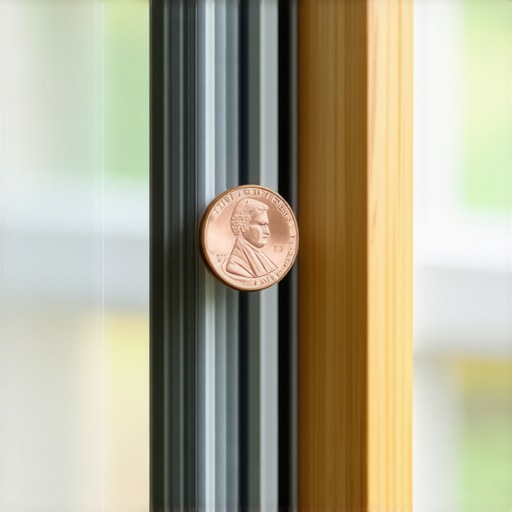
Understanding the Anatomy of a Draft
As a Master Glazier with over a quarter-century in the field, I have seen every imaginable window failure. Most homeowners assume that a drafty room requires a full-frame replace windows project, costing thousands. However, the culprit is often something far more granular: the failure of the weatherstripping. We think of windows as static objects, but an operable sash is a moving machine. Every time you open and close that window, you are stressing the compression seals and the friction-fit components that keep the outside world where it belongs. When those seals lose their elasticity, a phenomenon known as compression set, the thermal performance of your high-performance glazing drops to nearly zero. This is where the penny test comes into play as a vital diagnostic tool for any homeowner or window repair professional.
The Condensation Crisis: A Master Glazier’s Tale
A homeowner called me in a panic because their new windows were ‘sweating’ profusely during a cold snap. They were convinced the vacuum seal had failed on the insulated glass units. I walked in with my hygrometer and showed them the humidity was 60 percent, but the real revelation came when I examined the perimeter of the operable sash. I found that the pile weatherstripping was so clogged with debris that it could no longer create a seal against the frame. I didn’t need to replace windows; I needed to educate them. It wasn’t the windows; it was their lifestyle and a lack of maintenance. The moist air from their humidifier was hitting the cold air leaking through the failed seals, reaching the dew point instantly. This is why understanding the mechanics of your window’s seal is more important than the brand name on the latch.
“Air infiltration through the window assembly shall not exceed 0.3 cubic feet per minute per square foot of frame area when tested in accordance with ASTM E283.” – AAMA/WDMA/CSA 101/I.S.2/A440 Industry Standard
The Science of the Penny Test
The penny test is a rudimentary but effective way to check for ‘seal daylight’ or lack of compression. To perform this, you open the window, place a copper penny against the weatherstripping on the sill or the jamb, and then close and lock the sash. If you can pull the penny out with no resistance, your seal is shot. In the glazier trade, we look for a specific ‘crush’ on the bulb seal or the leaf seal. If the penny slides out, it means the sash is not pulling tight enough against the frame, likely due to a warped sash, a shifted rough opening, or simply aged-out EPDM or TPE materials. This gap allows for convective heat loss, which is far more aggressive than conductive heat loss through the glass itself.
Climate Logic: The Cold Front Defense
In Northern climates, the enemy is heat loss and the resulting condensation. When the weatherstripping fails, the U-Factor of your window, which measures the rate of heat transfer, becomes irrelevant because you are now dealing with direct air bypass. We want the Low-E coating on Surface 3 to reflect heat back into the room, but that heat will simply walk out the door if the sash perimeter is compromised. This is why a warm-edge spacer is critical, but it must be paired with a functional compression seal. If you are hiring a window cleaner, ask them to wipe down the weatherstripping; dirt is an abrasive that grinds down the pile and the silicone coatings that keep seals supple. If the damage is already done, you must decide between a targeted window repair or a larger intervention.
“Installation is just as critical as the window performance itself. A high-performance window installed poorly will fail.” – AAMA Installation Masters Guide
Beyond the Penny: Evaluating Frame and Sash Integrity
Sometimes the penny test fails not because of the weatherstripping, but because the window was never shimmed correctly in the rough opening. If the frame is ‘bowed’ or ‘crowned,’ the sash will never hit the seal evenly. You might see light through the glazing bead or notice that the muntins don’t align. In these cases, a simple weatherstripping replacement is a bandage on a broken bone. You have to look at the weep hole system as well. If air is rushing in through the weep holes and bypassing the internal baffles, your weatherstripping will be under constant pressure. A master glazier looks at the sill pan and the flashing tape to ensure that the entire rough opening is managed for water and air. If the frame has lost its squareness, the only real solution is to replace windows with a focus on structural stability, perhaps moving from a flexible vinyl to a more stable fiberglass or thermally broken aluminum if the budget allows.
The Role of the Window Cleaner and Maintenance
Maintenance is the most overlooked aspect of fenestration longevity. A professional window cleaner does more than just make the glass transparent; they often identify the first signs of seal failure. When cleaning the tracks, they should check that the operable parts move without binding. If the sash is dragging, it will tear the weatherstripping right out of its kerf. Regular cleaning of the sash perimeter prevents the buildup of grit that acts like sandpaper on your seals. If you find that your windows are difficult to lock, don’t force them. This is a sign that the sash and frame are no longer aligned, which will eventually lead to a penny test failure. Proper lubrication of the hardware and keeping the tracks clear can extend the life of your seals by a decade.