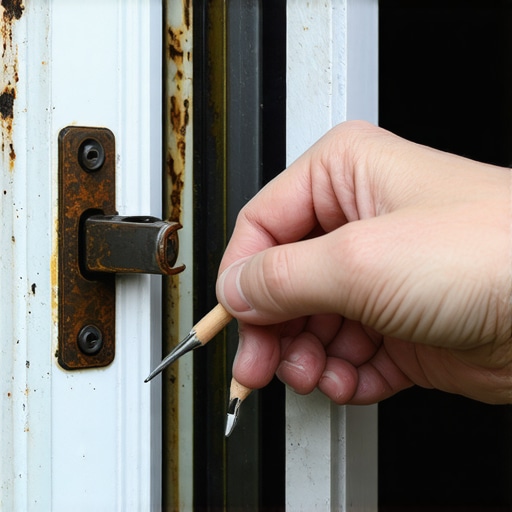
The Frustration of the Frozen Sash Lock
In twenty-five years of window installation and repair, I have seen homeowners ready to tear out perfectly functional double-hung units simply because they could not get the cam-lock to engage. They pull, they shove, and eventually, they break the handle off. I recall sitting in a living room in a chilly suburb where the owner was convinced they needed to replace windows throughout the entire ground floor. They had a quote for twelve thousand dollars. I took a simple carpenter’s pencil from my belt, rubbed it across the lock keeper, and the sash snapped shut with a satisfying click. It was not magic; it was material science. Most people do not realize that a window is a complex mechanical assembly. When you have a stuck lock, you are dealing with friction, thermal expansion, and often, a lack of basic maintenance that a professional window cleaner or glazier would spot in seconds.
“Installation is just as critical as the window performance itself. A high-performance window installed poorly will fail to operate or seal correctly over its lifespan.” – AAMA Installation Masters Guide
The Molecular Science of Graphite Lubrication
Why the pencil lead? Most homeowners reach for a can of spray oil or grease. This is a mistake that leads to eventual mechanical failure. Wet lubricants are magnets for dust, pet dander, and pollen. Over time, these particles mix with the oil to create a grinding paste that eats away at the zinc or stainless steel hardware. Graphite, which is what pencil ‘lead’ actually consists of, is a dry lubricant. Its crystalline structure allows layers to slide over each other with minimal resistance. When you apply it to a window lock, you are creating a microscopic barrier that reduces friction without attracting the debris that a window cleaner typically has to scrub away. This is especially vital in cold climates where traditional grease can thicken and become sluggish in sub-zero temperatures. In cities like Chicago or Minneapolis, where the U-Factor is the most critical metric for your glass, the mechanical seal of the lock is what actually prevents the air leakage that ruins your R-value.
Analyzing the Rough Opening and Sash Alignment
If the pencil trick does not work immediately, the problem is likely structural rather than just frictional. We have to look at the Rough Opening. Every window is held in place by a Shim. If the house has settled or if the original installer did not use enough shims, the frame can bow. This bowing takes the lock and the keeper out of alignment. Even a sixteenth of an inch of movement can prevent a cam-lock from rotating properly. You can test this by looking at the Sash. Is the gap between the sash and the frame even all the way across? If not, no amount of graphite will fix the underlying issue. You are looking at a window repair that requires realigning the unit within the wall. This is why I am often intolerant of ‘caulk-and-walk’ installers who ignore the plumb and square of the unit and simply fill the gaps with foam.
Thermal Expansion and the Material Choice
The climate plays a massive role in how your hardware behaves. If you have vinyl windows in a region with high thermal swings, you are dealing with a material that expands and contracts significantly more than fiberglass or wood. In the heat of the summer, a vinyl sash might expand just enough to cause the lock to bind against the Glazing Bead. This is where the physics of the Sash becomes a headache. In a cold climate, you want a Low-E coating on Surface #3 to reflect heat back into the room. However, if the mechanical lock fails to pull the sash tight against the weatherstripping, that expensive glass is useless. A loose lock allows cold air to bypass the thermal breaks, leading to a dew point shift that causes condensation on the interior of the frame.
“The service life of fenestration products is directly linked to the maintenance of operable hardware and the integrity of the water management system.” – ASTM E2112 Standard Practice
Step-by-Step: Executing the Pencil Lead Trick
First, open the Operable sash and inspect the lock mechanism. Look for any signs of oxidation or metal shavings. Use a stiff brush to clear out any debris from the Weep Hole area and the tracks. A professional window cleaner knows that a clean track is the first step to a working lock. Second, take a high-quality graphite pencil. Do not use a colored pencil or a mechanical pencil with thin lead. A #2 or a carpenter’s pencil is best. Rub the lead vigorously into the hook of the lock and the ‘keeper’ on the opposite sash. You want to see a visible grey sheen on the metal surfaces. Third, attempt to cycle the lock. If it still resists, do not force it. Check the Sill Pan for any debris that might be preventing the sash from seating fully at the bottom. Often, a small pebble or a buildup of insect nests in the corner will keep the sash up just enough to prevent the lock from lining up.
When Repair Transitions to Replacement
While I always advocate for window repair first, there are times when you must replace windows. If the lock is stuck because the wood sash has rotted due to a failed Sill Pan or lack of proper Flashing Tape, graphite is not the answer. When I see black mold on the drywall or a header that has begun to sag, the mechanical failure of the lock is just a symptom of a systemic water management failure. In these cases, we look at the ‘Shingle Principle.’ Water must always flow down and out. If the Flashing Tape was not integrated with the house wrap, water is likely sitting behind the Sash, swelling the wood and seizing the hardware. At that point, the cost-benefit analysis shifts toward a full-frame replacement with a modern material like fiberglass, which offers the stability of wood without the susceptibility to rot.
Final Thoughts on Window Maintenance
A window is an investment in your home’s envelope. It is the only part of your wall that you expect to be transparent, waterproof, and Operable all at once. Treat your hardware with the same respect you treat your HVAC system. A little bit of graphite, a regular check of the Weep Hole, and keeping the tracks clear will do more for your home’s comfort than the most expensive triple-pane glass ever could if it’s left unlocked. Do not let a salesman talk you into a full replacement for a mechanical issue that a pencil can solve. Buy the numbers, look at the NFRC labels for air leakage, and keep your hardware moving freely.