The Cold Reality of Thermal Performance
You feel it before you see it. It is that subtle chill that creeps across the floorboards in late November, or the way the curtains seem to flutter even when the HVAC is silent. As a glazier with over two decades in the field, I have seen every type of window failure imaginable. Most homeowners assume that if the glass is not cracked, the window is doing its job. This is a dangerous misconception. A window is a complex thermal barrier, and when that barrier fails, you are essentially trying to heat the entire neighborhood. If you are questioning whether your units are still performing, you need to understand the physics of the Insulated Glass Unit or IGU.
The Condensation Crisis: A Master Glazier Narrative
A homeowner recently called me in a total panic because their brand-new, expensive windows were sweating profusely on the interior surface. They were convinced the seal had failed within months of installation. I walked in with my hygrometer and a thermal camera. I did not even have to touch the glass to know what was happening. I showed them the reading: 60 percent humidity inside a house kept at 72 degrees while it was 20 degrees outside. The windows were actually performing too well. They were so airtight that the moisture from their cooking and breathing had nowhere to go. It was not a window repair issue; it was a ventilation and lifestyle issue. However, many times, that moisture is not on the surface but trapped between the panes. That is the death knell for a window. When the desiccant inside the spacer bar becomes saturated, the IGU is officially a thermal liability.
“Installation is just as critical as the window performance itself. A high-performance window installed poorly will fail.” AAMA Installation Masters Guide
The Science of the Hairdryer Test
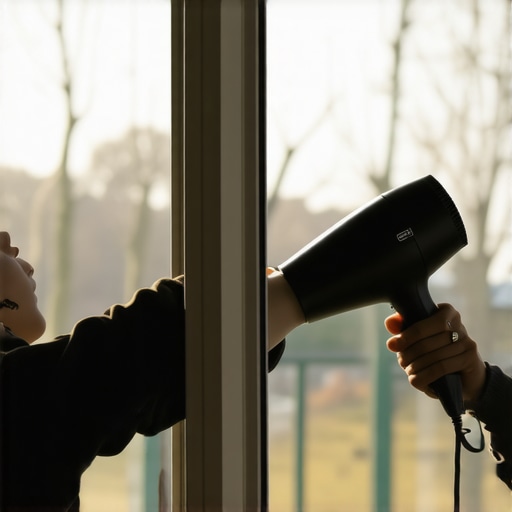
The hairdryer test is a common DIY method to detect air infiltration or seal failure, but you have to perform it with technical precision. By moving a hairdryer around the perimeter of the sash where the glazing bead meets the frame, you are looking for air movement on the other side or a rapid change in surface temperature that indicates a breach. If you have an assistant holding a candle or a piece of tissue paper, you can quickly identify where the rough opening was not properly shimmed or where the weatherstripping has lost its compression set. If you can feel the heat transfer through the glass almost instantly, your Low-E coating has likely degraded or was never there to begin with. In a cold climate, we rely on Surface Number 3 to have a sputtered silver coating that reflects long-wave infrared radiation back into the room. If that coating is gone, your furnace is fighting a losing battle.
Understanding U-Factor and Thermal Bridging
When you prepare to replace windows, the most important number you will see is the U-Factor. While the rest of the world obsesses over R-value, glaziers look at U-Factor, which measures the rate of heat loss. In northern climates, you want this number as low as possible, typically below 0.27. This is achieved through a combination of multi-chambered frames, argon gas fills, and warm-edge spacers. Older windows used aluminum spacers, which acted as a thermal bridge, literally conducting the cold from the outer pane to the inner pane. This is why you see frost on the edges of old double glazing. Modern spacers use stainless steel or structural foam to break that bridge. If your window cleaner mentions they cannot get the glass clear because of internal fogging, you have a breached seal. At that point, window repair is usually a temporary band-aid; the only permanent solution is to replace the IGU or the entire unit.
“The U-factor of a window is the best indicator of its ability to retain heat. For homeowners in heating-dominated climates, this is the primary metric for energy ROI.” NFRC Performance Standards
The Anatomy of a High-Performance Window
To truly understand if your glazing is holding heat, you must look at the frame material science. Vinyl is popular because it is cost-effective, but it has a high rate of thermal expansion and contraction. This movement can eventually stress the seals of the IGU, leading to premature failure. Fiberglass, on the other hand, is composed of glass fibers and resin, meaning it expands at the same rate as the glass itself. This synergy creates a much more stable environment for the seal. When we look at the sash and the muntins, we are looking for structural integrity that prevents the unit from racking. A racked window will never seal properly against the weatherstripping, regardless of how much caulk you apply. Proper installation involves a sill pan to manage water and flashing tape that integrates with the house wrap to ensure that the rough opening remains dry and rot-free for decades.
The Role of Low-E Coatings in Heat Retention
Low-E, or low-emissivity, is not just a marketing term. It is a microscopic layer of silver or other low-emissivity material applied to the glass. In a cold climate, we want to maximize solar heat gain during the day while preventing interior heat from escaping at night. This is a delicate balance. If you choose a glass with too low a Solar Heat Gain Coefficient in a northern state, you are actually increasing your heating bills by blocking the sun’s free energy. A master glazier knows how to read the NFRC label to ensure the glass package is optimized for the specific orientation of the house. North-facing windows need the highest U-Factor protection, while south-facing windows can benefit from a higher SHGC to help warm the home during the winter months.
When to Call the Professionals
If your hairdryer test reveals significant drafts, or if your window cleaner points out permanent mineral deposits between the panes, it is time for an intervention. You might be tempted by a quick window repair, such as defogging, but these are often cosmetic fixes that do not restore the insulating argon gas. When you decide to replace windows, do not just buy the cheapest unit at the big-box store. Look for a certified installer who understands the shingle principle of water management and who will ensure that the weep holes are clear and the unit is perfectly plumb and level. A window is only as good as the technician who puts it in the wall. Don’t be the homeowner who relies on the nailing fin alone; ensure that every layer of the assembly, from the interior shim to the exterior drip cap, is executed with precision. Your comfort and your energy bills depend on it. “