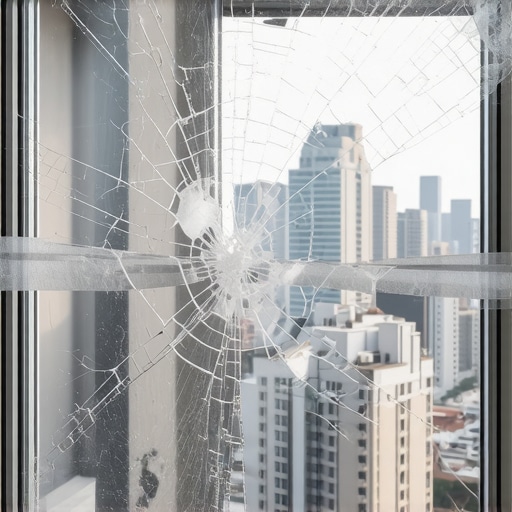
A spiderweb crack in an office window is more than an aesthetic nuisance; it is a structural failure in progress. In my twenty five years as a master glazier, I have seen how a seemingly minor fracture can transform from a hairline blemish into a catastrophic blow out. When we talk about an emergency fix for a cracked office window, we are not just talking about tape and luck. We are talking about managing the integrity of the building envelope. Whether the cause is thermal stress, building settlement, or a rogue bird, the response must be calculated. Delaying a window repair or neglecting to replace windows when the IGU (Insulated Glass Unit) is compromised leads to increased energy costs, potential water ingress, and liability issues that no building manager wants to face.
The Anatomy of a Crisis: Why Glass Fails
Before we look at the immediate triage, we have to understand the physics of the failure. I remember a specific call in downtown Chicago during a particularly brutal cold snap. A property manager called me because a large fixed pane on the 14th floor had suddenly spidered. When I arrived with my hygrometer and thermal camera, the problem was obvious. The previous installer had failed to leave adequate clearance in the rough opening. As the aluminum frame contracted in the sub zero temperatures, it pinched the glass. This is what we call a pressure crack. The glass had no room to breathe. This brings us to a fundamental truth in the glazing industry.
“Installation is just as critical as the window performance itself. A high-performance window installed poorly will fail.” – AAMA Installation Masters Guide
In that Chicago office, the condensation was already forming between the panes because the seal had ruptured. The homeowner or in this case, the building owner was worried about the aesthetics, but I was worried about the desiccant. Once the seal of an IGU is broken, the argon gas escapes and is replaced by moist air. This renders the U-Factor of the window useless. You are essentially left with two expensive sheets of glass acting like a single pane of ice. If you see fogging or moisture, the emergency fix is no longer just about the crack; it is about the entire unit thermal performance.
Triage: The Immediate Response to Cracked Office Glass
When a crack is discovered, the first step is stabilization. If the glass is tempered, it will likely shatter into thousands of small pebbles. If it is annealed, it will break into dangerous shards. For an office environment, safety is the priority. Use a high quality structural tape or a specialized glass resin to prevent the crack from migrating. However, do not mistake this for a permanent solution. A cracked pane has lost its structural rigidity. The wind load requirements for high rise or even mid rise offices are stringent. A compromised window cannot withstand the positive and negative pressures of a storm. This is where a professional window repair service becomes essential. They will assess whether the glazing bead can be removed to swap the glass or if the entire sash needs replacement.
Thermal Logic in the North: The War on Heat Loss
In colder climates, the enemy is always heat loss and the dreaded dew point. When we replace windows in these regions, we focus heavily on the U-Factor. The U-Factor measures how well a window product prevents heat from escaping. The lower the number, the better the insulation. For a cracked office window in the North, the emergency isn’t just the hole; it is the fact that your HVAC system is now trying to heat the entire street. We look for triple pane units with a Low-E coating specifically on Surface #3. This placement reflects long wave infrared radiation back into the office, keeping the heat where it belongs. Warm edge spacers are also non negotiable. These spacers, which separate the glass panes, are made of low conductivity materials that prevent the edges of the glass from getting cold enough to reach the dew point, which stops condensation before it starts.
The Installation Autopsy: Why Most Fixes Fail
If we look at the mechanics of a window repair, we often find that the failure started years ago at the rough opening. I have pulled out hundreds of units where the installer relied on a bead of caulk instead of a proper sill pan. Water management is a science, not a suggestion. A window must be installed following the shingle principle, where every layer overlaps the one below it to shed water outward.
“Flashing must be integrated with the water-resistive barrier to ensure a continuous drainage plane.” – ASTM E2112 Standard Practice
When you are looking to replace windows, ask your contractor about their flashing tape protocol. If they are not using a high quality butyl tape and ensuring it is rolled flat to avoid fish mouths, they are inviting rot into your wall assembly. In an office setting, this rot can stay hidden behind drywall for years, manifesting only as a musty smell that even the most diligent window cleaner cannot get rid of. The weep hole system in the frame must also be clear. I have seen many office windows fail because a painter or a misguided maintenance worker decided to caulk the weep holes shut, trapping water inside the frame and rotting the subfloor.
The Role of the Professional Window Cleaner
It might sound strange, but a professional window cleaner is often your first line of defense against an emergency. Because they are physically touching the glass and the glazing bead, they are likely to spot hairline fractures or failing seals before they become visible from the ground. If your cleaner reports a rattling sash or a loose muntin, take it seriously. These are the early warning signs of a failing system. Regular maintenance allows for planned window repair rather than midnight emergency calls. They can also identify when the Low-E coating is oxidizing, which looks like a blueish tint or a smudge that won’t come off. This indicates that the vacuum seal has failed and the metallic coating is reacting with oxygen.
Choosing Your Replacement: Materials Matter
When the emergency dictates a full replacement, the choice of frame material will dictate the next thirty years of your building’s life. Vinyl is common because it is cost effective, but in large commercial openings, its high rate of thermal expansion and contraction can be a liability. It can bow and flex, putting stress on the glass. Fiberglass is a superior alternative for offices; it has a thermal expansion rate almost identical to glass, meaning the entire unit moves together as the temperature shifts. This stability reduces the risk of stress cracks. For those wanting the traditional look, wood is an option, but it requires a level of maintenance that most commercial budgets don’t account for. Regardless of the material, the shims must be placed correctly at the setting blocks to ensure the weight of the glass is distributed evenly across the frame.
Conclusion: Don’t Just Patch, Perform
An emergency crack is a symptom of a larger issue. Whether it is a bad original installation, a lack of thermal planning, or simple mechanical damage, the fix must be comprehensive. Understand your U-Factor requirements, demand proper flashing, and never settle for a quick fix that ignores the physics of the building envelope. Window repair is an investment in your property’s safety and efficiency. When you finally decide to replace windows, ensure you are hiring someone who understands that the glass is only as good as the hole it is filling.