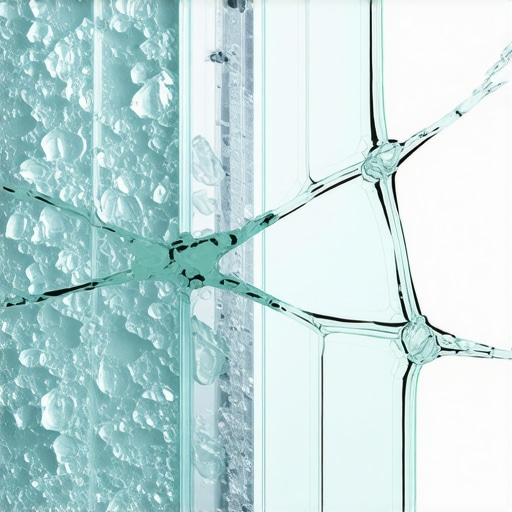
Understanding the Mechanics of Safety Glazing
As a glazier with over two decades of experience, I have seen every possible failure in the field. I have seen the aftermath of a rock hitting a standard annealed pane and the terrifying shards it leaves behind. When we talk about safety glass, we are moving beyond the basic float glass found in a standard picture frame. We are talking about engineered solutions designed to protect the occupants of a building. Whether you are looking at a window repair project or preparing to replace windows throughout a commercial storefront, understanding the distinction between tempered and laminated glass is non-negotiable. It is the difference between a glass that shatters into harmless pebbles and a glass that refuses to leave the frame even when broken.
“Installation is just as critical as the window performance itself. A high-performance window installed poorly will fail.” – AAMA Installation Masters Guide
A homeowner in Seattle once called me in a panic because their new windows were ‘sweating’ and they feared the glass was defective. I walked in with my hygrometer and showed them the humidity was 60 percent. It was not the windows; it was their lifestyle choices. However, that conversation shifted to safety glass when they asked why their bathroom window looked different than their kitchen window. This is where the physics of the glass comes into play. Safety glass is not just a marketing term. It is a legal requirement in ‘hazardous locations’ as defined by the International Residential Code. This includes windows near tubs, showers, stairwells, and doors. If your glazier is not checking the etching in the corner of the glass, they are putting you at risk.
The Thermal Tempering Process: Strength Through Stress
Tempered glass is often called ‘toughened’ glass for a reason. To create a tempered lite, we take standard annealed glass and run it through a tempering furnace. The glass is heated to approximately 1150 degrees Fahrenheit. Once it reaches the transition point, it undergoes a process called quenching. High-pressure air blasts the surface of the glass, cooling the exterior much faster than the interior. This creates a state of permanent compression on the surface while the core remains in tension. This internal stress is what gives tempered glass its strength. It is four to five times stronger than regular glass. When it does break, the stored energy is released all at once, causing the glass to shatter into small, relatively dull cubes rather than jagged daggers. This is why a window cleaner must be extremely careful. If there is fabricating debris (microscopic glass dust) trapped on the surface from the tempering furnace, a standard scraper used during a window cleaner session can catch that debris and create ‘scratches’ across the entire pane. In a window repair scenario, you cannot cut tempered glass. If the rough opening is off by even a quarter inch, that tempered sash is useless. You must measure the rough opening with absolute precision before the glass is fired.
Laminated Glass: The Structural Sandwich
Laminated glass operates on a completely different physical principle. Instead of using internal stress for strength, it uses a polymer interlayer, usually Polyvinyl Butyral (PVB) or SentryGlas Plus (SGP), sandwiched between two or more lites of glass. This assembly is placed in an autoclave where heat and pressure bond the layers together. The result is a glass that can be broken, but the shards will adhere to the plastic interlayer. This is why laminated glass is the gold standard for security and sound dampening. If an intruder hits a laminated window, they may break the glass, but they are still facing a tough, flexible plastic barrier. This is also a critical component in hurricane zones. In those high-pressure environments, the glass acts as a sacrificial layer while the interlayer maintains the building envelope. From a technical standpoint, laminated glass offers superior UV protection, blocking nearly 99 percent of harmful rays, which prevents the fading of furniture and flooring. When you replace windows in a noisy urban environment, the different densities of the glass and the plastic interlayer work together to disrupt sound waves, providing a much higher STC (Sound Transmission Class) rating than tempered glass alone.
“Safety glazing materials shall be labeled with the manufacturer’s name and the type of glass, and this label must be permanent.” – ASTM C1048 Standard Specification
Choosing the Right Glass for Your Climate
In colder northern climates, the focus is often on the U-Factor and preventing heat loss. Here, we look at the warm-edge spacers and the Low-E coating. In a dual-pane IGU (Insulated Glass Unit), we typically place the Low-E coating on surface number three to reflect heat back into the room. However, when we integrate safety glass, we must consider the thickness. Laminated glass is heavier and may require a beefier sash and heavier-duty shims to ensure the operable parts of the window do not sag over time. If you are in a high-traffic area where impact is a concern but security is secondary, tempered glass is the cost-effective choice. If you are concerned about forced entry or live in a flight path, the investment in laminated glass is worth every penny. Proper installation involves more than just popping the glass into the frame. You need a high-quality sill pan to manage water, proper flashing tape to seal the rough opening, and the correct glazing bead to hold the lite in place. A ‘caulk-and-walk’ installer will ignore the weep hole in the frame, leading to water backup and eventual rot. Whether it is a simple window repair or a full-scale project to replace windows, always verify that the glass meets the safety requirements for the specific location in your home. Check for the permanent etch in the corner, ensure the shims are properly placed to support the weight of the IGU, and never compromise on the quality of the glazing seals.