The Invisible Barrier: Understanding the Vulnerability of Modern Glass
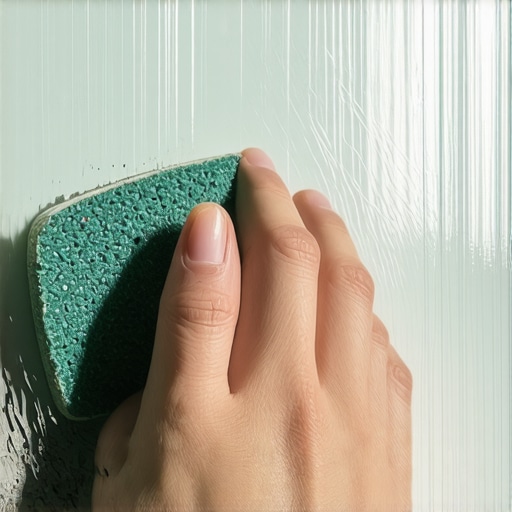
Why is that expensive high-performance pane of glass suddenly looking hazy? You have spent thousands of dollars to optimize your thermal envelope, only to find that your views are now obscured by a permanent milky white film. As a glazier with twenty-five years in the field, I have seen this tragedy play out more times than I can count. Homeowners often mistake this damage for a seal failure, thinking they need a window repair for a fogged unit, but the reality is far more permanent. They have inadvertently scrubbed away the very technology they paid for. We are talking about the microscopic destruction of Low-Emissivity (Low-E) coatings. When you take a standard green abrasive pad or even certain types of steel wool to a modern window, you are not just cleaning; you are performing a crude form of glass grinding that ruins the optical and thermal properties of the material. A window is not just a piece of silica: it is a complex assembly of metallic layers designed to manage the invisible spectrum of light. To understand why an abrasive pad is the enemy, we have to look at the glass through a microscopic lens.
“Installation is just as critical as the window performance itself. A high-performance window installed poorly will fail.” – AAMA Installation Masters Guide
The Cleaning Misconception: A Costly Narrative
I recently stood in a high-end residence where the homeowner was distraught. They had hired a window cleaner who, in an attempt to remove some stubborn construction debris and silicone overspray, reached for a heavy-duty scouring pad. The homeowner watched as the cleaner scrubbed the interior surface of the glass on a massive sliding door. By the time I arrived, the sun was hitting the glass at an oblique angle, revealing a shimmering web of micro-scratches that made the glass look like it was covered in grease that would not wipe off. I had to be the bearer of bad news: there is no window repair for scratched Low-E. Unlike a wood sash that can be sanded and refinished, or a rough opening that can be re-shummed, once the metallic sputter coating on the glass is compromised, the unit is biologically dead in a functional sense. They did not need a cleaner; they needed to replace windows. The cost of their cleaning mistake was nearly four thousand dollars for a single oversized insulated glass unit (IGU).
The Science of the Sputter: Why Coatings Matter
To appreciate the danger, you must understand what Low-E glass actually is. We are not talking about a tint or a film stuck to the glass. Modern high-performance windows utilize a process called Magnetron Sputter Vacuum Deposition (MSVD). Inside a vacuum chamber, the glass passes under a series of cathodes where a plasma of argon gas is used to knock atoms off a metal target (usually silver or zinc) and deposit them onto the glass surface. These layers are thinner than a human hair. In a cold climate like Chicago or Minneapolis, we prioritize the U-Factor. We want to keep the heat inside. This often involves placing a Low-E coating on Surface #3 (the outer face of the inner pane) or even Surface #4 (the room-side face). Surface #4 coatings are particularly dangerous because they are exposed to the interior environment. When you use an abrasive pad on these surfaces, you are literally stripping away the silver atoms that reflect long-wave infrared radiation back into your living room. You are effectively creating a thermal hole in your wall while simultaneously ruining the visible transmittance (VT) of the pane.
NFRC Decoding: Reading the Life of Your Window
Before you or any window cleaner touches a pane, you must look at the NFRC (National Fenestration Rating Council) label. This is the birth certificate of your window. It tells you the U-Factor, the Solar Heat Gain Coefficient (SHGC), and the Visible Transmittance. If you see a very low U-Factor (below 0.25 in northern climates), there is a high probability that the window utilizes a room-side Low-E coating to reach those numbers. Abrasives are the natural enemy of these ratings. According to industry standards, any mechanical cleaning that alters the surface roughness of the glass invalidates the performance data. If the silver layer is scratched, the emissivity of that specific area spikes. You no longer have a high-performance window: you have a piece of clear glass with a permanent smudge. This is why the glazing bead often has warnings embossed into it, yet they are frequently ignored by those looking for a quick fix for hard water stains.
“Glass surfaces should be cleaned with a soft, clean, grit-free cloth and a mild soap or detergent solution.” – ASTM C1036 Standard Specification for Flat Glass
The Physics of Abrasive Destruction
Glass is hard, usually sitting around a 5.5 to 7 on the Mohs scale. However, the metallic oxides used in Low-E coatings are much softer. A standard abrasive pad is often made of synthetic fibers impregnated with aluminum oxide or silicon carbide. Silicon carbide has a Mohs hardness of 9. When you apply pressure to a scouring pad against a Low-E surface, the harder abrasive particles plow through the softer metallic coating and even the glass surface itself. This creates micro-grooves. These grooves cause what we call Mie scattering: the light waves hit the jagged edges of the scratches and bounce in every direction rather than passing through cleanly. This is what creates the “haze” effect. This damage is particularly visible during the “golden hour” when the sun is low. What was once a clear view of the landscape becomes a blurred, glowing mess. In this scenario, you cannot simply perform a window repair; the structural integrity of the coating is gone.
Climate Context: Why Northern Homeowners Must Be Wary
In colder regions, we rely heavily on the thermal resistance provided by the IGU. The air or argon gas fill between the panes works in tandem with the Low-E coating. If you scratch the coating on Surface #3 by using a reach-pole with an abrasive head from the inside (on a single-pane setup) or Surface #4, you are compromising the energy efficiency of the home. In places like Canada or the Dakotas, where the temperature differential between inside and outside can be eighty degrees, that coating is doing heavy lifting. A scratched surface can lead to localized cold spots on the glass, which in turn leads to condensation. Condensation leads to moisture pooling on the sill pan, which can eventually rot out the rough opening if the flashing tape was not installed with the “shingle principle” in mind. It is a chain reaction of failure that starts with a simple green scrub pad.
The Proper Path: Safe Cleaning and Maintenance
If you have stubborn debris like bird droppings or tree sap, the answer is never abrasion. A professional knows to use a new, surgical-grade stainless steel scraper blade at a 30-degree angle, and only on wet glass, and never on a coated surface. For Low-E Surface #4, even a blade is often too risky. The only safe method is a solution of deionized water and a mild, non-abrasive soap, applied with a microfiber cloth or a soft squeegee. If the glass has hard water staining from a sprinkler system, you are looking at a chemical problem, not a physical one. Using an abrasive to scrub off calcium deposits is like using a belt sander to remove a fingerprint. You might get the spot off, but you will take the glass with it. If the staining is etched into the glass, it may be time to replace windows rather than risk further damage to the frames through aggressive scrubbing.
When Window Repair is Not an Option
There is a common myth that you can “buff out” scratches in glass. While you can sometimes polish clear, non-coated glass using cerium oxide, this is an absolute impossibility for Low-E glass. Polishing involves removing material to level the surface. If you polish a Low-E coating, you are simply removing the rest of the coating. You will end up with a clear spot in the middle of a hazy window, which is arguably worse than the original scratch. When the coating is gone, the window’s ability to block heat is gone. At that point, your only move is to contact a glazier to measure the sash and order a new IGU. This involves removing the glazing bead, extracting the damaged glass, ensuring the weep holes are clear, and setting a new unit on proper shims to ensure it stays square within the rough opening.
Final Thoughts: Respect the Engineering
Modern windows are marvels of material science. They are designed to keep you warm in the winter and cool in the summer while letting in the maximum amount of light. Treat them with the respect that engineering deserves. Put away the abrasive pads and the harsh chemicals. If a window cleaner shows up with a green scouring pad, send them away. The cost of a few minutes of convenience is the permanent destruction of your home’s thermal performance and aesthetic clarity. Always remember: a window is a hole in your house that is supposed to keep the elements out. Don’t let a cleaning mistake turn it into a liability.