Navigating the Physics of Fenestration Failure
As a master glazier with a quarter-century in the field, I have seen every possible failure a window can exhibit. Homeowners often call me with a simple request for window repair, but they rarely understand the fundamental physics at play. A window is not a static object. It is a dynamic pressure vessel that must withstand wind loads, thermal expansion, and UV degradation. When you see an issue with your glass, you are looking at one of two distinct mechanical failures: a breach in the structural integrity of the glass itself or a failure of the hermetic seal in the Insulated Glass Unit (IGU). Recognizing which one you are facing determines whether you need a simple glass swap or if it is time to replace windows entirely.
A homeowner called me during a sub-zero week in January because their brand new double-hungs were clouded with moisture. They were convinced the manufacturer had sent them defective units with blown seals. I arrived with my hygrometer and a thermal camera. Within five minutes, I showed them that the indoor relative humidity was hovering at 58 percent while it was five degrees outside. It was not a blown seal; it was a lifestyle issue. Their high-efficiency furnace and lack of ventilation were turning the glass into a giant dehumidifier. This is the first lesson in glazing: diagnostics require more than just a quick look. You have to understand the dew point.
“Installation is just as critical as the window performance itself. A high-performance window installed poorly will fail.” – AAMA Installation Masters Guide
The Anatomy of a Cracked Pane: Stress vs. Impact
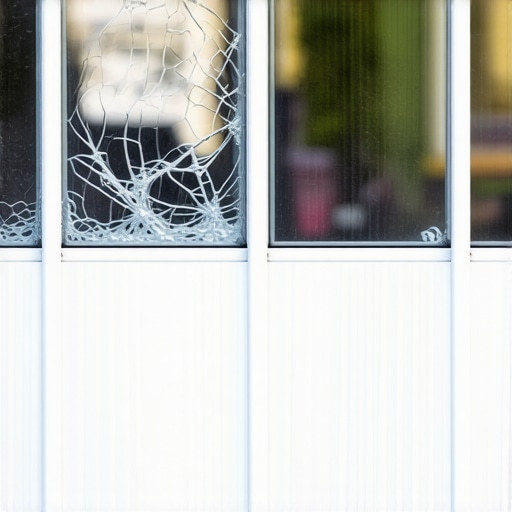
When we talk about a cracked pane, we are discussing a physical break in the glass substrate. This is often the result of an external force, such as a stray baseball or a bird strike, but often it is more subtle. In my years on the job, I have diagnosed thousands of stress cracks. These occur when the glass is restricted within the sash or when there is a significant temperature differential across the surface of the pane. If the glass was cut too large for the sash and forced in without proper clearance, the expansion of the vinyl or wood frame puts immense pressure on the edge. Eventually, the glass reaches its breaking point.
A stress crack usually starts at the edge of the glass, often hidden behind the glazing bead. It moves across the pane in a meandering, wavy line. This is different from an impact crack, which radiates from a central point of contact like a spider web. If you have a cracked pane, a window cleaner cannot help you. The structural integrity of the glass is gone. In a double-pane unit, if the outer pane is cracked, the insulating gas has already escaped, and the desiccant inside the spacer will quickly become saturated. Repairing this involves removing the glazing bead, extracting the broken IGU, and installing a new factory-sealed unit. It does not always require a full frame replacement if the sash and frame are still square and plumb.
The Science of the Blown Seal: When the IGU Fails
A blown seal is a completely different animal. This is a failure of the sealants that hold the two panes of glass together. An IGU consists of two or three layers of glass separated by a spacer bar. This spacer bar contains a desiccant, a material that absorbs moisture. The entire assembly is sealed twice. The primary seal is usually polyisobutylene (PIB), which is a fantastic moisture barrier. The secondary seal is typically a structural silicone or polysulfide that holds the unit together. When these seals fail, the insulating argon gas leaks out and moisture-laden air leaks in.
Why do seals fail? The primary culprit is solar pumping. As the sun hits the window, the air or gas inside the IGU expands, causing the glass to bow outward. At night, the gas cools and the glass contracts. This constant movement puts a massive amount of strain on the seals. Over ten or fifteen years, the seal can develop microscopic fractures. Once the desiccant inside the spacer is fully saturated with moisture, it can no longer keep the air between the panes dry. This results in the characteristic fogging or “calcium deposits” that you see between the glass. At this stage, no amount of window cleaning on the outside or inside will clear the view. The window has effectively become a wall that you can slightly see through.
“The NFRC rating system provides a reliable way to determine if a window’s seal and gas fill are performing to their engineered specifications.” – NFRC Performance Standards
Thermal Performance in Cold Climates
In cold northern climates, the U-factor is the most critical metric. The U-factor measures the rate of heat transfer. A blown seal spikes your U-factor because air is a much worse insulator than argon. When that seal goes, you lose the thermal benefit of the window. You will start to feel a draft, not because air is blowing through the window, but because the cold glass is creating a convection current in the room. The air near the window cools, drops to the floor, and pulls warm air toward the glass. This is why a high-performance window with a Low-E coating on Surface 3 is essential in the North. It reflects the long-wave infrared radiation back into your living room, keeping the heat where it belongs.
To Repair or Replace: The Glazier’s Verdict
When you are faced with a blown seal or a cracked pane, you have to look at the overall health of the opening. If you have a high-quality wood or fiberglass frame that is only ten years old, a simple IGU replacement is the way to go. We pull the glazing bead, replace the glass, and the window is as good as new. However, if you are looking at old vinyl frames where the corners are cracking or the rough opening was never properly flashed, you are throwing good money after bad. If the sash is warped or the balance system is failing, it is time to replace windows with a full-frame installation. A new unit allows us to inspect the sill pan and ensure the flashing tape is integrated with the house wrap. Water management is a science, and a window is the most vulnerable part of your building envelope. Do not settle for a quick fix if the foundation of the window is compromised. In the end, whether it is a stress crack or a saturated desiccant, the goal is a dry, comfortable home. Ensure your installer uses proper shims and a high-quality sealant, and avoid the installers who think a tube of caulk is a substitute for proper flashing. Check the weep holes for blockages and ensure the sash sits square in the frame. That is how you guarantee a window lasts for thirty years instead of five.